![How To Hold Semi-Private Lessons]()
by Kat Camplin | Nov 5, 2015 | Training Methods
Semi-private lessons are my new favorite type of service. They cover a number of client “problem” areas that we don’t always get the opportunity to address through private instruction or group classes.

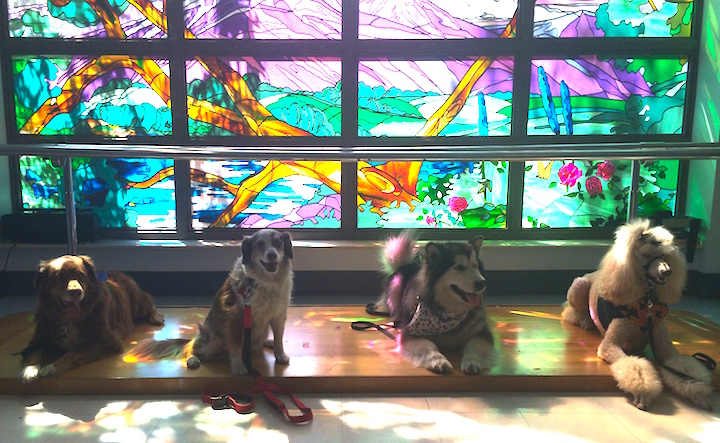
- Image via Kat Camplin
What Is A Semi-Private Lesson
Technically, the definition should be fairly obvious. A semi-private would assume that it’s more than one client and less than a regular group class. How you market it determines how it’s viewed.
The Smaller Class
Reactive Rover classes are typically smaller in size, but aren’t really sold as semi-private instruction. This is probably due to the classes taking place in a facility that does other group classes. Marketing a group class as “smaller,” or semi-private allows you to charge more per person per class to make up the income difference you’d normally have in a regular sized class. The smaller class should be no more than 3 or 4 students to make it exclusive. There is a balance with these classes. They have the opportunity to fill up quicker, but you need people with the income to pay more. Sales points can be “more one on one instruction,” or “great for shy or timid dogs.”
Try a few different naming conventions to see which one resonates with your target demographic.
The Group Private Lesson
Private instruction is usually geared for people who can’t make a group class or may have a dog that doesn’t do well away from home. The downside of having a dog trainer show up at your home is it costs more than going to a facility for a group class. If a new client can’t afford your private rate, giving them an option to host a small group at their home and split your rate with friends.
The upside of this type of semi-private is the client fills their own class from their neighbors and friends. The neighbors and friends get to split your private hourly rate and get one on one instruction. This works if all the students have basically the same needs. If one dog is reactive and the others just need basic obedience instruction time will probably not be in balance.
To make these work you really need to be upfront and inclusive to everyone involved. Topics and behaviors covered, the number of weeks the class meets, and what happens if someone can’t make a class should be spelled out in advance. A questionnaire can be helpful to see what everyone’s needs are and find the behaviors that cover the most problem areas. To save you time you’d want to be sure you have handouts and homework for what the lessons cover. The really great thing about doing these “neighborhood classes,” is that neighbors get to work with each other in between sessions, which increases client compliance and time spent training.
If you’re marketing these as a cost saving plan you’d split your hourly rate by the number of students then multiply it by the number of weeks. As an example: Your hourly rate is $100. There are three students in the semi-private class that runs for five weeks. Each student pays $34 a week, for a total of $170 per student. Typically these are run as a package, so payment is expected from each student up front.
Is it worth it? Yes, if you pick the right location. I am interrupted at least once in every neighborhood class by a neighbor that needs a trainer. It’s great exposure, just pick the right neighborhood.
Moving Advanced Clients To Semi-Private Lessons
Semi-rivate lessons are a fabulous way to continue to work with students that may have capped out of all your other classes. Think of these as field trip classes. Finding locations that are dog friendly can be a problem, but it’s usually worth it if you get to work with real world problems and distractions in exotic locations.
Therapy Dogs, DIY Service Dogs, reactive dogs that are too good for a Reactive Class, but not quite ready for the close quarters of a regular class, and students who just want to set new goals, are all great resources for these small groups. How you market and charge for this type of class is up to you. While the hosted semi-private lesson in someone’s home is sold as a cost saving measure, the time spent to set up working locations will probably warrant the “smaller,” class model.
Locations can include dog friendly restaurants, hospitals or medical offices with elevators, public transportation locations like bus stops and train stations, public parks with active baseball games, horse stables, and local hiking trails. Visit each location ahead of time and make a plan for where you’ll work and what you’ll work on. Have a backup plan in case you get there and there is something that prevents you from holding class.
Goals for advanced students can be individualized based on the location. Discuss the goals with each individual student then make sure they know what to do when things are going well and what to do when things are going wrong. Your job for most of these advanced classes will resemble a circus ring leader. You will be watching for unexpected intrusions, giving a heads up to oncoming children, dogs, people, horses, etc., and sometimes running interference with those things. Students work individually unless the students have agreed to work together ahead of time.
Are you already doing semi-private lessons? How are they working for you? Leave us a comment!
![2015 APDT Conference – Day One Summary]()
by Lisa | Oct 15, 2015 | Events, Training Methods
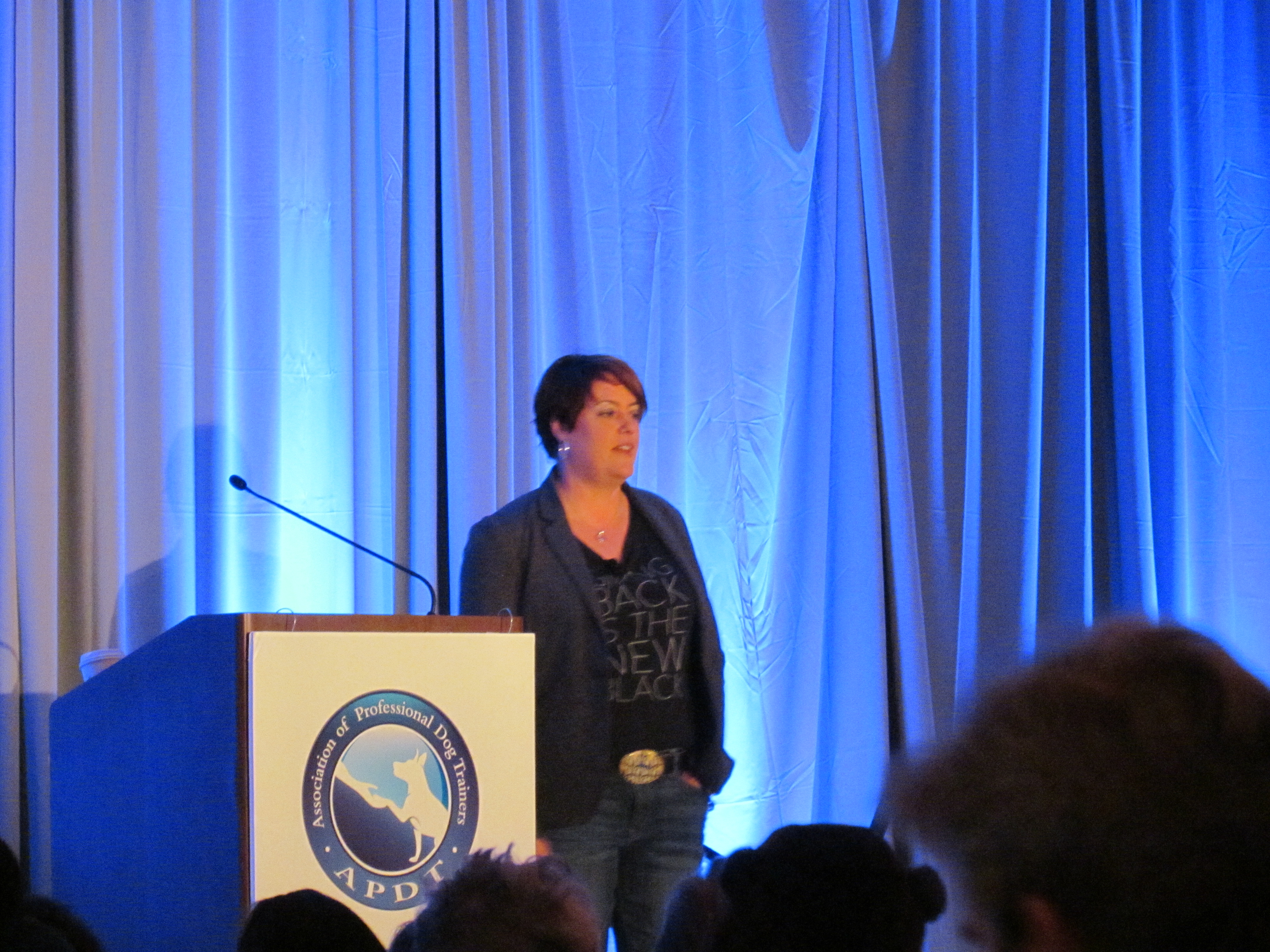
My eyes opened up to darkness at around 6:00am and instantly I was excited when I realised I was in the Sheraton Dallas Hotel for the 2015 APDT Annual Educational Conference & Trade Show. This is the first year I have attended and this is known as being a “Puppy”.
I made my way down to the Dallas Conference Room for the Opening Session & Welcome given by Amber  Burckhalter, Chair of the Board of Trustees, she welcomed the attendees and gave some random facts about Dallas – Barney the purple dinosaur from the very popular children’s tv show originated from Dallas along with German Chocolate Cake and the Margarita machine. She talked about the APDT Foundation and their Auction on Friday.
She handed over to the Treasurer – Robin Bennett, CPDT-KA who reported that the APDT’s pre-audit figures as at June 30th, 2015 accounts were in good standing. Casey Lomonaco, KPA CTP, the Secretary advised of the two new Board Members – Nick Hof and Megan Armstrong CPDT-KA, CBCC-KA.
The 2015 Award Members are as follows –
Members of the Year – for the first time that Casey knows of there were two winners – Sandy Crosby, CPDT-KA and Dae Grodin, CPDT-KA.
APDT Scholarship Winners – Mary Fish Arango, MA, Med, Dawn Gardner, CPDT-KA, Samantha Schinder, MA.
Dogwise Shelter – Scholarship Winner – Kim Imel, LVT, CPDT-KA.
Casey & Amber were both presented with a gift for their dedication and hard work.
Amber issued a Challenge to the attendees – Make an Impact – find 3 things from the Conference and take them home to make a difference.
2015 APDT Conference – Keynote Speaker
The keynote speaker was Stephen Ledoux, PhD whose topic – Helping our Canine Friends by Helping Ourselves with Science. His talk highlighted some characteristics of behaviorology, the natural science of behaviour, that enable us to apply it in ways to benefit our canine friends.
He talked about how to keep magical approaches to behaviour separate from scientific approaches and how to avoid a variety of unhelpful, fictional explanations of behaviour.
Scientific approaches:
Genetics – about the structural foundation of behavior
Physiology – about HOW behaviour happens or occurs
Behaviorology – about WHY behaviour happens or occurs
a. Sample – Recombination of repertoires
i. “Self-Concept”
ii. “Insight”
b. Sample – Concept formation
c. Sample – Complex behaviour
i. Multiple stimuli – affect multiple responses
ii. Coincidental reinforcers and superstitious behaviour
iii. The Law of Cumulative Complexity
The general relation of brain structures to behaviors of consciousness in humans and canine species.
Linda P Case, MS – Beware The Straw Man: Fact, Fiction & Science in the Dog Training World
1. Understand the way in which the scientific method is applied in canine science. Identify important components of a well-designed study.
2. Identify and assess various sources of information, including the “evidence pyramid” of science.
3. Appreciate and assess a research study example case – the effectiveness of “Touch then Treat” training.
Scientific Evidence Pyramid
Systematic Review
Randomized Controlled Studies with Dogs
Case Studies & Case Reports with Dogs
In vitro studies, research in other species
Linda Case then went into an example of a recently published study which examined a technique called “Touch then Treat”, a popular training and behaviour modification technique. This study was evaluated along with the results, the relevance of the results and the how further studies were needed to help -trainers, pet professionals and dog owner make well-informed, evidence-based decisions for their dogs.
Roger Abrantes, PhD – The Evolution of Canine Social Behavior
This very interesting talk covered the differences between aggressive, fearful, dominant and submissive behaviour, the variety of expressions in wolves, jackals, foxes and the domestic dog, the greeting, bonding, friendliness parental behaviour, mating strategies. Attendees learnt about dog body language, how to distinguish between closely related but different behaviors, and how to interpret dog behavior based on science rather than popular myths.
Day 1 is now over and my brain is already fried. I wonder what tomorrow will bring.
Get Dog Training Business Tips!
Receive valuable dog training business tips and resources every week! Subscribe to The Modern Dog Trainer now by submitting your name and email below.
[mc4wp_form]
![How Mobile Payment Apps Are Helping Dog Trainers Succeed]()
by Ines | Sep 28, 2015 | Training Methods
Time is money – all dog trainers know that.
In the old days, for trainers to get paid, clients would have to lug around cash or checks to a training session. That required your clients to have to remember to withdraw cash, or bring their check book. And often times they would forget, forcing you to pester them continually until they get around to writing said check and putting it in the mail. That all lead to extra work on your client’s end, and then leaving you with further trips to the bank to deposit your hard earned dollars.

Electronic invoicing and payments have surfaced to slightly improve this laborious process. This puts less strain on clients (i.e., more time to pay) while giving them payment flexibility (i.e., pay with e-payment, not check). However this requires dog trainers to sit in front of a computer after a long day’s work and send out invoices, which doesn’t even guarantee that payments will be made on time (or at all).
PocketSuite – The Best Dog Training Business Mobile Payment App
Technology has evolved once again! Tools like Square and Venmo allow dog professionals to accept payments and credit cards from their phones while offering convenience to their clients. More advanced apps, like PocketSuite, even allow clients to reserve sessions and appointments upfront with credit card, enabling trainers to process payments while walking out of each session without hassling the client one bit.
Mobile payment apps as a whole offer core benefits compared to what you might be stuck using today, which in turn will help you run a more successful pet professional business.
Fast
Do work, get paid. That’s how mobile payment apps drive business – disrupting traditional invoicing so there’s no cumbersome process or ongoing game of “chase-and-remind” for clients who are late on payment. QuickBooks’ reign of clunky/desktop invoicing is over. Mobile and instantaneous payment methods free up dog trainers to put their time where it counts – on their actual skillset. With extra time on your hands, you are free to complete more sessions and win more clients.
Affordable
Typically, dog trainers who wanted to accept credit and debit card payments had to invest in a merchant processor account. These accounts come riddled with extra fees (e.g., gateway fees, monthly minimum fees, statement fees) totaling between $25 to $35 per month. But now mobile payment options give you the ability to process credit card transactions without the infrastructure of a merchant processor account. Such mobile payment options free you from long-term contracts and numerous hidden fees, offering clear pricing and fast deposits for a fraction of the cost. And the best ones come without any hardware at all.
Convenient
That’s convenience for both you and your clients. While you’re enjoying a life without invoicing and waiting for payments, your clients will enjoy a life with a lot less check writing, cash withdrawing and wallet opening. It’s freedom for both parties. At the same time, mobile payment apps can protect trainers from canceled jobs and client no-shows, by securing customer credit cards upfront when reserving appointments, all the while delivering clients an “Uber-like” experience.
Mobile payment apps flat out just make life easier for today’s pet professional. Dog trainers in particular will find that this independence, flexibility and support that these apps give them when running a business, will yield them more time and money – to help drive their business towards success.
Sign up for PocketSuite for Free!
Get Dog Training Business Tips!
Receive valuable dog training business tips and resources every week! Subscribe to The Modern Dog Trainer now by submitting your name and email below.
[mc4wp_form]
![5 Behaviors To Teach A Dog With PICA]()
by Erin Bessey | Sep 16, 2015 | Training Methods
I live with a dog that has PICA. I am here to tell you that when a client says their dog eats rocks, sticks, just about everything, address it like it is PICA instead of it’s a puppy who will outgrow it. I never had experienced this disease until I got my second household dog, Henry, and he will eat anything! This disease can be life threatening and the added challenge for me was Henry had a secondary cleft palate so depending on what he ate it had the chance of going up into his nasal cavity. Here are 5 behaviors that I have found helpful in dealing with a dog with PICA.

Image via Erin Bessey – Bessey’s Positive Paws
This behavior is important so that your dog responds to you when you call his name. It also works to gain your dog’s attention so that you can then cue him for another behavior. Using an actual interrupter noise or attention noise like a kissy sound will work to get your dog to focus on you. This is sometimes a better choice than name response because it is easy to abuse their name by over using it. Both the name response and the attention noise should be charged using a very high value, delicious treat.
Leave it
Once your dog is focused on you, you can then cue him to leave the item he is thinking about eating. This will be one of the most crucial behaviors to train. It does require you to be present with the dog who wants to eat everything but it is possible that the use of leave it over time will help decrease the intensity of the behavior. While Henry still eats things or tries to eat things he shouldn’t, it has improved over the past 3 years.
Drop It
There will be times when the dog is able to pick up something it shouldn’t and it is crucial to have a fast drop it to prevent him from eating it further.
Coming When Called
If you trust the dog off leash because you have worked hard on teaching the leave it cue, a reliable recall is another essential behavior. Even inside the house recall can work in your favor. If the dog is considering eating something leave it works to stop the behavior and then calling your dog back to you moves him further away from the object.
In the end this is one of the most important behaviors to teach. Teach the dog with PICA to accept wearing a basket muzzle. This allows the dog to have freedom with you outside without being restricted to a leash and allows the dog to be a dog. I would not advise using a muzzle in a heavily dog populated area when your dog is off leash as it does restrict your dog’s natural way of defending himself. This is also important to use when you have a reliable recall.
It is difficult and frustrating to be an owner of a dog with PICA. Management is crucial in preventing unwanted chewing and eating of objects. Having food dispensing toys, nyla bones, raw meat bones, etc. available to your dog will help satisfy some of the chewing desires. You never know what a dog with PICA is going to chew next so keeping a house cleaned of small items like socks and small kids toys will help. Crating the dog when you are unable to supervise will help prevent the undesired behaviors and keep your dog safe. Be certain to keep the crate free of blankets and only provide toys that have been proven to stand up to the chewing demands of your dog.
Get Dog Training Business Tips!
Receive valuable dog training business tips and resources every week! Subscribe to The Modern Dog Trainer now by submitting your name and email below.
[mc4wp_form]
![Unique Ways To Use Household Tools For Your Training Bag]()
by Jorge Melara | Sep 12, 2015 | Training Methods
Let’s face it. In the market place there are countless gadgets for trainers and dog-owners alike. However, over the years, I’ve found some of the best tools hiding away are in arms reach right at home. A skilled trainer has the ability to resource from the environment they are in; utilizing in-the-moment props if you will. Here are a few of my favorites to get you, the trainer to think on the spot.
Peanut Butter Club
Regardless of the high value treat, sometimes when our pups are small and our humans are tall it equals fumbling and tripping in attempt to “work at the same level”. For example if the small pup has to jump to reach the treat, without knowing, we’d be rewarding the jump itself. Much of the time especially with small dogs in the beginning, there can be fumbling with the treat pouch, working with the leash, and lowering down; that all of these moving parts end up leaving us delayed in the delivery of the treat, and can be confusing to the pup. My solution? The PBC, or the Peanut Butter Club. Fancy for a long wooden spoon laden with gooey delicious peanut buttery goodness. Find your longest wooden spoon, (or keep an eye out at your next yard sale) and coat the magic wand with your favorite peanut butter and send it to the freezer so it’s ready for rewarding the pup for polite leash walking. Remember to allow the pup to lick using the same arm as the side he’s on so they’re not being rewarded for crossing in front of the human! PBC is also a great tool when working with a fearful dog because the PBC is longer and will allow a shy dog to come closer. I often find that after a few trials I can shorten the spoon causing the fearful pup to come closer.

Say Cheese
In the Wild West the cowboys kept their pistols right on their side for quick access and total readiness. We as dog trainers need a fast treat delivery system if we want to pair our reward with the behavior. For this one, I’ve got good ol’ cheddar spray cheese in my holster. Although it’s not the healthiest of treats, dogs love it! You can grab the can along with other treats and hit the road. My favorite use for it is during the winter months because it keeps my hands covered and warm and so I can train the pups without getting frostbitten.
Let the Light In
Sometimes visual barriers are all that’s required for pups that struggle with perimeter barking and sensitivity to movement near or around the house. But, who wants to live in the dark; keeping curtains and front doors always closed? Not me! Encourage your client to consider a great product originally intended for bathrooms and privacy: Frosted clings for windows! I love to use them at front windows and the like, to take away the visual stimulation or trigger without causing the house to feel like a dungeon.
This step can be critical for dogs that don’t need to be crated but struggle with barking.
Not Intended for a Rainy Day
Maybe the most unassuming tool I keep in my training bag is an umbrella. But not just any umbrella: it’s got to be one that pops open at the touch of a button and is dark color to create an instant barrier. A while back I received a call from an elderly woman who had been out for a walk when an off leash dog ran up and attacked her little Maltese. Although the altercation was minor, it left the woman and her pup quite shaken. I suggested to her that she could consider carrying an umbrella, a mobile shield of sorts that would be available at the touch of a button to both shield her pup and keep him invisible on the other side. If a dog is approaching and there is concern, an umbrella can be dispatched and buy the human precious moments to get a hold of the situation on the street, or even in an elevator! Let’s face it: training takes place on every terrain, and I know that when working in urban environments triggers can lurk around every corner, which can really set back any good training protocol. With the umbrella you can limit the time the dog is reacting and get to a safer spot on your walk or step between cars and block the small space between cars with the open umbrella.
Since necessity is the mother of invention, what are some of your cool household tools?
Get Dog Training Business Tips!
Receive valuable dog training business tips and resources every week! Subscribe to The Modern Dog Trainer now by submitting your name and email below.
[mc4wp_form]
![THE “D” WORD]()
by Jorge Melara | Sep 6, 2015 | Training Methods

What does art, the written word, Martial Arts, yoga, or music have in common? The “D” word. A word that so often in the world we generally use in terms of punishment; but not today. Today I’m going to speak about practice, or rather: Discipline. Anything anyone practices with devotion is a discipline. To become skilled at anything requires dedication and discipline. The discipline to get up in the morning to get to the gym, the discipline to pick up an instrument and practice for a while consistently, or the discipline required for training a dog.
Getting to Know Ya…
Whether training your own dog or helping the client to achieve the goals they desire, discipline in this case is the practice and devotion of helping dogs. Owner compliance is something that often will get in the way of progress. As a trainer it is not only important to show your clients techniques that will help their dogs along, but also to show them techniques on how to practice and implement said techniques in day to day life. Asking about your clients and getting to know them a little will help you better understand how to help them stay disciplined and dedicated to working the behaviors. Find out about their hobbies, what they do for work, what excites them—and especially about their dogs.
Discipline isn’t Necessarily a Consequence
After working on a stay or a go to your place cue, order a pizza and show clients how to work a stay or a go to your place cue while there is actually food around! This might sound crazy but it’s amazing how much better people feel when they see how to handle some failures and are working in a real-life setting. Clients are often tired after their workday and sometimes will just kennel their pup versus staying disciplined and on track by practicing what you have taught. Look for ways to give them confidence and not feel overwhelmed at the end of the day.
Set an Example
Being a disciplined dedicated coach to your clients will also do wonders for progress. Because one of the biggest roadblocks to progress is often owner compliance due to the demands of their schedules, I look for times that I can tag along to offer support. I find that going with them to events– be it a kids soccer game, or to a BBQ, for example are great ways to demonstrate how to work and train the family dog so they can see that it’s not only possible to succeed but that it’s really less daunting than they think.
Down the Rabbit Hole
How far would you like to go? Everyone has different levels of discipline. I for one love riding my bike and going to the rock gym to rock climb; but you will not find me climbing El Capitan in Yosemite or doing the Tour de France. This doesn’t mean I’m not disciplined; rather I have a different level of discipline that fits my lifestyle and my goals. When meeting with clients at their first consult I flat out ask them, “How much would you like to know? Would you like all the juicy scientific terms or would you like a base model that is simpler?” This simple question helps to set my clients up for success and it allows me to give them exactly what they want.
So let’s use the “D” word to ignite passion and dedication! What are your plans to have a more disciplined dog-training practice?
Get Dog Training Business Tips!
Receive valuable dog training business tips and resources every week! Subscribe to The Modern Dog Trainer now by submitting your name and email below.
[mc4wp_form]