![Trusting New Clients: Things Are Not Always As They Seem]()
by Thomas Aaron | Feb 20, 2016 | Business, Training Methods
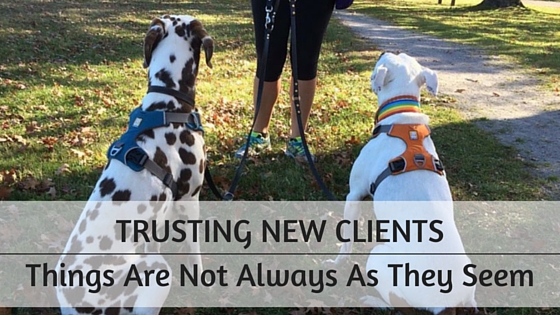
It is a story often told among dog trainers. It goes something like this:
A prospective client calls and says that another dog trainer – sometimes multiple dog trainers – could not help their dog or said their dog was beyond help. We take the case and find that the dog is indeed help-able. In fact, we do wonders with the dog in a short period of time, and we are perplexed and discouraged that the other trainer (or trainers) almost destroyed the client’s hope for their pet, when in fact the case really was not that difficult.
Recommended Reading: The Importance of Asking the Right Questions to New Dog Training Clients
When we take such cases and succeed in helping a dog, there is a part of us that feels superior – that other trainers in our area are not as capable as we are. Frankly, it feels kind of good, and we can’t wait to herald the news to our other colleagues so that they can be wary of the incompetent, unhelpful trainers who nearly destroyed some pup’s life.
All is well that ends well, right? The dog received the help it needed. The client is happy. We feel more confident than ever. But there often is another side to such stories.
Taking Client’s Comments With A Grain Of Salt
Perhaps the client was indeed telling the truth about the other trainer(s). But stories about multiple trainers failing cause me to be suspicious of the client – especially if my impression is that the dog’s problems are easily remedied.
We need to consider that clients may not always be truthful. They are human (like us), and sometimes they are not above behaving in a way that gets them what they want or makes them feel good (like their dogs).
A case in point: I recently was approached by a prospective client who told me that one of my most trusted colleagues and referral partners had recommended my board-and-train program. According to this client, my colleague thought it would be a better option for this particular dog than her own group class.
When I called my colleague to thank her, I learned the prospective client was lying. In fact, my colleague had this client on the roster for an upcoming, limited-size group class and had no idea the client was still shopping around for trainers.
When questioned about the situation, the prospective client began back-pedaling and telling me more lies to extricate herself from the first one. I decided not to accept this person as a client. If she was willing to blatantly lie to me (she could have just said they would rather do a board-and-train program), then what would she have been capable of unjustly saying about ME? It just didn’t seem worth the risk.
Digging For The Truth
As a rule, when a potential client tells me they have worked with one or more trainers, I require them to tell me who the trainers were, what steps were taken to solve a dog’s behavior issues, and how the dog responded to those steps. (And if I personally know one or more of the trainers mentioned, I might call them to better understand their experience with the client and dog.) If the prospective client is not willing to be forthcoming with such information – or if the information they provide throws up red flags about their own credibility or willingness to follow through with a trainer’s advice – I am better off without them.
Give Colleagues The Benefit Of The Doubt
Professionally speaking, I think it is a bad idea to give credence to unverified testimony against colleagues. Doing so risks us forming (or worse, spreading) false conclusions about them, and it potentially burdens us with deceitful or non-compliant clients. There are two sides to every story, and if we are to make a judgement about the credibility of a prospective client or the professionalism of a colleague, it is only right to get all the pertinent details and understand both sides of the story.
My mission as a professional dog trainer is helping dogs, but sometimes owners need help too. And sometimes helping an owner is showing them that some behaviors are rewarding, whereas others are not.
Have you ever had a similar experience?
Dog Training Business Tips
Receive valuable dog training business tips and resources right in your inbox! Subscribe to The Modern Dog Trainer now by submitting your name and email below. Don’t forget to let us know what you want to learn more about!
[mc4wp_form]
by Monica Callahan | Jan 19, 2016 | Training Methods
CleverPet: Challenge Your Dog Like Never Before
Have you heard of CleverPet yet? At the beginning of the year at the CES conference, a brand new dog puzzle toy was announced. Essentially, this is a new game console made specifically for your dogs.
How does CleverPet work?
CleverPet can hold and dispense any type of dry dog food. There are three buttons on the console’s body, and it begins by dispensing a treat for free to get the dog acclimated to the console. Then, the game gets a little harder once your dog catches on. This game console adapts to what your dog needs while playing and can even get your dog to press lighted sequences before dispensing a treat. CleverPet is being pitched as the best puzzle toy on the market for dogs as it constantly challenges our dogs in different ways. In fact, new games can continually be added to the CleverPet hub via your home’s WiFi signal.
Leo Trottier is one of the co-founders and holds a PhD in cognitive science from the University of California, San Diego. He claims that this toy is a great alternative to doggy day care or a great toy for families who are afraid their dogs are getting bored at home. He says that CleverPet is a great way to dole out food to your dog throughout the day and that you can keep tabs on your dog’s activities during the day while you are gone through their mobile app.
https://youtu.be/fMQ6WuTcsLE
Why Should Dog Trainers Care?
- Separation Anxiety: This is an obvious game changer, but imagine the entertainment it can provide for our client’s dogs who live with separation anxiety. The fact that it changes games will keep their dogs entertained longer than a Kong or other fillable toy would.
- Family Life: Are your clients bringing home a baby soon, or are they looking for ways to entertain their dogs while they deal with the life of children? This is a great way to engage their dog’s minds so parents don’t feel guilty not giving their dog as much attention as they are used to having.
- Confidence: Do your client’s dogs have low self esteem or confidence issues? Starting off easy and slowly getting harder will help build the confidence in dogs who need help.
CleverPet can currently be pre-ordered on their website for $299. To find out more information and watch this console in action, visit their website.
Dog Training Business Tips
Receive valuable dog training business tips and resources right in your inbox! Subscribe to The Modern Dog Trainer now by submitting your name and email below. Don’t forget to let us know what you want to learn more about!
[mc4wp_form]
![New Year’s Resolutions For Dog Trainers]()
by Erin Bessey | Jan 18, 2016 | Business, Training Methods
Welcome 2016! Traditionally people begin thinking of their New Year’s Resolutions shortly after the start of the new year, maybe a week or two before. While there are the common, personal New Year’s Resolutions – eat healthy, exercise more – what about your resolutions as a dog trainer? What have you resolved to do? How are you going to better yourself and your business this year? We are already half way through January and if you haven’t come up with any resolutions we’ve got you covered.

Image via Erin Bessey – Bessey’s Positive Paws
10 New Year’s Resolutions
Increase Clientele
Review your clientele numbers for the last year or two. Then figure out how much you would like to grow this year and set a goal to increase those numbers for 2016.
Network More
Maybe you are just starting out in your business, perhaps you are well established, whichever you are make a point to reach out to others. We can fall into patterns easily and get comfortable there. You won’t be able to grow if you don’t push those comfort levels. Reach out to other trainers, veterinarians, groomers, boarding and daycare facilities. Those are the traditional places to network. What about thinking outside the box? Look to speaking with schools or children’s daycare. While this may seem odd, these places have great, continuous interactions with families. Families who like to share stories about their kids and the family pet. Maybe the daycare is run in a home and has a dog that is present. Putting your name out there and talking to some office people is all it would take. Your name could spread like wildfire because who else would think to make themselves known at a non dog-related business?
Earn Certifications
This is the year to get certified or get more memberships! Sign up for the test (if required) to commit yourself to becoming certified and then start studying. There’s no better way to set yourself apart from others than to have obtained a few certifications. Certification of Professional Dog Trainers, Karen Pryor Academy, International Association of Behavior Consultants are just a few to look into.
Raise The Rates
If it has been a number of years and you are still maintaining the initial starting rate it might be time to increase. The business is growing and it is important to stay competitive with the surrounding areas while being paid your worth.
Train Your Own Dog
As a trainer we get very fixated on our work. Why wouldn’t we? We love what we do, but because we are busy helping others train their dogs our personal pets often fall to the way side. Make one of your new year’s resolutions to teach your dog a new trick or activity.
Teach A New Class
If you haven’t given your classes a face lift in a while make it happen this year. Have you just updated the current class curriculum? Why not look into offering a new class.
Learn A New Skill
The dog training world is exploding with all kinds of training. If you are used to teaching basic behavior classes take the time, reach outside of your comfort zone and learn something new. If you have never done agility, find a class and try it out with your own dog or better yet, build your own equipment. Interested in doing a trick class? Teach your dog the trick first before offering it to others. You would accomplish two resolutions on your list doing it this way! Try any one of the following: Treiball, heel work, Rally-o, agility, dog sports, trick training, nose work, and the list goes on!
Read More Books
In order to learn a new skill it may require you to read a new book to accomplish that. Challenge yourself and read a book that you don’t necessarily agree with as far as training techniques. Exercise your mind and form opinions and arguments and be sure to be able to back up your position. How many dog training books did you read last year? Can you do better?
Set A Schedule
It can be tough setting a schedule and sticking to it. Dog trainers want to help owners and their dogs as much as they can and go to great lengths to do this. Making time when we wouldn’t otherwise be scheduling due to fear of losing a potential client isn’t always best. Being too flexible could indicate to clients business is slow. Avoid answering e-mails and phone calls at all hours. Instead have a shut off time where you are done work for the day. Set a schedule if you don’t have one and stick to it.
Make Time To Play
Make time for yourself! To avoid burn out you need to be sure to leave time for yourself to play. This is where setting a schedule as one of the new year’s resolutions will be helpful. Play might be considered learning a new skill or working with your own dog but be sure to leave time to do something for you. It’s okay to do that!
What new year’s resolutions have you made? Comment below and let us know.
Sign up below to stay up to date with modern dog training business practices and dog training methods!
Dog Training Business Tips
Receive valuable dog training business tips and resources right in your inbox! Subscribe to The Modern Dog Trainer now by submitting your name and email below. Don’t forget to let us know what you want to learn more about!
[mc4wp_form]
![Four Reasons Why Continuing Education Is Important]()
by Laurie Schlossnagle | Jan 12, 2016 | Business, Training Methods
What Is Continuing Education?
In a quick, unscientific poll of a small number of colleagues and clients, the overwhelming results were that clients appreciate knowing their trainers are participating in hands-on continuing education. To be among the best of the best in the dog training field, it is important to also be a student. Some certifications for dog trainers require continuing education to maintain certification; some dog trainers choose to participate in continuing education.

Continuing education can take on many forms. It can be a book that is read, a dvd that is watched, a seminar that is observed, a local workshop that is hands-on, a national conference that is all of the above with the added bonus of networking with colleagues. While a list of books read and dvds watched can be impressive, spending time and funds on a seminar, workshop, and/or conference shows clients a different level of commitment to continuing education – a level of investment both of time and funds to seek out knowledge and information.
Recommended Reading: Top 10 Dog Training Conferences for 2017
Why Is Continuing Education Important For Dog Trainers?
Accountability – seeking out and participating in continuing education puts a trainer into the position of being a student and demonstrating results.
Commitment – commitment to our profession, commitment to our clients, commitment to our dogs. Attending workshops, seminars, classes, etc. sparks a renewed commitment to spend time doing what we love.
Maintenance of/increasing knowledge and skill – use it or lose it! Teaching helps us to maintain our knowledge and skill but continuing education helps us to increase that knowledge and skill. Learning about new thought processes and methods expands our range of who we can help and how we can help them.
Staying on the cutting edge – there is constantly new science about dogs, about learning, about humans, about the dog/human interaction, etc. Participating in continuing education keeps trainers up to date on the latest and greatest science and how it can be useful in dog training.
Related: Check out our “Mastermind Meetups for Modern Dog Trainers” and request one in your area!
Sign up below to stay up to date with modern dog training business practices and dog training methods!
Dog Training Business Tips
Receive valuable dog training business tips and resources right in your inbox! Subscribe to The Modern Dog Trainer now by submitting your name and email below. Don’t forget to let us know what you want to learn more about!
[mc4wp_form]
![Overcoming the Most Challenging Situations of Teaching a Reactive Dog Class]()
by Ines | Jan 5, 2016 | Training Methods
I don’t believe that there is such a thing as a perfect reactive dog class. Humans will be humans, dogs will be dogs, and real life training means unexpected situations will arise. However, there are some expected situations we can prepare for to ensure success and progress with our reactive dog clients.
Management Solutions for Teaching a Reactive Dog Class in Imperfect Locations
Not all of us have an ideal environment to host group classes for reactive dogs. The dream is to have a large covered outdoor area that is fenced in to keep loose dogs and curious owners at a distance. This is not the reality for most group classes. However, the demand for classes or semi-private lessons for reactive dogs is high so sometimes you it makes the most sense to provide your clients with an affordable group class.
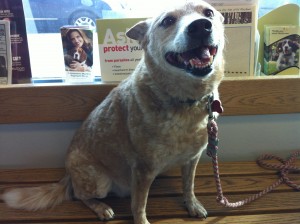
I have taught classes outside in fields and in small, echoey rooms, but neither is really ideal for reactive dogs due to the chance of off leash dogs coming up in one case and being in close proximity to other dogs in class in the other. Fortunately, all of the dogs in both of these situations can make progress thanks to creative management solutions you can put in place.
As a trainer, your first step is to break down the triggers a dog typically reacts to (in this case other dogs) enough so that when the reactive dog is exposed to it, they don’t have a reaction. In reality, all group classes will set the dogs up to get excited and aroused at first.
Most reactive dogs will get anxious and aroused at the mere thought, smell, or sound of another dog. This means that they don’t actually have to see each other to start the counter conditioning process. Visual barriers are a necessity for every group class with reactive dogs. The dogs will be able to smell and hear, but not see each other. This will reduce their arousal, increase their focus, and allow you to begin the counter conditioning process.
Barriers can be made out of all kinds of materials. You can use PVC pipes to make a frame and then hang fabric from the frame. I have used and recommend getting large panels of insulation and duct taping them together so they can make an L shape and stand alone. The insulation is strong enough to stand by itself and helps reduce noise, but should be stored in a location where dogs cannot get to it and eat it. If you have a larger budget, you can consider making panels out of solid corrugated plastic.
Entering and Leaving Reactive Dog Class
This can sometimes be the most challenging part of reactive dog classes. Everyone has to come through the same doorway to enter and exit the room. There are two approaches you can use to avoid this potentially dangerous situation.
The first is to ask clients to keep their dogs in their cars until you come out and ask them to come in. Most dogs feel safe in their cars. For added precautions, remind your clients to keep their dogs in a covered crate in their cars so the dog does not look out the window and bark at other dogs going by before class. Reactive incidences before class could stunt a dog’s progress during class.
Another idea I got from fellow professional dog trainer, Sarah Fulcher, CDBC, KPA-CTP, is to stagger your group class arrival and departure times for each dog so that no one enters or exits at the same time. Sarah says, “I found that when I had the dogs enter and exit the class room [at set intervals] really helped to keep the classes calm. It also became a valuable exercise for each dog in class – the first dogs in the room had the challenge of staying settled when they could hear or see another dog entering (depending on their progress level, they may or may not have had a visual barrier set up). The dogs that left first had the challenge of possibly walking past another dog, and those staying had to work on being calm while they could hear or see another dog enter or exit. I was always careful to set the dogs up for success, knowing what their triggers and thresholds were, and setting up the entry and exit portions of class so that each dog would be challenged just enough.”
Set Strict Rules for Your Clients
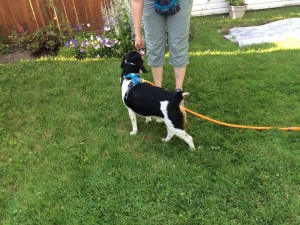
During group classes, don’t be afraid to give your clients strict instructions to ensure their dogs are not set up to fail outside of class. Instead, give them a list of alternative methods to wear their dogs out without having to expose their dogs to triggers. I always recommend that clients avoid dog parks, busy neighborhoods, remind them to block off windows, and other situations that could trigger their dogs to react. Your clients will be overwhelmed with information so break instructions down and make them as specific as possible to set them up for success.
What Your Reactive Dog Clients Do Outside of Class Matters More Than What They Do During It
Sometimes you might be so focused on setting the dog up to be successful that you might forget to set the owner up to be successful, too. As clients become more aware of their dog’s needs, they may take to doing some research for themselves. They may seek out guides, resources, and videos online to learn from. If you have a client like this, consider yourself lucky. They’re demonstrating their commitment to working with their dog, but it can also leave you in a sticky situation.
We all know the internet holds a wealth of knowledge when it comes to dogs. Unfortunately, a lot of the information that is readily available is incorrect, outdated, or untrue to the real science behind dog training. The success of a reactive dog team relies on making sure they stick to your proven plan that revolves around desensitization, counter conditioning, classical conditioning, and some foundation obedience cues. The last thing you want is for the owner to start trying new things they saw online. So what do you do?
You can recommend books, blogs, or Youtube video channels that follow your training approach, but some times that can confuse your client’s even more with terminology or exercises that aren’t part of your program. Ideally, you’d have one place online to send them to so that they could review the exercises you teach in class with more explanations, videos, and graphics to further demonstrate your class’s material.
What is the most challenging thing you find about teaching reactive dog training classes? Comment below!
Sign up below to stay up to date with modern dog training business practices and dog training methods!
Dog Training Business Tips
Receive valuable dog training business tips and resources right in your inbox! Subscribe to The Modern Dog Trainer now by submitting your name and email below. Don’t forget to let us know what you want to learn more about!
[mc4wp_form]
by Kat Camplin | Jan 4, 2016 | Events, Training Methods
The Ultimate Animal Training Conference Wish List for 2016
Education, networking, adventure, and fun! Here are the best training and education conferences for you to attend in 2016. It was particularly difficult to whittle down the list this year. If your conference didn’t make the cut please post registration information in the comments! Conferences are listed in chronological order due to the author’s inability to decide which should be first.
ClickerExpo
ClickerExpo will be held in 3 locations throughout 2016. This year ClickerExpos have slightly different labs and workshops depending on the location.
Reno, Nevada
When: Friday, January 22-24, 2016
Where: Reno, Nevada
Why: New for 2016 are Educational Themes. Themes include: Trainer Skill Development, Teaching People, Aggression and General Behavior Management. Feel free to follow a single theme or skip around. There’s something for everyone! CCPDT, IAABC, and KPA Continuing Education Units are available for professionals attending this event.
More Information: http://www.clickertraining.com/clickerexpo/registration-NV-2016
Cincinnati, Ohio
When: Friday, March 18-20, 2016
Where: Cincinnati, Ohio
Why: New for 2016 is a complete Equine Theme which includes Husbandry, Saddling, Trailer Loading, and much more! This is in addition to the Themes listed for Reno above. CCPDT, IAABC, and KPA Continuing Education Units are available for professionals attending this event.
More Information: http://www.clickertraining.com/clickerexpo/registration-OH-2016
ClickerExpo Europe
When: Friday, October 28-30, 2016
Where: Billund, Denmark
Why: The ClickerExpo 2016 schedule for Denmark has not been released yet. It will be released by 15 February 2016. The highlight so far? The conference is going to be held in the LegoLand Hotel!
More Information: http://www.clickertraining.com/clickerexpo/denmark/register
ORCA 8th Annual Art and Science of Animal Training
When: Saturday, February 20-21, 2016
Where: Dallas, Texas
Why: ORCA is now a two day event! This conference has become a staple for all animal trainers. Bringing together trainers and behavior analysts, the conference covers a broad spectrum of knowledge of animal behavior and how to get it. This year has two themes. Saturday will cover shaping behavior in both animal and human learners, and Sunday will cover concepts and tools for improving animal welfare and human-animal interactions. This year’s keynote speaker, Dr. Iver Iversen, will discuss: “Selection and creation processes involved in shaping of novel behavior: Method and Theory.”
More Information: http://www.artandscienceofanimaltraining.org/conference/
Penn Vet Working Dog Conference
When: Friday, April 8-11, 2016
Where: Philadelphia, Pennsylvania
Why: You may have seen this conference’s DVD’s on TawzerDog. Did you know you could attend the Penn Vet Working Dog Conference? This year’s theme is “Whole Dog 360: A multidisciplinary approach.” Individual topics will be addressed with a series of four (4) – ½ day sessions: Advancements in working dog health and medicine; Training the working dog using current scientifically-based methods; Implications of handler training on the successful working dog team; Driving progress in the working dog field through research & innovation. This year’s keynote speaker will be Ken Ramirez.
More Information: http://pennvetwdc.org/education/conference/
IAABC Animal Behavior Conference
When: Saturday, April 9-10, 2016
Where: Anaheim, California
Why: The International Association of Animal Behavior Consultants has creatively merged their Feline and Canine Conferences into one event. Choose to follow the Feline or Canine track, or pick and choose which presentations you’d like to join. The dual-track conference features speakers discussing the latest science, treatments, and protocols for managing and modifying behavior in dogs and cats.
More Information: https://iaabc.org/conference/2016
Animal Management Behavior Alliance (ABMA) Annual Conference
When: Monday, April 17-22, 2016
Where: Tampa, Florida
Why: The Animal Behavior Management Alliance (ABMA) specializes in animal care and training through enrichment. This year’s theme is “Breaking Down Barriers: New Possibilities in Animal Welfare.” Conference locations include multiple zoos and a post conference trip to Natural Encounters. This year’s keynote speaker will be Dr. Susie Ellis of the International Rhino Foundation. Details will be posted as they are finalized.
More Information: https://theabma.org/abma-annual-conference/
DogEvent 2016
When: Thursday, May 5-8, 2016
Where: Nice, France
Why: You’ve always wanted to see Nice and now you have an excuse! 4 days of dog training, behavior workshops, and demos. Each day has a theme: Shelter Dogs, Behavior Analysis, Training, Canine Nutrition, and Advanced Behavior Techniques. Speakers include Dr. Clive Wynne, Ken McCort, Jean Lessard, Nancy Tucker, and Dr. Jean Dodds. This conference has a limit of 100 attendees.
More Information: http://www.dogconseil.com/dogevent2016/en/
Fenzi Dog Sports Academy Training Camp
When: Friday, June 19-22, 2016
Where: Purina Farms – Gray Summit, MO
Why: It’s bigger. It’s better. It’s at Purina Farms! The Ultimate Dog Sports Training Camp covers Obedience, Rally, Agility, Nosework, Freestyle, and Rally FrEe! Join the dynamic dog sports goddesses Denise Fenzi, Deb Jones, Hannah Branigan, Julie Flanery, Loretta Mueller, Nancy Gagliardi Little, Shade Whitesel, Sue Ailsby, Amy Cook, Julie Symons, and Stacy Barnett for 4 days of fun. Work on heeling, scenting, retrieves, utilizing play to build motivation, and so much more.
More Information: http://www.fenzidogsportsacademy.com/index.php/waiver-of-liability/8-fdsa/6934-fdsa-camp-2016
Canine Science Forum
When: Tuesday, June 28-July 1, 2016
Where: Padova, Italy
Why: The CSF is a biannual event. This year’s topics include: Evolution of canines; Ecology and conservation of canines; Dogs and humans; Applied aspects of canine biology; Behavioural biology of canines; Cognition; Canine genetics and endo/phenotyping. The Forum also includes a Round Table on service dogs that will introduce some of the main issues related to service dogs and defining the needs and critical points of this area.
More Information: http://www.csf2016.com/index.php
APDT Annual Conference and Trade Show
When: Wednesday, October 12-15, 2016
Where: Las Vegas, Nevada
Why: You’re a professional dog trainer, this is your Association. The Association of Professional Dog Trainers Annual Conference is full of prestigious speakers and engaging seminars. The speakers and schedule for 2016 is still pending. This entry will be updated as information becomes available.
More Information: https://apdt.com/conference/
Pet Professional Guild Educational Summit
When: Tuesday, November 8-11, 2016
Where: Tampa, FL
Why: The speakers and schedule for 2016 is still pending. This entry will be updated as information becomes available.
More Information: http://www.petprofessionalguild.com/2016-Summit
Looking Forward to 2017 – WOOF! is Back!
When: Friday, February 10-12, 2017
Where: University of Nottingham, United Kingdom.
Why: It’s back! It’s’ back! The very successful WOOF! European Behaviour & Training Conference has been on hiatus since 2013, but it’s back for 2017. Why look that far ahead? This baby is going to fill up fast! Speakers include Sean Pogson, Susan M. Schneider, Susan Friedman, Steve Martin and Chirag Patel. The full topics and speaker schedule is still pending. This entry will be updated as information becomes available.
More Information: http://www.domesticatedmanners.com/woof2017
Training Camps and Workshops
In addition to the conferences, these training camps should be on every trainer’s Must Do list.
Terry Ryan Coaching People to Train Their Dogs
When: February 11-15th, 2015
Where: Waialua, Oahu
Why: Coaching People to Train Their Dogs is for anyone with an above average interest in dog training, animal training, and/or student instruction. This course is also for anyone who has read the book by the same name and wants to put it into practice.
More Information: http://www.countrycaninehawaii.com/events_TerryRyanCoaching_201602.html
Bailey-Farhoody CHICKEN CAMPS
When: Summer 2016
Where: Columbia, MD
Why: Dogs are incredibly forgiving. If you want to test your training skills, train a chicken! Dr. Bob Bailey and Ms. Parvene Farhoody, MA, teach these Workshops using chickens as a behavior model in order to teach operant conditioning (OC) and applied behavior analysis (ABA) principles. The 2016 schedule is still pending.
More Information: http://www.behaviormatters.com/Workshops-operant-conditioning-animal-training.htm
Terry Ryan CHICKEN CAMPS
When: 2016
Where: Pending
Why: Training a chicken is a stretch and a boost to your mechanical skills. The average chicken is faster than the average dog, giving you a chance to improve your coordination and timing. The 2016 schedule is pending.
More Information: http://www.legacycanine.com/#!chicken-workshops/cfvg
PROFESSIONAL SEMINARS FOR ZOOLOGICAL TRAINERS
When: Monday, March 28 – April 1, 2016 and Monday, August 22-26, 2016
Where: Shedd Aquarium in Chicago, IL
Why: This is a full graduate course adapted to a one-week format for zoo training professionals. Although originally designed for zoo trainers, many dog trainers take the course each year. This course fills up early.
More Information: http://www.sheddaquarium.org/Learning-Experiences/Continuing-Education/Professional-Animal-Training-Seminar/
See the top four reasons that continuing education is so important here!
Sign up below to stay up to date with modern dog training business practices and dog training methods!
Dog Training Business Tips
Receive valuable dog training business tips and resources right in your inbox! Subscribe to The Modern Dog Trainer now by submitting your name and email below. Don’t forget to let us know what you want to learn more about!
[mc4wp_form]