![The Modern Dog Trainer Podcast – Ep. 6 Interview with the International Dog Parkour Association]()
by Ines | Jun 14, 2016 | Podcast, Training Methods
 In this podcast we talk to Abigail Curtis DVM, one of the founders of the International Dog Parkour Association. We go over how it all began, what you should know before you get started with dog parkour, and how you can leverage this sport with your clients as a professional dog trainer.
Subscribe to The Modern Dog Trainer Podcast on SoundCloud or iTunes. Follow The Modern Dog Trainer Blog on Twitter at @ModernTrainer, on Facebook at The Modern Dog Trainer Blog Page, and on Instagram at @TheModernDogTrainerBlog. We love hearing from our listeners! Please leave us a review on iTunes to help support our podcast!
The International Dog Parkour Association is a 501c3 non-profit organization founded in 2014 by Karin and Abigail.
To learn more about what dog parkour is and how to get started check out their “What is Dog Parkour” page.
![The Modern Dog Trainer Podcast – Ep. 5 Building Online Dog Training Courses with Helix Fairweather]()
by Ines | Apr 30, 2016 | Podcast, Training Methods
In this podcast we invited Helix Fairweather, KPA instructor and creator of CyberDog, to talk about building online dog training courses.
Subscribe to The Modern Dog Trainer Podcast on SoundCloud or iTunes. Follow The Modern Dog Trainer Blog on Twitter at @ModernTrainer, on Facebook at The Modern Dog Trainer Blog Page, and on Instagram at @TheModernDogTrainerBlog. We love hearing from our listeners! Please leave us a review on iTunes to help support our podcast!
Building Online Dog Training Courses with Helix Fairweather
 Helix Fairweather teaches dog training classes remotely with the help of email and webinar software. Listen to this podcast to learn more about how she teaches classes online successfully.
As mentioned in the podcast, be sure to check out her online Start Smart course for owners and dog trainers.
Reach out to her at HelixFairweather at gmail. com if you’d like speak with her directly.
![5 Training Games for Puppy Classes]()
by Erin Bessey | Mar 28, 2016 | Business, Training Methods
Everyone loves good puppy classes. Cute, fluffy, little bundles of fur with their stinky breath and corn chip smelling feet. Most students come to class already having begun the basic behaviors. While those are important and key to any dog training class here are a few training games to incorporate into class to strengthen those basic behaviors while having fun.

Image via Bessey’s Positive Paws
5 Fun Games to Play During Puppy Classes
Crazy to Calm
When the bait bag and clicker come out those puppies line right up in front of their owners and pay close attention to what is being asked. They stay calm and attentive and excel at learning behaviors. What’s happening though, is that the pups aren’t learning how to still do those behaviors when they are amped up. Crazy to calm does just that. Play with the puppy for a set amount of time, jazzing them up to a level where they are rowdy but not completely out of control. After the time is up, stop playing and wait for the pup to calm down and ideally offer a sit. It is okay when your puppy is new to this game to cue them to sit the first few times but ultimately we want them to be able to offer it on their own. If we cue too much our dogs begin to rely on us to tell them what to do in any given situation, whereas when we allow them to offer the behavior it becomes more reliable.
Once your puppy is calm and sitting you will continue to reward your pup for staying put. Then you will release him with “Free.” Always remember to release your puppy when done. Crazy to calm will help teach impulse control, stay, and how to quickly calm themselves in excitable situations.
Puppy Ping Pong
Majority of owners will prioritize the behaviors they want their puppy to learn with coming when called being first, if not second to walking on leash. Puppy ping pong is a great game to play to build a knee jerk reaction to hearing their name and running towards their owner. The game can include 2 or more people. Each person will have a handful of delicious meaty high value treats. One at a time someone will call the puppy, be very exciting and happy to encourage the puppy to run fast towards them. Once the puppy reaches the person calling they will touch the dog’s collar and then reward with the meaty treat. Encourage clients to give 1 to 3 treats, one at a time to avoid having a puppy dine and dash (knowing they will only receive one treat, grab it and run off to the next person). Stress the importance of being able to touch the dog’s collar because it can save the dogs life. A recall is no good if you can’t actually get a hold of the dog if you are alongside a busy road.
Have another person call the puppy and reward the same way. The puppy will run back and forth between the people playing learning that coming when called results in fun and that he gets delicious stinky treats.
Catch Me If You Can
Another game to strengthen the recall and to help with leash walking. When a puppy has something he shouldn’t or doesn’t come when we call, we move towards him to get him. With a puppy this often prompts a fun game of chase. How extremely annoying for the owner. Catch Me If You Can turns the table on the puppy and teaches him it is more fun to catch up to us than to be pursued. In a safe space or with your puppy on leash move away from him encouraging him to follow you. When he moves in your direction you stop, let him catch you, mark it and reward with high value treats. While the puppy is eating the treat move away again in another direction, encourage him to move after you. Mark and treat. The point of stopping before the puppy actually catches up is to prevent having a puppy bite at pant legs or jump at the person running.
Pass the Puppy
Who doesn’t love to cuddle a puppy. Have the trainer take one puppy away from their owner. Have the person who is without a puppy move and take the puppy to their right and so on until everyone has someone else’s puppy. Pass the puppy is great for socializing the puppy and have them get used to other people handling them in a positive environment. People handling can ask for a simple behavior, give treats and just play.
Hide and Seek
If you have equipment in the training room or places where the owner can go out of sight, hide and seek is a good game to play to help with recalls. This game teaches dogs that they need to listen to their handlers as much as look for them. It encourages owners to stay upbeat and pushes their dogs to find them because recalls aren’t always as easy as saying “Come” and then quietly standing by for the dog to find them.
I like to remind clients that everything we teach our puppy is a trick but to us we take some more serious than others. Playing these games will help take those serious behaviors and keep them fun for us and our pups and make them strong, reliable behaviors.
Do you have other games you play in puppy classes?
Dog Training Business Tips
Receive valuable dog training business tips and resources right in your inbox! Subscribe to The Modern Dog Trainer now by submitting your name and email below. Don’t forget to let us know what you want to learn more about!
[mc4wp_form]
![The Modern Dog Trainer Podcast – Ep. 4 The IAABC Shelter Program with Molly Sumridge]()
by Ines | Mar 12, 2016 | Podcast, Training Methods
In this podcast we invited Molly Sumridge, board member of the IAABC, to talk about their new shelter animal behavior program for shelter volunteers, staff, and trainers.
Subscribe to The Modern Dog Trainer Podcast on SoundCloud or iTunes. Follow The Modern Dog Trainer Blog on Twitter at @ModernTrainer, on Facebook at The Modern Dog Trainer Blog Page, and on Instagram at @TheModernDogTrainerBlog. We love hearing from our listeners! Please leave us a review on iTunes to help support our podcast!
Episode 4 – The IAABC Shelter Animal Behavior Program
 Molly Sumridge runs Kindred Companions in Frenchtown, NJ. We discussed all of the information available to members. Animal shelter volunteers can receive a discount. The IAABC library contains a tremendous amount of reading and handout materials in addition to access to world-renown animal behavior experts. We also discuss how Molly juggles the challenges and benefits of having a business that involves dog training, pet sitting, and a physical pet store.
About the Hosts
Links mentioned in the show:
Dog Training Business Tips
Receive valuable dog training business tips and resources right in your inbox! Subscribe to The Modern Dog Trainer now by submitting your name and email below. Don’t forget to let us know what you want to learn more about!
[mc4wp_form]
![When The Only Symptom Is A Behavior Change]()
by Kat Camplin | Mar 11, 2016 | Training Methods
One of the first questions we ask behavior clients is if they’ve done a veterinary checkup. What meets this criteria is generally a physical examination, a CBC blood panel, and maybe a urine check if we’re dealing with “abnormal” urination. Is that enough? This is a story of my journey with my own dog’s sudden increase in aggression.
Aggression “Out of Nowhere”

Paisley and Shira sharing space on the sofa.
This photo was taken a week before the aggression started. I put this here to show just how drastic the change in behavior was. Paisley is on the bottom. She’s a 7 year old white Border Collie mix. Shira is on the top. She’s a 12 1/2 year old Australian Shepherd. They’d lived together for 6 years, and while there have been scuffles over found food and competition while chasing cats, they lived mostly like this.
A week after this photo was taken Paisley violently attacked Shira while I was rearranging some furniture. I had put my training bag on the floor, and although there shouldn’t have been food in it, it was possible there was still a food smell. I put this first attack under the “found food,” resource guarding that I was familiar with. I chastised myself to be more careful and moved on with rearranging.
The second attack happened four days later with the addition of a new rug. Again, I thought this new rug had precipitated a new form of resource guarding and put the rug away until I had time to deal with the new addition.
Then the third attack happened. All the dogs were sleeping. Paisley woke up, began air scenting, began growling, looked for Shira, who was still asleep, then flew across the room and attacked her. Paisley has done a few more of these, waking from sleep, air scenting, growling, then searching for Shira. This video shows how it starts. Paisley respects the gates, but if they weren’t there she would have gone directly toward Shira who is sleeping behind the camera.
The Vet Check
After the third attack I purchased a few gates and took Paisley to the vet for a check up. She had an ear infection, so they cleaned her up, put a bunch of long lasting goop in the ear, and sent us home. The following day Paisley had numerous aggressive incidents. The gates were up, but she hit one of them pretty hard. I attributed this to the ear pain and began looking at adverse reactions to the ear medication. Nothing quite fit, so I decided to wait it out and see if her behavior got better as the ear got better.
Three days later there another violent outburst toward the gate. I decided we needed more information, so I made another vet appointment to do some blood tests. These tests came out almost perfect. She had an increase in pancreatic enzymes, but without any other symptoms the vets determined she did not have pancreatitis. She had dilute urine, which was unexplained. Coincidentally, there was another huge aggression event the day after the second vet visit. Stress was playing a role in the aggression.
Since she was attacking Shira, I decided to have Shira tested as well. She had the exact same results as Paisley, an increase in pancreatic enzymes and dilute urine. Again, with no other symptoms there was officially nothing wrong with her.
Getting Outside Help
I felt the need to get to work on a solution to stop the aggressive behavior. I called the amazing Sarah Owings to come help me work with some desensitization and counter conditioning with the gates as well as Paisley sharing space with Shira. The problem was there were times when Paisley was almost back to “normal.” Without a definitive trigger, we’d just be working toward a general co-existence between the dogs and they had had that before. Sarah recommended better gates so I could relax a bit more and a pre-consult with a Veterinary Behaviorist to see if that was a route I should take, meaning adding behavior medication to the mix.
In preparation for the behaviorist consult I asked for copies of the lab reports. While the veterinarian had told me the pancreatic enzymes were elevated, on the lab report they were incredibly elevated. I had Paisley tested again, but this time the results were normal. In 24 days the pancreatic enzymes had changed dramatically and I have no idea why.
Paisley did have a few minor symptoms. There were a few days when she initially refused her breakfast, although she eventually ate it. Within a two week period she had vomited twice. However, in all other respects she was perfectly healthy. She was eating, drinking, playing, and eliminating normally. The only change was her increased aggression episodes.
Taking A Break
I decided I really needed more information and didn’t quite know how to get it. My gut kept telling me this was a medical issue, but everyone kept telling me it was a behavioral problem. Telling my story got quite a few recommendations, everything from prong collars and alpha rolls to DS/CC to Prozac. One of the vets told me to rehome Paisley. The Veterinary Behaviorist didn’t see any aggression in the videos at all. It was a very frustrating time.
I began cataloging the conditions under which the aggressive episodes happened, not the aggressive behavior itself. I also began noticing other behavioral changes Paisley was displaying that were more subtle. For instance, the reason the video above was recorded was because Paisley had never taken a nap in that location before. Since that behavior was new, I decided to put up the camera in case there was an additional new behavior. Other new behaviors included an increase in growling as an attention seeking behavior, increased sound sensitivity, and resting in a number of unusual locations.
We had periods of time when everything seemed back to the time of pre-aggression, then something would happen. Some magic combination that I couldn’t quite pinpoint would create an aggressive episode. It seemed to have something to do with prey drive. The most consistent trigger was a cat passing the front porch when the door was open. I’m guessing frustration that she couldn’t get to the cat would cause Paisley to redirect toward Shira, but redirection is a new behavior for Paisley. There was something new in the mix, after all, we had 6 years of happy co-existence with the crazy cat lady living next door. There may be a pain component to the aggression. We do not know what happens biologically when a dog goes into prey drive. Does the stomach clench? Is there an increase in salivation or digestive acid in anticipation of food? There seemed to be something in there more than just redirected aggression, at least I thought so.
A New Vet. A New Dawn.
A month after the second blood check I decided to find a new vet who could help with more than just “she appears healthy.” I found Dr. Lisa Hsuan D.V.M through Sarah Owings and discovered what it’s like to work with a veterinarian who likes to play detective. We rechecked Paisley’s blood and checked her bile. Her blood was again “pristine,” however, her bile values were very high. We did an abdominal ultrasound, which showed abnormalities in the gall bladder, pancreas, stomach, and small intestines. Paisley was positive for pancreatitis, gastroenteritis, and liver malfunction. Is this what a sick dog looks like? This is 10 days before the last round of blood work and the ultrasound. The radiologist suggested we might test for Addison’s Disease in the next round of testing after we do the first round of medication and dietary changes. I’ll keep you updated on her progress.
We Should Never Punish Aggression.
I would hate to think where I would be if I had chosen to silence Paisley’s aggression through punishment. A lot of canine communication is so often considered “undesirable behavior,” and so it’s punished. I get it. When the dog’s behavior is causing fear in the human we want to quell it. In my case, my 13 year old dog was being attacked. It’s completely normal to try and quell that. However, we cannot condone silencing a dog who is trying to communicate. We see the outward behavior and we want to help clients, so we get working on a solution without really knowing what we’re dealing with. We can only change the behavior we see.
My own journey has made me reevaluate what really constitutes medical testing to rule out illnesses. At what point do we keep going with tests versus assuming the dog is healthy and work on behavior modification alone? With so little study behind medical causes of behavior change, sometimes we just have to go with our gut and hope we find something. We need to have this discussion. We need to share cases in which behavior change in the only symptom. We need to start listening to our dogs instead of trying to “fix,” them while we wait for more information.
The Tests.
For those of you interested in the medical tests, they are included in the links below.
Paisley Blood / Urine – Early Dec.
Paisley Pancreatitis – Late Dec.
Paisley Blood / Bile / Urine / Thyroid – Feb
Paisley Ultrasound – Feb
Paisley Pancreatitis – Feb
Shira’s Blood / Urine – Dec
Dog Training Business Tips
Receive valuable dog training business tips and resources right in your inbox! Subscribe to The Modern Dog Trainer now by submitting your name and email below. Don’t forget to let us know what you want to learn more about!
[mc4wp_form]
![Guest Post: What Breed is That Doggy in the Shelter Window?]()
by Guest Poster | Mar 5, 2016 | Events, Research, Training Methods
This post is written and provided by Lisa Gunter, MA. Lisa is a PhD student at Arizona State University in the Department of Psychology and conducts her research under the mentorship of Clive Wynne in the Canine Science Collaboratory. She has presented her research at numerous conferences including the Association of Professional Dog Trainers, the Interdisciplinary Forum for Applied Animal Behavior, the Veterinary Behavior Symposium and the International Society of Anthrozoology.
What Breed is That Doggy in the Shelter Window?
Chihuahua. Chow Chow. Pointer. Irish Wolfhound. When thinking about unique breeds and the range of physical differences that exist with man’s best friend, it’s hard to believe that a tiny toy lap dog and another that’s as tall as a human are of the same species [1].
For centuries, we’ve bred dogs for the purpose of aiding us in our work, such as in hunting (Labradors), herding (German Shepherd), and livestock protection (Great Pyrenees) [2]. Our influence on how dogs look and act brings along with it expectations about different dog breeds. When I say “Golden Retriever,” you likely think of a fluffy blonde dog that enjoys playing with children. When I mention a Border Collie, you probably imagine a wickedly smart black & white dog that plays fetch for hours.
In the United States, there are a little over 80 million dogs living with us with 20% of those dogs adopted from shelters [3]. As many of you have experienced firsthand, the way animal shelters operate today has changed from what homeless animals experienced just fifteen years ago. Before 2000, dogs usually stayed on average for about 10 days at the shelter. Then, over half were euthanized, and the others were either adopted or redeemed [4]. Today, the situation is better. While almost 4 million dogs are entering animal shelters each year, only 30% are euthanized [5]. While we’re pleased with these improvements, one of our main foci of research in the Canine Science Collaboratory at Arizona State University is to further increase adoptions and reduce euthanasia rates for pet dogs.
Given the importance placed on appearance in our culture, it should come as no surprise that looks matter in canine adoption, too! Researchers from the American Society for the Prevention of Cruelty to Animals (ASPCA) [6] found that appearance was the single most important reason people gave for why they adopted the dog they did. In our own lab we found that when potential adopters were presented with photographs of dogs that had been either adopted or euthanized they were able to distinguish which dogs had met which fate solely because the adopted dogs were more attractive than those that had ended up euthanized [7].
The Pit Bull Label
If you work in animal sheltering, you’ve likely heard of the term “pit bull.” While there is a specific breed of dog known as the American Pit Bull Terrier, more conventionally this label has been applied to many breeds that are short-haired, muscular and blocky-headed such as American and English bulldogs, Staffordshire bull terriers and American Staffordshire terriers as well as mixes of these types of dogs [8].
Recent studies into dog adoption [11, 7, 12-13] have found breed to be associated with different outcomes, including but not limited to increased euthanasia and length of stay. With the big role that physical appearance plays in dog selection, our lab was interested in understanding how breed labels could influence how attractive a dog seemed to be.
So what is the basis for the negative perceptions about pit bulls? The pit bull terrier does have a past that includes bullbaiting and dogfighting (which still occurs illegally in some areas of the US), and reports of aggression towards humans, specifically dog bite injuries and even deaths, have likely contributed to the unfavorable public opinion of these dogs as well [14-18]. Yet while an association may exist between certain types of dogs and aggression towards people, the reliability of breed characterizations in positively identifying dogs involved in these types of incidents is hotly debated [8, 19].
Labels vs. DNA Analysis

Photo by Erin Bessey
Which leads us to wonder what breeds of dogs are there shelters? It’s a more complicated question than it may appear, because breed assignment is usually based on the way the dog looks. Yet, researchers from Western University of Health Sciences [20-21] have found discrepancies between breed identification and the results of DNA analysis, and researchers in Florida found at one shelter that 50% of dogs that were labeled as belonging to a pit-bull-type breed lacked the DNA breed signature [22].
In our own lab, we’re wrapping up a multi-shelter study using the MARS Wisdom Panel. While it’s too early to talk about our specific findings, what we can say is that these shelter dogs show a range of breed diversity (over 150 breeds were identified at each shelter!), there are much fewer purebreds than we anticipated, most dogs have more than two breeds in their breed heritage and correctly identifying the breeds of a mixed breed dog via visual identification alone is an extremely difficult task.
Canine Science Symposium
Research questions like the ones I’ve mentioned here are just some of the questions we attempt to answer in the Canine Science Collboratory. If you enjoy learning about the latest research in canine science, you may want to consider attending our Canine Science Symposium. Now in its fourth year, the Symposium will be taking place at the San Francisco SPCA on April 16 & 17.
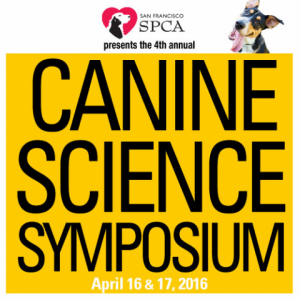 While most of the speakers at the Canine Science Symposium are former or current students of Clive Wynne (the director of the Canine Science Collboratory), our research interests are diverse as evidenced by this year’s Symposium topics. Our presentations include decoding dominance in dogs; canine sociability and attachment; using advanced behavioral principles in dog training; applying cognitive, behavioral and physiological measures to improve shelter dog welfare; using play as training and enrichment; understanding visitor behavior in shelters to increase adoptions; exploring canine olfaction and interpreting canine body language. We want those that come out to learn with us to be able to walk away with new techniques and approaches to try in their interactions with shelter dogs, dogs that they train and the dogs they live with.
For more information on the research studies I mentioned above, check out the journal articles references below. If you’re interested in attending the Canine Science Symposium, head on over to the SFSPCA website for all the details including speaker bios, presentation descriptions and online registration (at the bottom of the page). Our early-bird registration ends March 2nd, so those that want to attend should sign up now!
References
1. Coile DC. The dog breed bible. Hauppauge: Barron’s Educational Series; 2007.
2. Serpell J. The domestic dog. Cambridge: Cambridge University Press; 1995.
3. American Pet Products Association. U.S. pet-ownership estimates from the APPA for 2012. Available: http://www.humanesociety.org/issues/pet_overpopulation/facts/ pet_ownership_statistics.html#.U0oh8uZdW_A. Accessed 30 January 2014.
4. Wenstrup J, Dowidchuk A. Pet overpopulation: Data and measurement issues in shelters. J Appl Anim Welf Sci. 1999;2(4): 303-19.
5. American Society for the Prevention of Cruelty to Animals. FAQ, Pet statistics, 2012. Available: http://www.aspca.org/about-us/faq. Accessed 19 September 2014.
6. Weiss E, Miller K, Mohan-Gibbons H, Vela, C. Why did you choose this pet?: Adopters and pet selection preferences in five animal shelters in the United
States. Animals. 2012;2(2): 144-59.
7. Protopopova, A, Gilmour, AJ, Weiss, RH, Shen, JY, & Wynne, CDL. The effects of social training and other factors on adoption success of shelter dogs. J Appl Anim Welf Sci. 2012;142(1): 61-8.
8. Lockwood, R, Rindy, K. Are “pit bulls” different? An analysis of the pit bull terrier controversy. Anthrozoos. 1997;1: 2-8.
9. Posage, JM, Bartlett, PC, Thomas, DK. Determining factors for successful adoption of dogs from an animal shelter. J Am Vet Med Assoc. 1996;213(4): 478-82.
10. Lepper, M, Kass, PH, Hart, LA. Prediction of adoption versus euthanasia among dogs and cats in a California animal shelter. J Appl Anim Welf Sci. 2002;5(1): 29-42.
11. Brown, WP, Davidson, JP, Zuefle, ME. Effects of phenotypic characteristics on the length of stay of dogs at two no kill animal shelters. J Appl Anim Welf Sci. 2013;16(1): 2-18.
12. DeLeeuw, JL. Animal shelter dogs: Factors predicting adoption versus euthanasia. Doctoral dissertation, Wichita State University. 2010. Available: http://soar.wichita. edu/bitstream/handle/10057/3647/d10022_DeLeeuw.pdf?
sequence=1
13. Clevenger, J, Kass, PH. Determinants of adoption and euthanasia of shelter dogs spayed or neutered in the University of California veterinary student surgery program compared to other shelter dogs. J Vet Med Educ. 2003;30(4): 372-378.
14. Sacks, JJ, Sattin, RW, Bonzo, SE. Dog bite-related fatalities from 1979 through 1988. J Am Vet Med Assoc. 1989;262(11): 1489-1492.
15. Sacks, JJ, Lockwood, R, Hornreicht, J, Sattin, RW. Fatal dog attacks, 1989-1994. Pediatrics. 1996;97(6): 891-895.
16. Sacks, JJ, Sinclair, L, Gilchrist, J, Golab, GC, Lockwood, R. Breeds of dogs involved in fatal human attacks in the United States between 1979 and 1998. J Am Vet Med Assoc. 2000;217(6): 836-840.
17. Kaye, AE, Belz, JM, Kirschner, RE. Pediatric dog bite injuries: A 5 year review of the experience at the Children’s Hospital of Philadelphia. Plast Reconstr Surg. 2009;124(2): 551-558.
18. O’Brien, DC, Andre, TB, Robinson, AD, Squires, LD, Tollefson, TT. Dog bites of the head and neck: an evaluation of a common pediatric trauma and associated treatment. Am J Otolaryngol. 2015;36(1): 32-38.
19. Patronek, GJ, Sacks, JJ, Delise, KM, Cleary, DV, Marder, AR. Co-occurrence of potentially preventable factors in 256 dog bite–related fatalities in The United States (2000-2009). J Am Vet Med Assoc. 2013;243(12): 1726-1736.
20. Voith, V, Ingram, E, Mitsouras, K, Irizarry, K. Comparison of adoption agency breed identification and DNA breed identification of dogs. J Appl Anim Welf Sci. 2009;12(3): 253-262.
21. Voith, VL, Trevejo, R, Dowling-Guyer, S, Chadik, C, Marder, A, Johnson, V et al. Comparison of visual and DNA breed identification of dogs and inter-observer reliability. Am J Sociol Res, 2013;3(2): 1729.
22. Olson, KR, Levy, JK, Norby, B, Crandall, MM, Broadhurst, JE, Jacks, S et al. Inconsistent identification of pit bull-type dogs by shelter staff. Vet J , 2015.
23. Patronek, GJ, Glickman, LT, Moyer, MR. Population dynamics and the risk of euthanasia for dogs in an animal shelter. Anthrozoos. 1995;8(1): 31-43.
24. Salman, MD, New, Jr, JG, Scarlett, JM, Kass, PH, Ruch-Gallie, R, Hetts, S. Human and animal factors related to relinquishment of dogs and cats in 12 selected animal shelters in the United States. J Appl Anim Welf Sci. 1998;1(3): 207-226.