![10 Ways to Stop Burnout and Compassion Fatigue in its Tracks for 2017]()
by Guest Poster | Dec 8, 2016 | Business
This is a guest article by Molly Sumner CDBC, CPDT-KSA, CFE. Molly is a professional dog trainer and behavior consultant as well as a certified compassion fatigue educator. Her passion for dog training doesn’t stop at clients and their dogs but also extends to her fellow colleagues. Molly sees the personal drain that caring so deeply for animals can have on professionals so she’s graciously agreed to share some helpful tips to prevent burnout and compassion fatigue.
Molly just appeared as a guest on our podcast for Episode 10 Molly Sumridge on Compassion Fatigue in Pet Professionals. Listen in to learn about the differences between compassion fatigue and burnout and the symptoms to look out for!

2017 is less than a month away. December is usually quite hectic with the holidays, up and down schedules, commitments and gatherings, and the cold or flu trying to take over the minute we feel worn out. It is easy for the month to blow through and next thing you know it’s January, the year is over and you’re left with the new year stretched out in front of you with little to no guidance on what to make of it.
Don’t let December consume you. And don’t miss out on creating a plan for the new year that will set you up for major success and happiness in the new year. Even if you read this after the new year, it’s not too late to set yourself up to have one of the best years of your life both personally and professionally. I write and speak a lot on compassion fatigue and burnout, and truth be told, most of the professionals I meet are struggling in some way or another. But making a few changes in our lives we can significantly change how we feel and in response, can propel us to some very exciting and successful outcomes.
Here are 10 (YES 10!) tips to make 2017 your best year while staving off burnout and compassion fatigue.
1. Goal Setting
New Year’s Resolutions statistically speaking – FAIL. But actual attainable goal setting can be successful if you do it right. Goal setting using the SMART system can be very effective. Make sure any changes you want to make to your life are: S – specific, M – measurable, A – assignable, R – realistic, T – time-bound. There are many goal setting systems. Pick one that resonates with you, dedicate a week to work on the process and then commit to seeing it through with weekly, monthly, and quarterly check ins.
2. Contact Boundaries
The hard truth is, your business will not fail if you don’t reply to that message immediately. In fact, the opposite is true. The more you are accessible to your clients, the more likely you are to give bad advice, create scheduling errors, and become burned out or compassion fatigued. Spend a week or two designing a contact schedule where people can reach you or you will respond to their messages. This should include email, phone, text messages and any other communication portal your clients use to reach you. Have designated “no contact” times where you will not check your email or messages and will not answer. Consider leaving your device in a space away from you during that time so you can be completely focused on yourself, a task or your loved ones. You’ll be happier and healthier for it.
3. Conquer the Email Monster
How many emails are sitting in your inbox? 20, 50, 300? Clean it out and create a system for filing messages. An even better solution is a program like Boomerang that can move emails in and out of your inbox based on your availability and remind you when someone has failed to reply to a message. For more on beating the email blues, check out my blog on the topic.
4. Express Gratitude
Positive Psychology studies have shown that practicing gratitude changes how your brain filters the world. By focusing on the good things we have, our brain finds new opportunities for us. The opposite applies too. If we focus on the negative, our brain only filters in more problems. So turn the dial to success. On a piece of paper, list 5 things you’re grateful for. Do this daily. After a week or so, the information your brain picks up will start to change.
5. Talk to Yourself
Now I don’t mean out loud, in a crowded space, without at least some kind of Bluetooth in your ear. This that case it’s fine. But really what I mean is taking a moment and asking yourself how you’re feeling. After that, asking yourself what is causing those feelings. And from there asking yourself what might help encourage or discourage those feelings. Cognitive-behavioral psychology teaches us that we have much more control over how we feel than we think we do. This is also the basis for beginning a mindfulness practice. It really is that simple.
6. Celebrate – YOU!
It is likely you will spend some part of the end of the year celebrating a birthday, at a holiday party, or some other social celebration, but how often do you celebrate you? I don’t just mean on your birthday either. Celebrating yourself meaning taking stock of your accomplishments, big or small, whatever matters to you – and only you – and honoring them. The celebration could take many forms. It could be as simple as writing them down to acknowledge them. Or it could be as big as having a get-together or a meal to celebrate. The size of the act does not matter. It is the acknowledgment that matters. Ignoring our accomplishments defeats us and leaves us feeling resentful of our world. It inevitably will hold you back. Don’t feel guilty celebrating yourself – you deserve it!
7. Pay it Forward
Expressing gratitude to another is powerful for the giver and the receiver. Generally, our best clients come from personal referrals. 88% of consumers trust online reviews as much as personal recommendations. So share the love. Leave positive reviews on people’s business websites or offer to write a testimonial. Leave positive feedback on receipts. This feedback releases happy chemicals in both the receiver and the giver – it’s a win for all!
8. Get Moving
Agility doesn’t count. Seriously, though, with the long hours you put into your business I’m guessing you don’t get out much, but moving is some important to physical and mental health. Try something simple if you don’t move around much, such as a short walk around the block, or even just 2-3 extra trips of the stairs or back and forth to the car. For you over achievers (you know who you are), try a yoga class, crossfit, a morning bootcamp, or a class at the YMCA. Anything to get your heart going just a little faster once a day will change your life.
9. Get Out of Your Box
If you’re like me, your life revolves around people and dogs with little room for anything non-animal related. Any activity that is out of this realm can feel weird or uncomfortable. But it is so important to escape once in awhile. Try a group class in something you know little about. Go to a lecture, concert, or play. Driven to make a difference? Volunteer to help at a food pantry, meals on wheels, habit for humanity etc. You don’t have pick something you feel a connection to either. It is about getting out of the norm and trying something new. It is good for the brain, opens up your social circles, and breathes fresh air into your life. It might even connect you with future opportunities you’ve never even dreamt of.
10. Take 10
I get it, you’re busy. I am too. After writing this I have a webinar to attend and a client to go see. But I am also “Taking 10”. I am taking 10 minutes to do something that heals and helps me. It could be meditation, reading a book, journaling, being spiritual, coloring, cooking a meal or just breathing. What it won’t be is time on social media, answering emails, or interacting with anyone or anything. It is 10 minutes of solitude. If you think that’s too much, or too hard – you need 20! But start with 10.
If you only do one thing on this list let it be the last one. Then work on the rest. Your industry needs you. The world needs you. Take care of yourself in a meaningful way so that you can be there for all those who need you. Self-care isn’t selfish. Let’s make 2017 an awesome year, by focusing inward and then letting our light sign. For more help and suggestions, visit: http://www.mollysumridge.com/
Molly Sumner CDBC, CPDT-KSA, CFE, is a professional dog trainer and behavior consultant as well as a certified compassion fatigue educator. Her passion for dog training doesn’t stop at clients and their dogs but also extends to her fellow colleagues. Molly sees the personal drain that caring so deeply for animals can have on professionals. She has dedicated a significant part of her career to learning about how to help her colleagues better their business and themselves. In addition to her dog training education, she is also a QPR Gatekeeper and Online Suicide Prevention Specialist.
Dog Training Business Tips
Receive valuable dog training business tips and resources right in your inbox! Subscribe to The Modern Dog Trainer now by submitting your name and email below. Don’t forget to let us know what you want to learn more about!
[mc4wp_form id=”2494″]
![Guest Post: What Breed is That Doggy in the Shelter Window?]()
by Guest Poster | Mar 5, 2016 | Events, Research, Training Methods
This post is written and provided by Lisa Gunter, MA. Lisa is a PhD student at Arizona State University in the Department of Psychology and conducts her research under the mentorship of Clive Wynne in the Canine Science Collaboratory. She has presented her research at numerous conferences including the Association of Professional Dog Trainers, the Interdisciplinary Forum for Applied Animal Behavior, the Veterinary Behavior Symposium and the International Society of Anthrozoology.
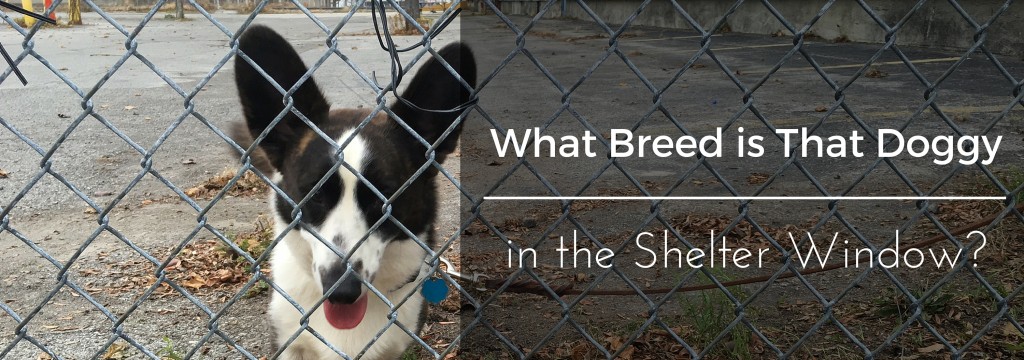
What Breed is That Doggy in the Shelter Window?
Chihuahua. Chow Chow. Pointer. Irish Wolfhound. When thinking about unique breeds and the range of physical differences that exist with man’s best friend, it’s hard to believe that a tiny toy lap dog and another that’s as tall as a human are of the same species [1].
For centuries, we’ve bred dogs for the purpose of aiding us in our work, such as in hunting (Labradors), herding (German Shepherd), and livestock protection (Great Pyrenees) [2]. Our influence on how dogs look and act brings along with it expectations about different dog breeds. When I say “Golden Retriever,” you likely think of a fluffy blonde dog that enjoys playing with children. When I mention a Border Collie, you probably imagine a wickedly smart black & white dog that plays fetch for hours.
In the United States, there are a little over 80 million dogs living with us with 20% of those dogs adopted from shelters [3]. As many of you have experienced firsthand, the way animal shelters operate today has changed from what homeless animals experienced just fifteen years ago. Before 2000, dogs usually stayed on average for about 10 days at the shelter. Then, over half were euthanized, and the others were either adopted or redeemed [4]. Today, the situation is better. While almost 4 million dogs are entering animal shelters each year, only 30% are euthanized [5]. While we’re pleased with these improvements, one of our main foci of research in the Canine Science Collaboratory at Arizona State University is to further increase adoptions and reduce euthanasia rates for pet dogs.
Given the importance placed on appearance in our culture, it should come as no surprise that looks matter in canine adoption, too! Researchers from the American Society for the Prevention of Cruelty to Animals (ASPCA) [6] found that appearance was the single most important reason people gave for why they adopted the dog they did. In our own lab we found that when potential adopters were presented with photographs of dogs that had been either adopted or euthanized they were able to distinguish which dogs had met which fate solely because the adopted dogs were more attractive than those that had ended up euthanized [7].
The Pit Bull Label
If you work in animal sheltering, you’ve likely heard of the term “pit bull.” While there is a specific breed of dog known as the American Pit Bull Terrier, more conventionally this label has been applied to many breeds that are short-haired, muscular and blocky-headed such as American and English bulldogs, Staffordshire bull terriers and American Staffordshire terriers as well as mixes of these types of dogs [8].
Recent studies into dog adoption [11, 7, 12-13] have found breed to be associated with different outcomes, including but not limited to increased euthanasia and length of stay. With the big role that physical appearance plays in dog selection, our lab was interested in understanding how breed labels could influence how attractive a dog seemed to be.
So what is the basis for the negative perceptions about pit bulls? The pit bull terrier does have a past that includes bullbaiting and dogfighting (which still occurs illegally in some areas of the US), and reports of aggression towards humans, specifically dog bite injuries and even deaths, have likely contributed to the unfavorable public opinion of these dogs as well [14-18]. Yet while an association may exist between certain types of dogs and aggression towards people, the reliability of breed characterizations in positively identifying dogs involved in these types of incidents is hotly debated [8, 19].
Labels vs. DNA Analysis

Photo by Erin Bessey
Which leads us to wonder what breeds of dogs are there shelters? It’s a more complicated question than it may appear, because breed assignment is usually based on the way the dog looks. Yet, researchers from Western University of Health Sciences [20-21] have found discrepancies between breed identification and the results of DNA analysis, and researchers in Florida found at one shelter that 50% of dogs that were labeled as belonging to a pit-bull-type breed lacked the DNA breed signature [22].
In our own lab, we’re wrapping up a multi-shelter study using the MARS Wisdom Panel. While it’s too early to talk about our specific findings, what we can say is that these shelter dogs show a range of breed diversity (over 150 breeds were identified at each shelter!), there are much fewer purebreds than we anticipated, most dogs have more than two breeds in their breed heritage and correctly identifying the breeds of a mixed breed dog via visual identification alone is an extremely difficult task.
Canine Science Symposium
Research questions like the ones I’ve mentioned here are just some of the questions we attempt to answer in the Canine Science Collboratory. If you enjoy learning about the latest research in canine science, you may want to consider attending our Canine Science Symposium. Now in its fourth year, the Symposium will be taking place at the San Francisco SPCA on April 16 & 17.
 While most of the speakers at the Canine Science Symposium are former or current students of Clive Wynne (the director of the Canine Science Collboratory), our research interests are diverse as evidenced by this year’s Symposium topics. Our presentations include decoding dominance in dogs; canine sociability and attachment; using advanced behavioral principles in dog training; applying cognitive, behavioral and physiological measures to improve shelter dog welfare; using play as training and enrichment; understanding visitor behavior in shelters to increase adoptions; exploring canine olfaction and interpreting canine body language. We want those that come out to learn with us to be able to walk away with new techniques and approaches to try in their interactions with shelter dogs, dogs that they train and the dogs they live with.
For more information on the research studies I mentioned above, check out the journal articles references below. If you’re interested in attending the Canine Science Symposium, head on over to the SFSPCA website for all the details including speaker bios, presentation descriptions and online registration (at the bottom of the page). Our early-bird registration ends March 2nd, so those that want to attend should sign up now!
References
1. Coile DC. The dog breed bible. Hauppauge: Barron’s Educational Series; 2007.
2. Serpell J. The domestic dog. Cambridge: Cambridge University Press; 1995.
3. American Pet Products Association. U.S. pet-ownership estimates from the APPA for 2012. Available: http://www.humanesociety.org/issues/pet_overpopulation/facts/ pet_ownership_statistics.html#.U0oh8uZdW_A. Accessed 30 January 2014.
4. Wenstrup J, Dowidchuk A. Pet overpopulation: Data and measurement issues in shelters. J Appl Anim Welf Sci. 1999;2(4): 303-19.
5. American Society for the Prevention of Cruelty to Animals. FAQ, Pet statistics, 2012. Available: http://www.aspca.org/about-us/faq. Accessed 19 September 2014.
6. Weiss E, Miller K, Mohan-Gibbons H, Vela, C. Why did you choose this pet?: Adopters and pet selection preferences in five animal shelters in the United
States. Animals. 2012;2(2): 144-59.
7. Protopopova, A, Gilmour, AJ, Weiss, RH, Shen, JY, & Wynne, CDL. The effects of social training and other factors on adoption success of shelter dogs. J Appl Anim Welf Sci. 2012;142(1): 61-8.
8. Lockwood, R, Rindy, K. Are “pit bulls” different? An analysis of the pit bull terrier controversy. Anthrozoos. 1997;1: 2-8.
9. Posage, JM, Bartlett, PC, Thomas, DK. Determining factors for successful adoption of dogs from an animal shelter. J Am Vet Med Assoc. 1996;213(4): 478-82.
10. Lepper, M, Kass, PH, Hart, LA. Prediction of adoption versus euthanasia among dogs and cats in a California animal shelter. J Appl Anim Welf Sci. 2002;5(1): 29-42.
11. Brown, WP, Davidson, JP, Zuefle, ME. Effects of phenotypic characteristics on the length of stay of dogs at two no kill animal shelters. J Appl Anim Welf Sci. 2013;16(1): 2-18.
12. DeLeeuw, JL. Animal shelter dogs: Factors predicting adoption versus euthanasia. Doctoral dissertation, Wichita State University. 2010. Available: http://soar.wichita. edu/bitstream/handle/10057/3647/d10022_DeLeeuw.pdf?
sequence=1
13. Clevenger, J, Kass, PH. Determinants of adoption and euthanasia of shelter dogs spayed or neutered in the University of California veterinary student surgery program compared to other shelter dogs. J Vet Med Educ. 2003;30(4): 372-378.
14. Sacks, JJ, Sattin, RW, Bonzo, SE. Dog bite-related fatalities from 1979 through 1988. J Am Vet Med Assoc. 1989;262(11): 1489-1492.
15. Sacks, JJ, Lockwood, R, Hornreicht, J, Sattin, RW. Fatal dog attacks, 1989-1994. Pediatrics. 1996;97(6): 891-895.
16. Sacks, JJ, Sinclair, L, Gilchrist, J, Golab, GC, Lockwood, R. Breeds of dogs involved in fatal human attacks in the United States between 1979 and 1998. J Am Vet Med Assoc. 2000;217(6): 836-840.
17. Kaye, AE, Belz, JM, Kirschner, RE. Pediatric dog bite injuries: A 5 year review of the experience at the Children’s Hospital of Philadelphia. Plast Reconstr Surg. 2009;124(2): 551-558.
18. O’Brien, DC, Andre, TB, Robinson, AD, Squires, LD, Tollefson, TT. Dog bites of the head and neck: an evaluation of a common pediatric trauma and associated treatment. Am J Otolaryngol. 2015;36(1): 32-38.
19. Patronek, GJ, Sacks, JJ, Delise, KM, Cleary, DV, Marder, AR. Co-occurrence of potentially preventable factors in 256 dog bite–related fatalities in The United States (2000-2009). J Am Vet Med Assoc. 2013;243(12): 1726-1736.
20. Voith, V, Ingram, E, Mitsouras, K, Irizarry, K. Comparison of adoption agency breed identification and DNA breed identification of dogs. J Appl Anim Welf Sci. 2009;12(3): 253-262.
21. Voith, VL, Trevejo, R, Dowling-Guyer, S, Chadik, C, Marder, A, Johnson, V et al. Comparison of visual and DNA breed identification of dogs and inter-observer reliability. Am J Sociol Res, 2013;3(2): 1729.
22. Olson, KR, Levy, JK, Norby, B, Crandall, MM, Broadhurst, JE, Jacks, S et al. Inconsistent identification of pit bull-type dogs by shelter staff. Vet J , 2015.
23. Patronek, GJ, Glickman, LT, Moyer, MR. Population dynamics and the risk of euthanasia for dogs in an animal shelter. Anthrozoos. 1995;8(1): 31-43.
24. Salman, MD, New, Jr, JG, Scarlett, JM, Kass, PH, Ruch-Gallie, R, Hetts, S. Human and animal factors related to relinquishment of dogs and cats in 12 selected animal shelters in the United States. J Appl Anim Welf Sci. 1998;1(3): 207-226.
![Guest Post: A Passion for Primitive Dogs]()
by Guest Poster | Dec 7, 2015 | Training Methods
This is a guest post by professional dog trainer, Molly Sumner, CDBC, CPDT-KSA, CBATI. She is an expert when it comes to training primitive dogs and is generously sharing her top 5 tips with us today. She now runs a website for primitive dogs and their owners: https://www.couchwolves.com/
Each night I fall asleep never having to remember to set an alarm clock. As dawn breaks so does the silence. A dull “woooo” sound begins from the crates on the first floor. It slowly gets louder and more punctuated. Then a few more voices join in until my canine alarm clock is going full blast. They are trying to tell me, as they do every morning, that they are awake and would like to go out. The only time I get a vacation from this routine is when I am away at an obedience trial. This is not due to any lack of attendance on their part, because I’m the crazy trainer showing primitive dogs in obedience. In reality it is because the orchestra ring leader is snuggling in bed with me, and when he has bed privileges he doesn’t want to get up till around noon. Lazy bones.
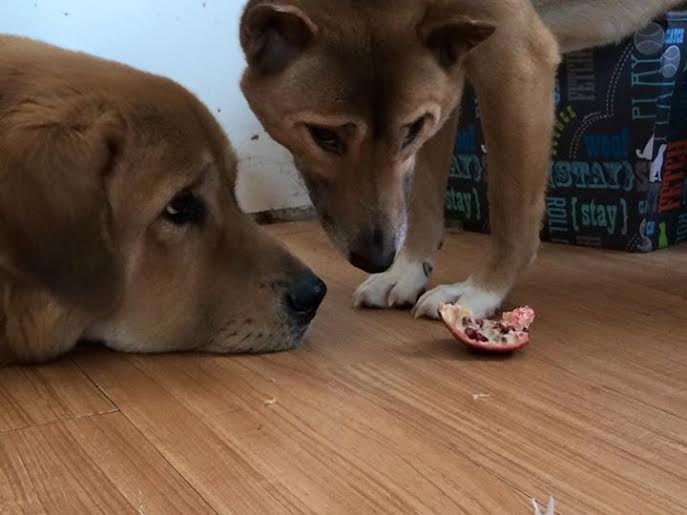
 My husband and I share our home with 5 Shiba Inus, a Cattle Dog mix, a Tibetan Mastiff, and a New Guinea Singing Dog. This seems like quite the mix of dogs, but they have one very strong thing in common and that is their primitive nature. To be clear, what I mean when I say “primitive dog” is a breed of dog who’s ancestral primitive nature is still intact. These dogs weave through the traditional breed groups making a pretty tapestry of shapes, sizes, and histories. But when you break them all down, a similar independent, sensitive, wise old soul is back there, ready to tell you that they know better. Some examples of primitive dogs are Africanis, Akitas, Alaskan Malamutes, Armenian Gampr, Basenji, Canaan Dog, Carolina Dog, Chow Chow, Finnish Spitz, Norwegian Elkhound, Pharaoh Hound, Saluki, Samoyed, Shar-pei, Swedish Lapphund and this is just a few. This short list (A longer list is available at the end of this article) gives you an idea of the variety of shapes, sizes, and jobs these dogs have, and their close resemblance to their canine ancestors, and/or selective breeding that has maintained behavioral and physiological traits going back 1000-5000+ years.
Life with primitive dogs is a little different than life with other breeds. I mean sure, they are all dogs. But life with primitive dogs isn’t an owner/pet relationship. It’s more like a roommate agreement. They have their particular wants and needs and if you fail to understand them and find a way to manage them, you will end up with a huge problem on your hands. As my husband likes to say, “You don’t train a primitive dog, you come to an understanding”, and he is absolutely right. Many times trainers label these dogs “untrainable”, “willfull”, “stubborn”, or “dominant”. These labels only come out when a trainer or owner is butting heads with these dogs and their truly honest temperaments. I call it an honest temperament because they are utterly consistent and expect the same from you. They are strong communicators who will use a wide range of calming signals to express themselves. Trainers and owners who ignore them, many times end up on the frustrated end of the leash, or worse, bitten and bloodied.
In no way am I suggesting that primitive dogs are a greater bite risk or more aggressive than other breeds. However, I do believe that their tolerance for rude handling, compulsive training, and rude interactions with other dogs, is significantly less than breeds bred to be more tolerant. We created these breeds prior to the great Victorian genetic manipulation period and were never expected to be the center of attention in a family setting. Instead these dogs had a purpose to either hunt and kills other animals, guard property, pull, or herd. When not in use, these dogs were left to their own devices. They have an innate knowledge of what they want to be happy and usually a good chunk of that is to be left alone. They are also highly sensitive dogs and become intolerant of discomfort quickly. Enough repetitions of this and they will become unwilling to cooperate and eventually aggressive.

Today there is a growing population that enjoys breeds with these independent natures and it is becoming more and more important that trainers become familiar with how to be successful working with these kinds of dogs. I have clients come to me all the time telling me that their previous trainers hated primitive dogs, that they all are highly aggressive, or if it didn’t respond to compulsion based training, it couldn’t be trained. This is heartbreaking for an owner to hear and leads to many of these dogs getting dumped in shelters or left to an existence locked in a laundry room or outside kennel. It is the responsibility of modern progressive dog trainers to embrace the growing interest in these dogs and better understand their behavioral workings, motivations, and needs. Once these are met, owning, managing, and training these dogs is a breeze.
5 Tips for Training Primitive Dogs
1. If The Dog Is Failing – It’s Not Them, It’s You
Sorry but primitive dogs are very honest dogs. This means that if you’re rate of reinforcement is poor or you’re either too challenging or not challenging enough, a primitive dog will blow you off. The more this happens, the less they will want to interact with you and their relationship will continue to diminish until they actively avoid you. Keep training light, short and be ready to jump 2 steps ahead at any point. More than 5 or 6 repetitions is enough to bore most of these dogs and if they make a learning leap go with it. Don’t push them backwards or they will think your “game” is stupid and walk away.
2. You Can’t MAKE a Primitive Breed Do Anything
Molding a primitive dog just teaches the dog to avoid contact with you. Luring teaches the dog to sniff out treats before they are willing to work with you. Shaping and capturing tend to be the most powerful ways to train a primitive dog. They are very intelligent and when given the opportunity to work out operant tasks they will usually rise to the occasion very quickly. But this works both ways. If they know growling and biting is the only way to make you stop doing something they don’t like, they will stop communicating with calming signals and move to lunging whenever they perceive discomfort. If lunging doesn’t stop the discomfort they will escalate to biting. This is why knowing body language and teaching advocacy for what the dog is saying, is essential to a happy primitive dog household.
3. They Know You Better Than You Do
Primitive dogs are always watching and always working out the system. Every move you make and every gesture has been worked out in their heads. They know the difference between a recall that is for reward and a recall that is for the end of play because it is time to go to work. They know when you have a treat and when you don’t. These can lead to frustration for the owner when training “only works when a cookie is present” as well as Separation Anxiety, Resource Guarding, aggression while being handled, and leash reactivity. When called in to deal with behavior problems it is essential that a trainer see all the details prior to a problem situation to see what the dog is actually being cued by. It may be leagues away from where the owner thinks the cause is.
4. Self Interest is Your Guide
In my home I use very colorful terms of endearment with my dogs. It is an affectionate joke. But for many owners it is no joke. It is hard for many owners to get over the sense of self interest these dogs possess. Like I mentioned earlier, these dogs are more your roommate than your pet. These dogs, while they love you, are still out to get whatever it is they want, at whatever means necessary. But this is a powerful tool for trainers. Following methods like Karen Overall’s Deference Protocol, and other styles of, you get what you want, when I get what I want can create very harmonious households. I like to think Premack was channeling a primitive dog when we wrote his Principle because that will get you farther than anything else in your training.
5. Keep Your Heart Open
You can’t get mad at these dogs. They will simply walk away, go pee on something, and take a nap. You have to roll with the punches, appreciate their independent nature, and laugh at your mistakes. Otherwise these dogs will get inside your head and drive you insane. You will need multiple ways to train a behavior and don’t be afraid to start with classical conditioning. Most of the time the reason these dogs are challenging is because they are uncomfortable emotionally, not because they are dumb, wild or stubborn.

About the Author: Molly Sumner CDBC, CPDT-KSA, CBATI
Molly Sumner is a professional dog trainer and behavioral consultant. She lives in Frenchtown, New Jersey with her husband and house filled with primitive dogs, including Journey the worlds first competition titled New Guinea Singing Dog. Molly is the author of multiple articles for Barkpost, as well her blogs and loves giving voice to both her canine and human clients. She is currently working on book about primitive dog training and ownership. You can visit her blog at www.kindredcompanions.com or find her on Facebook.
Dog Training Business Tips
Receive valuable dog training business tips and resources right in your inbox! Subscribe to The Modern Dog Trainer now by submitting your name and email below. Don’t forget to let us know what you want to learn more about!
[mc4wp_form]
![Bringing Modern Dog Trainers Together for Education]()
by Guest Poster | Oct 30, 2015 | Communication
This post is a guest post by Miranda K. Workman, MS, CABC, CBCC-KA, CPDT-KSA. We are honored to share with you a situation that proved that modern dog trainers can in fact come together to bring awareness into the community.
At a recent TEDxBuffalo presentation about building community one speaker said, “Community begins where there is conflict.” Those words came to life for me on October 17, 2015. As a certified behavior specialist, I meet many people in my professional career. One of those individuals is Melissa Henchen, the president of Going to the Dogs rescue based in Perry, NY. A newspaper in her local area had printed a story about a local trainer who presented outdated information about canine behavior. The article was filled with references to humans as alpha wolves who give direction (never affection). It was an article that was completely void of current scientific understanding about learning theory, canine behavior and ripe with anthropomorphic explanation about cross-species social relationships.
After reading this article it was clear that allowing this outdated information to go without comment was a disservice to the pet owning public who are part of the readership for this paper. The rescue president and I knew this was an opportunity to educate the public. We just needed to decide how to do it. We decided a direct response to the paper would be the best course of action. 24 hours later I had finished the first draft of a letter to the editor of the paper. After sharing the draft with the rescue president, we talked about who would sign the letter…then it hit me. This should be a community response. Not a response from one, two, or three individuals. We needed to “rally the troops.”
Over the last few years there have been a few opportunities when training and behavior professionals, leadership from various rescues, groomers, daycare operators and others have come together. Most of those meetings were informal social gatherings as we all started to get to know one another. Although our philosophies were aligned, there had been little formal effort to communicate with the general public about science-based training focused on positive reinforcement. This opportunity gave me a reason to get everyone together with a specific and formal goal. Oh…and with a deadline.
I worked on reaching out to my colleagues and other contacts in the Buffalo, NY area. Melissa reached out to those in the Rochester, NY area. Once several people agreed to participate, we used social media to collect everyone in one virtual location to discuss the letter. Realizing that media is like capturing lightening in a bottle, we knew we had to act quickly. A quick response would maximize the effect as the previous article would still be in the readership’s consciousness.
Although there was some debate and we ended up with a third, final version of the letter, after 24 hours of bringing the group together we had twenty-two individuals who were willing to stand together as a group to educate the general public. The letter was published – in its entirety including references – seven days after the original article aired. We posted the letter on social media and found supporters across the nation who joined with us by adding their signatures in the comments of the online version of our letter. By networking with others, even members in our online communities pledged their support of the efforts of this new community in WNY.
Through this conflict, I am confident and hopeful that a new community has been forged. I have already reached out to those twenty-two signers to create a regional education organization. No doubt more will join us. The sum of all the parts of this new community will no doubt become very a prominent whole in the larger community of Western New York. I am already preparing to plan the first meeting where this new community will begin to determine our mission, vision, guiding principles and goals. As a group we will work to coordinate action plans to fulfill those goals.
Ultimately, it was by being both diverse and inclusive that we met this time-sensitive goal. I hope that we will continue to be diverse in this new community’s membership while including all those who share our desire collaboration for the sake of education about current, science-based behavior and training information in our larger community.
Link to original article
Link to response
About the Author
Miranda K. Workman, MS, CABC, CBCC-KA, CPDT-KSA has been President and CEO of Purrfect Paws Animal Behavior Center since its inception in 2006. A voracious reader and tireless researcher, she strives to understand and apply the most “up to date” developments in training and behavior.
She has over 14 years experience in applied animal behavior and training. She is an experienced behavior specialist with a well-respected reputation including being listed as a WNY expert by the Buffalo News. While she works to rehabilitate many different behavior concerns of pet owners, she especially enjoys working with multi-pet households, aggression and feline behavior problems.
She also served from 2007-2011 on the Board of Directors of the Certification Council for Professional Dog Trainers, Inc. (CCPDT); three of those years she was President of the Board and was responsible for the creation and implementation of the Certified Behavior Consultant – Canine certification exam. Currently she serves as the Chair of the Cat Division for the International Association of Animal Behavior Consultants, Inc. (IAABC).
![Dealing With Difficult Clients: Standing Your Ground When You Know You’re Right]()
by Guest Poster | Jun 24, 2015 | Communication

After 10 years in business nothing surprises me. There is no client that can intimidate me, bully me, or otherwise make me feel like I did something to wrong them. I have built a reputable business with thousands of happy customers. Yet, despite that, there will always be otherwise “difficult” customers who will do their best to test your patience and professionalism. Heck, sometimes there’s even customers who for a split second will make you feel like you should throw in the towel. What you need to understand as a business owner, and an expert in our industry, is that you cannot make everyone happy. This is a harder egg to swallow than we want to admit. After all, we’re dog trainers! What does that actually mean? That means we have feelings. We have empathy for people. We want to make people happy through the service we provide, so we genuinely do feel bad when we let them down – even if and when we know it’s not our fault.
What You Should Do With Difficult Clients
I’m here to tell you to man up. Yes, you heard me. Get over it! Customers that make you feel like you’re a bad person in some way are not worth your time, the same way that a boyfriend or girlfriend who is emotionally abusive to you in any way is not worth your time. At the end of the day, it’s all about relationships, right? Nod yes with me here, because you know I’m right.
For reference, here’s an email I received just tonight from an unhappy customer who is convinced, wrongly, that she wasn’t made aware of our policy to schedule classes in advance:
Dee,
When I paid for Fluffy, nobody told me anything about pre booking. This is not a cceptable, figure out something else, or reimburse the unused lessons, and I will figure out how I get Fluffy trained. How can you take my money, do not give explanations and do not have space in class?!!!!!!
Upset
Ok. So let’s take a look at the above for a second. Firstly, I don’t take you seriously because you a) couldn’t take the time to write me a proper email with proper spelling, grammar or punctuation and b) you were pushy, demanding and downright rude. Do you actually think you are threatening me by taking your business elsewhere? You’re not. Do you know why: because you won’t find better trainers, service, or facilities elsewhere. You, client, just shoved your foot in your mouth because you actually thought that by writing me an off the cuff frustrated email would actually get the results you desired. You are so wrong.
Here is my response:
Client,
Unfortunately I cannot make a space appear that doesn’t exist. We have an eight-dog limit per class so that all dogs in class have an enjoyable experience. We cannot overbook the classes otherwise we compromise the quality of the training that we provide. Happy to refund your money — I’ll get a check in the mail to you tomorrow, that’s not a problem. Obviously there was a miscommunication somewhere along the way. It has always been our policy to pre-book for group classes. I’ve been in business for ten years and we’ve always required pre-booking for group classes, so I’m a bit surprised that somehow that wasn’t communicated clearly to you. I don’t know who originally sold you the group class training package but apologize that we didn’t meet your expectations. Again, I’ll put a check in the mail to you tomorrow.
Sincerely,
Dee
Ok, so yes. My email did take one dig at her. But she totally deserved it. Where in business does it say you have to always be 100% polite? Nowhere last time I checked. Sometimes people need to be dished out what served. That doesn’t mean you have to be super rude, or unprofessional, but when a client thinks they can bully you into giving them a result that you simply can’t give you have every right, in my opinion, to make it one hundred percent clear that their expectations are unrealistic. My client’s demand for me to “figure out something else” is absolutely ridiculous! I mean, seriously?!
After I intentionally put her in place, I made it clear why I couldn’t accommodate her. This isn’t about her, this is about my business and the over all well-being of all clients that use our services. I have policies in place for a reason, lady! At the end of the day, those policies benefit my customers. If you can’t wrap your head around that then I’d be more than happy to show you the door! After showing her the value as to why we require pre-booking, I did apologize. That is, after all, the professional thing to do. I would never, as a business owner, deny somebody an apology for the slim to none chance that it was our screw up. It’s the least I can do. Lastly, I would also never, as a business owner, deny someone a refund for un-used services. I have always felt that the absolutely worst thing you can do for your business is tell a customer that there are no refunds. I feel that by not providing a refund for unused services you are indicating to your customer that you value money more than the quality of service you provide. As dog trainers, I know for all of us that is simply not true. We’re not in this for the money, so let’s not fight over $100 bucks.
Moral of the story? “Difficult” customers aren’t worth your time. Let them go instead of trying to accommodate them. As soon as they walk out that door they make room for your next best, and ideal, customer who will appreciate the type of service you’re trying to provide.
About The Author
 Dee Hoult is the CEO of Applause Your Paws, Miami’s largest privately owned reward based dog training company. With twenty-two employees strong, Dee believes in positive people training as well as positive leadership based training for her employees. Although Dee still does see private clients for behavior cases, she is most passionate about her company, her people, and her business processes. Dee personally owns five dogs, two cats, and has a reef aquarium. Her husband Sam is lucky enough to also be one of her most valued employees as of January 1, 2015. You can follow Dee’s business on instagram @applauseyourpaws or on facebook at www.facebook.com/applauseyourpaws.
![Guest Post: How to Build a Successful Dog Training Business]()
by Guest Poster | Apr 20, 2015 | Business

All dog trainers want to build a healthy and successful dog training business. But as your dog training business grows, so does the stress of managing your expanding client list, schedule, and income stream.
The act of putting best practices in place to help you manage your growth sounds like both a daunting and tedious task. But the truth is it’s not. There are simple tips to follow and free technology available to make the act of building a successful and scalable training business a breeze.
Your Client List
To provide the quickest and highest quality service to prospective clients, you need to know who your client is, how to reach them, and what their needs are.
Keeping all this information in a single location will pay large dividends as your customer base grows. Mobile tools these days allow you to keep all your client contact information, notes, transaction history, and payment statuses in an easily accessible spot. Client data and access to information in the most convenient way possible will save you a tremendous amount of time, especially as your days start filling up with more and more client visits.
Schedule & Appointments
The days of pen and paper scheduling are over!
Keep an organized daily, weekly, and monthly calendar in place that’s easily accessible and able to be updated on the fly. Appointment details constantly change, so give yourself a digital tool that allows for easy edits and updates. Not to mention, new clients reach out to you at random times throughout the course of the day, so put convenient systems in place to efficiently field these appointment requests and add them to your calendar without having to play phone tag.
Make sure your clients stay organized too. That means automating and customizing notifications and reminders sent to clients about upcoming classes, sessions, or private lessons. This will ensure your clients are always on the same page, and will ‘professionally and politely’ remind them of upcoming appointments with you, so you never experience a no-show again.

Payments
Everyone likes getting paid. The trick is to ensure that no payment ever slips through the cracks.
Protect yourself before walking into any training session. Ask clients to put their card down to reserve appointments ahead of time. This will not only reduce flaky clients and last-minute cancellations, but will professionally demonstrate to your clients that your time is valuable. Not mention, your entire payment process is streamlined once your appointment is complete – say farewell to those awkward “How much do I owe you?” conversations…Simply charge your clients as you’re walking out the door, and move on to your next appointment.
If you still prefer to invoice, then make sure no invoices are ever left hanging. Part of this is setting up a simple monitoring system to enable you to get notified with each invoice that has been paid. Then give yourself an easy dashboard to keep yourself up to date on any invoices still outstanding. This will also give you a sense as to who your best clients are (and even who your worst ones are).
Putting These Ideas Into Practice
 The question now becomes how to implement these tips in the easiest and least disruptive way possible.
Good news! There are now tools out there that help solo professionals run their business from their phone. The key is to find the tools that are simple, that are affordable, and that move with you wherever you go – mobile. The more a single app does, the easier your life becomes.
As you start growing and winning more business, you’ll be able to bring these clients on in the most efficient way possible, maintaining your ability to serve them well – all the while making your day-to-day a lot less stressful.
Ready to be more efficient and professional with your clients? PocketSuite is a free iPhone app that provides all of these services for free! Download and access it through the Modern Dog Trainer’s referral link here.
Get Dog Training Business Tips!
Receive valuable dog training business tips and resources every week! Subscribe to The Modern Dog Trainer now by submitting your name and email below.
[mc4wp_form]
About The Author
 Sam Madden is the co-founder of PocketSuite, the first mobile business tool for independent professionals and solopreneurs. Sam spent most of his career researching and investing in business technology for small and medium-sized businesses. He has since shifted all of his focus to build great technologies like PocketSuite to help eager and independent professionals succeed. You can read more about Sam’s mission on Entrepreneur Magazine.
PocketSuite is a new mobile app for dog trainers helping them run and build a better business. PocketSuite empowers pet professionals with the ability to schedule appointments, invoice customers, collect payment, track income, and communicate with clients…All from a single app. PocketSuite is a free iPhone app to download and can be accessed through the Modern Dog Trainer’s referral link.