It is our job to start puppies off on the right paw.
As a dog trainer, we know that those first few months of a dog’s life are the months that shape who he’s going to be for the rest of his life. Socialization and structure for a puppy are incredibly important, especially when they begin turning into adolescents. Part of puppyhood should include access to a well run puppy class which you can provide for your clients. There are many things a good puppy class can include, these are 10 of them.
1. Socialization To Touch
An important quality for a family dog to have is the ability to be handled by the family members, especially if children are present. Although tugging and pulling on puppies is inappropriate handling, we want to build a positive association with different handling so the client’s puppy can be a good family pet. Focusing on handling ears, paws, muzzles, and tails while receiving treats will help a client build a good association with their puppy.
2. Socialization to Vet Procedures
A location that quickly becomes scary to puppies can be a veterinarian’s office. Something that we can market to veterinarians is our ability to make a veterinarian’s job easier by training for a vet visit. This can include introducing puppies to low stress handling techniques, weight scales, muzzles, and routine procedures such as ear drops, teeth brushing, or nail trimming.
3. Potty Training
Everyone knows that puppies come with potty training. It’s very important in a puppy class to touch on potty training strategies like routines, management, and reinforcement.
4. Resource Guarding
This is a very important subject for all families, whether their dog or puppy currently shows symptoms or not. Going over what resource guarding is and how it can present itself is important, along with modification techniques and prevention such as adding food to a bowl as you walk by. This can easily be practiced in a puppy class.
5. Socialization to Sounds
Noise sensitivity can show up in dogs when they are not properly socialized to sounds as a puppy. MP3s on your phone or mp3 player can be used softly during puppy class and slowly made louder throughout the class to desensitize puppies to noises like thunder, construction, fireworks, and other loud noises. Calming music such as Through A Dog’s Ear can also be played to keep class a little bit calmer.
6. Focus
Before an owner can expect their puppy to perform basic obedience cues such as sit and down, we need to work on their puppy’s focus. This is something they can constantly work on throughout the whole class.
Puppies are always go, go, go. As a trainer and an owner, we have to teach them to stop every once in a while and be calm. Mat work can be a great way to teach puppies to calm down and hold still for longer than two seconds. It can also help less confident puppies feel more confident in new locations during socialization.
8. Socialization With People
As a family dog, owner’s want their puppies to be comfortable with house guests and anyone else they come in contact with. When appropriate, games like pass the puppy can help puppies meet different people in a positive light.
9. Toy Play
Reinforcement training requires many different types of reinforcement in our tool bags when we work with dogs and puppies. Having owners get down and actually play with their puppies to reinforce good behavior gives us one more tool. Keeping a puppy’s drive for toys through adulthood will make training easier. Sometimes people don’t know how to play with their dogs and it is our job as a trainer to teach them. Toy play can also teach puppies how to respect their owner’s hands when it comes to puppy biting.
I like to include touch in my puppy training because it teaches a puppy how to interact with people and hands in a positive light instead of biting. It is also a gateway to training many different obedience or modification cues. When highly reinforced, this can also become another reinforcer for the owners.
Puppy class shapes a dog’s life. When we can start a puppy out on the right paw, this will lead to better socialized dogs who can enjoy specialized classes that you offer with their owner. It’s our duty as a trainer to improve the well-being of the canine species. This starts with puppies.
What exercises do you include in your puppy class that you feel are important?
Get Dog Training Business Tips!
Receive valuable dog training business tips and resources every week! Subscribe to The Modern Dog Trainer now by submitting your name and email below.
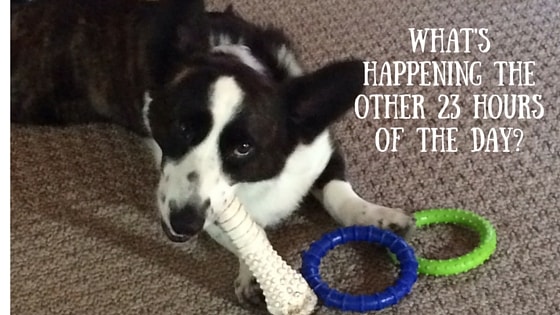
The way to success in becoming a star athlete or a master criminal is achieved in the same way. The more a skill or behavior is rehearsed the better and more natural it becomes. So often dog parents may come to you wanting to change a dog’s behavior. Of course we are interested in the behavior at hand, but we should be even more interested in what is happening the “other 23 hours of the day”.
Having tunnel vision by focusing on the unwanted behavior isn’t enough. We’ve got to look at what is happening behind the scenes at all of the rehearsal time before the curtain goes up. A pro-golfer is likely to practice other calisthenics to improve his game and I’ll bet your clients dog has his own version of cross-training, too. It reminds me of Mickey, the inventive trainer in Rocky. Mickey had Rocky chase chickens to find a new and more agile way of becoming quick on his feet. Somewhere when you aren’t looking, the pup has invented his own technique for getting the result he desires.
Let’s say you feel like your client’s dog is unnecessarily barking for attention and you are at your wit’s end with this. First, we’ve got to figure out when and where else this behavior is being reinforced. Does he get practice barking away “intruders” like the UPS man or a neighbor dog being walked by the window? Although you might not be directly rewarding the pup for this action with a cookie, just the act alone of the “trigger” going away can be the reward itself to the dog. “I bark, and it goes away”, thinks the pup. “Success!” The repetition of this story is in itself a rehearsal. In turn, the rehearsal of the behavior gets stronger and more habitual. The behavior will eventually become second nature for the dog.
As a professional dog trainer even I get stumped sometimes. Imagine my astonishment when I saw my dog, Dexter with his paws on the kitchen counter! I racked by brain trying to figure out where he had learned this behavior. How had he been rewarded, and where was this rehearsed? After a week of question and observing him like a hawk, I saw him jumping up on the gate in the back of my van to gain a better vantage point. That was it! If it worked for him in the van, he’s bound to “learn” it will work for him in the kitchen. Because animals are such excellent problem-solvers they can piece together the puzzle through masterful trial and error learning. This can make the pup both clever and sly quickly, but it’s also why they are so fun to shape and train.
If the rehearsal of behavior is the key to success, then eliminating or, at least, minimizing the opportunity for the unwanted behavior is the way to begin. Common sense tells us that we aren’t going to keep the UPS guy from coming to the door, or keep other dogs out of our neighborhood, but what we do have control over is what our pup rehearses.
Let’s imagine that I am a master car thief with years of practice. Although I’ve been successful for years, one day I get pinched. I go to jail. I’m kept from practicing my craft. If one day my sentence is up, and I return to society without rehabilitation (learning a replacement behavior) I’m likely to fall back into my old ways to achieve success with my desired result. Moral of the story: If you prevent the villain from rehearsing the behavior while rehabilitating (teaching them alternative actions and behaviors), then they are much less likely to go back to their old crime.
So how do you prevent the pup from repeating bad behaviors? I teach and reward the “opposite” behavior or a DRI (Differential Reinforcement for Incompatible behavior). With barking, for example, I teach and reward a quiet cue. For jumping, I teach and reward a solid “down” or a “belly up” behavior. We should work to reward an appropriate behavior rather than starting by punishing the inappropriate behavior. We must also keep in mind those other 23 hours in the day.
Addressing the time when the dog is alone or not around us is important. For example, you can recommend crating the pup while leaving upbeat music playing to drown out sounds from outside to prevent perimeter barking. Employing simple preventatives, such as making sure the pups are well exercised and left with a food-stuffed toy to keep them engaged, can prevent them from rehearsing old behaviors.
Dogs will always be rehearsing behaviors. It’s up to us to teach and reward the behaviors we want rehearsed. How do you get to Carnegie Hall? Practice.
Get Dog Training Business Tips!
Receive valuable dog training business tips and resources every week! Subscribe to The Modern Dog Trainer now by submitting your name and email below.
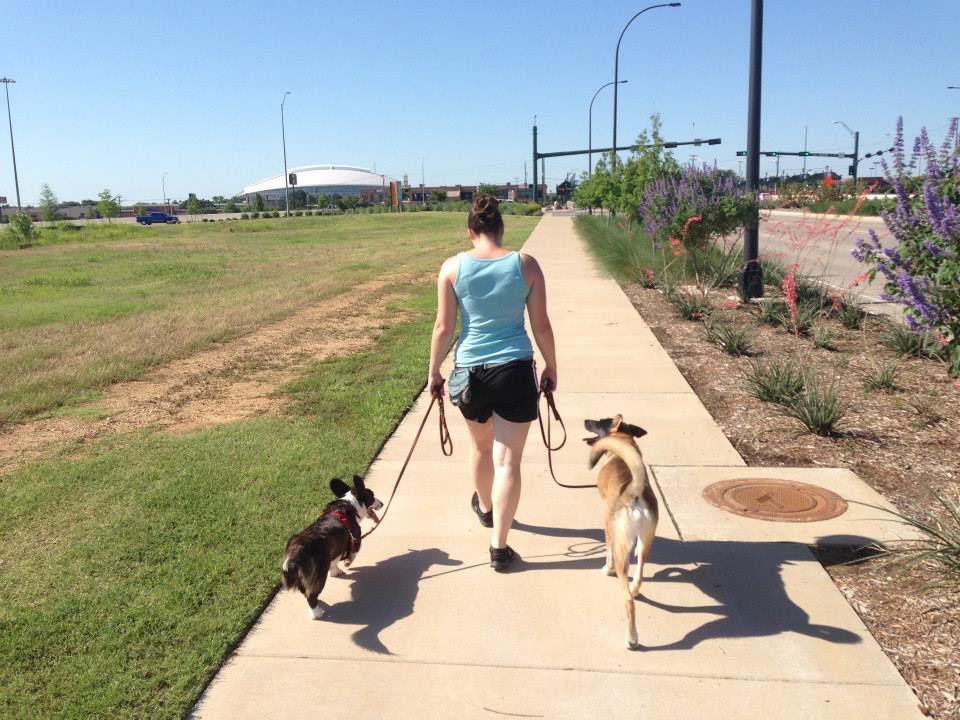
Loose leash walking. *insert ominous music* Sometimes teaching loose leash walking to clients can feel like the bane of every dog trainer’s existence. It’s not that the skills needed are difficult. No, it’s the consistency and patience that are required that can make it so tedious. So, as a modern dog trainer, what are some ways you can help teach loose leash walking to your clients? Here, we’ll examine three videos that may be of benefit.
“Polite Walking On Leash” by Ines Gaschot
This first video shows how starting simple can make such a big impact. Ines starts on the porch with her dog, Loker, simply clicking and treating for a loose leash while working in a small, relatively low distraction location. Ines illustrates how to increase difficulty via distractions and duration of behavior. She then does some troubleshooting for forging and offers alternative ways to reward dogs (changing up treat delivery, sniffing breaks, etc). She offers helpful tips at the beginning and end of the video. This video is fantastic due to its simplicity. It will be easy for your clients to grasp this concept and put it into play, even after you are gone.
“Clicker Training Loose Leash Walking” by Casey Lomonaco
Casey’s approach to loose leash walking is to emphasize the placement of treat delivery. Careful and consistent treat placement means the dog learns that being beside the owner is a Very Good Place to be. She starts slow, just standing in one place. She then begins pivoting 90 degrees each time to encourage the dog to start moving into position. After the dog is confidently doing that, she begins taking large single steps, changing direction frequently. To introduce longevity into the loose leash walking, Casey uses the “300 Peck” method. By the end of this short video, her puppy, Cuba, is politely offering loose leash walking even though he is off leash.
“How Do I Teach My Dog Not To Pull On Leash?” by Kevin Duggan
Kevin takes a different approach from the two videos above. His method is incredibly useful for dogs that aren’t as food motivated, or dogs that are in a highly distracting area. He teaches the dog that all forward movement stops if the leash gets tight. He then turns and goes another direction (“penalty yards”), teaching the dog that pulling towards a desired object actually makes it go further away. Kevin uses his voice as praise a great deal, some treats, and also a toy that his dog desires.
Conclusion
These videos all are highly simple and effective even though they use three different methods. Your clients will all have different learning styles, so being able to offer them several options for teaching this skill will ensure they have success.
What other methods do you like to use to teach your clients loose leash walking?
Get Dog Training Business Tips!
Receive valuable dog training business tips and resources every week! Subscribe to The Modern Dog Trainer now by submitting your name and email below.
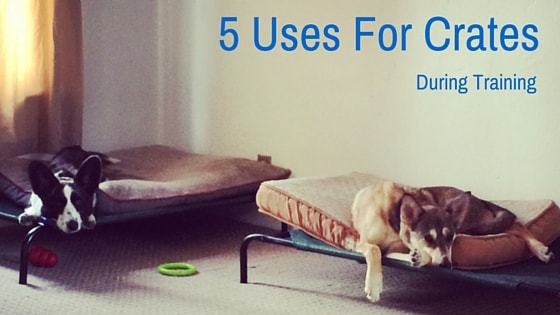
Many clients are averse to the idea of crating their dogs. Being able to explain to them how crating can help their dog’s training progress may open them up to the concept.
Housetraining
Crating can be of immense benefit when it comes to housetraining a dog, regardless of age. It keeps the dog confined to a relatively small space, keeping them from being able to roam and squat wherever they desire. Feeding the dog in the crate makes housetraining go even faster as most dogs will not go to the bathroom where they eat. Obviously it is important to stress to your clients the importance of taking the dog outside on a regular basis. Also, be sure to emphasize that crating is not to be utilized 24/7, but only when the dog is not able to be immediately supervised.
Settle
Crating can teach a dog that it’s okay to relax. Starting with very small amounts of time, clients can put their dogs in a crate with something yummy to chew on. Doing this consistently can teach the dog that good things happen in there and it’s okay to relax and settle down. This can be helpful at times when visitors are coming and going or the dog just needs to be out of the way for some reason. Having a dog that will settle in its crate can be a great management tool.
Home Base
Group classes are a great time to utilize crating. When you are talking and your attendees need to listen, they can put their dog (who knows that settling in a crate is a good thing!) in the crate so they can focus on you. The crate can also act as a home base for the dog when things get stressful or he just needs a break. Or make a training game of it – have your client do some work with the dog and then they and their dog can run to the crate together and throw a party when the dog enters.
Separation Distress/Anxiety
Separation distress/anxiety can be a nightmare to deal with, but crating can sometimes help ward it off. If your client’s dog has learned to associate the crate with Very Good Things, and has learned that its crate is used for settling in and relaxing, it can help the process of treating the separation anxiety. It is also useful to prevent a dog from pacing back and forth from window to window and barking at people/animals passing by, thereby keeping their stress levels elevated. Crating can encourage the dog to just relax and sleep or work on a chew toy. Note: Separation anxiety can be dangerous for the dog – if you are not confident in your ability to recommend a course of action that will keep the dog safe during training, please refer your client to somebody who is!
Preparation For Emergencies
Nobody ever wants a tragedy to occur, but sometimes they do. What happens if your client’s dog gets sick and has to spend the night at the e-vet? If the dog isn’t accustomed to crating, it can get incredibly stressed out, hindering treatment. If you and your clients live in a location with natural disasters that might prompt evacuation, having a crate trained dog can make it much easier to find a place that a client can go with their dog. Or even something as basic as your client wanting to take a vacation – dogs that are not accustomed to crating are more likely to panic in a kennel setting.
Crating responsibly can be incredibly beneficial to your clients’ progress in training their dogs. Being able to explain the usefulness may open some otherwise closed minds.
Get Dog Training Business Tips!
Receive valuable dog training business tips and resources every week! Subscribe to The Modern Dog Trainer now by submitting your name and email below.
One of the first behaviors we recommend teaching every client a nose target. There are many behaviors you can teach with a nose target, and even more you can teach with general targeting. We also believe it is a good behavior to teach in the beginning because it can help clients sharpen their clicker mechanics. Clients are able to physically feel the behavior they are supposed to click. Here are 10 good behaviors you can train with basic targeting.
1. Loose Leash Walking
Once the dog is able to nose target your hand well, it can be a big help for teaching loose leash walking. Instead of luring the dog with food, you can place your hand exactly where you want the dog to be (lined up with your leg), and click/treat them when they target your hand. If the dog is very target savvy, they can follow your hand for multiple steps before you click/treat. You can eventually fade out the hand target and have a very nice loose leash behavior. This can also help with heeling.
2. Mat Work
Mat work is very popular. It can provide a dog their own space whether in the house or in a foreign location. It can also be a helpful tool when trying to teach impulse control or relaxation methods. Instead of using just a nose target, mat work is a whole body targeting technique. You are teaching the dog that when they see their mat, they are to place their entire body on top of the mat. You can decide if you want only a down, or if you will accept a sit or stand on the mat. This can be applied to their cage, or a certain spot in the house when doing a certain activity. For example, when I’m cooking in the kitchen, you are to stay on the kitchen rug out of my way.
3. Platform Work
Platforms are very useful for many different dog sports or training techniques. You can use a platform as a ‘home base’ if you are working with multiple dogs. You are training the dog to target their whole body to a platform and to stay until you call them off. Another form of platform work is to teach the dog to target their two front paws on a platform and to pivot. This helps the dog learn hind end awareness which is very helpful for many dog sports including obedience, rally, agility, and freestyle.
4. Close The Door
A fun behavior to teach with targeting is closing the door. Using a nose target, you can train the dog to close the door through small approximations. If the dog can nose target a sticky note, have the dog target the sticky note on an open door and click for any movement of the door when they target the note. Once the dog knows what you are asking for and can close the door, you can begin to get rid of the sticky note by making it smaller and smaller until you no longer need the sticky note. People love seeing this behavior and will love to show off this skill to their friends. You can also work this with dresser drawers.
5. Recall/Come
Many people do not think of a recall as a targeting behavior, but it definitely can be. If you ask for the target cue from further and further, you are essentially asking the dog to recall from further and further away. You can eventually switch to a recall cue if you want to use something else, or you can just continue using your target cue.
6. Basic Obedience Cues
Your basic obedience cues such as sit, down, and stand can be taught with targeting instead of luring. Once the dog has the hang of a nose target, instead of using a piece of food to lure their nose up for a sit, you can just have the dog target your hand up into a sit. The same can happen for a down or a stand behavior. Some people prefer targeting over luring for these behaviors before you do not have to fade out the treat lure. It can be easier to fade out your hand movement or simply create a hand signal for the behavior.
7. Leg Weave
You can teach the dog to weave between your legs very easily with a nose target. Have the dog sit and stay and make a triangular space with your legs large enough for the dog to go underneath. Ask for a nose target on the opposite side of your legs and click as the dog targets your hand and moves between your legs. Once they catch on, you can ask for multiples weaves before rewarding. A very impressive, but easily taught behavior.
8. Saying “Hi!”
If the dog is an excited greeter, you can use a hand target for greeting in order to keep the dog from getting over excited. Having the dog on leash when guests come over gives the dog time to calm down before greeting the guests. Once they have calmed down a bit, the guest can ask for a hand target and then the dog can reorient to you for reinforcement.
9. Medical Behaviors
Targeting can be used to help a dog become comfortable with handling or procedures at the vet’s office. Targeting behaviors are used with large animals in aquariums and zoos to help veterinarians get samples or perform procedures on them. A prolonged target behavior can make it easier to give vaccines, take samples of blood, or get a physical exam. If the dog is doing a job, they will be more focused on the job than on what is occurring. A highly reinforced behavior like targeting can also help to calm the dog during a stressful situation. These targeting behaviors can even be done muzzled if you need that extra protection for veterinarians and staff.
10. Take A Bow
This cute finisher can easily be taught with a nose target. It is very similar to a down, but your precise clicker mechanics will come into play here. As the dog is going down to target your hand between their legs, you click as the behavior is happening, but before they drop their rear into a down. Too many bad clicks in down position will confuse the dog and will get you a down instead of a bow. Once the dog is getting pretty good, you can begin to fade the hand target and you will end up with a nice finishing behavior for all your future demonstrations.
Targeting is a very fun behavior for dogs and quickly becomes very highly reinforcing for them. These are ten behaviors you can teach with targeting, but the possibilities are truly endless when it comes to behaviors you can teach with targeting. What behaviors do you teach your clients with targeting? Do you prefer fun tricks or behavior modification with targeting?
Get Dog Training Business Tips!
Receive valuable dog training business tips and resources every month! Subscribe to The Modern Dog Trainer now by submitting your name and email below.
Open enrollment dog training classes are a big leap from traditionally scheduled and planned classes, but the conveniences they provide to our students are outstanding! Many students are looking for convenience in their classes and this concept can be a delightful change in your class schedule.
Set Up An Orientation Time For New Students
Orientation time can be a separate class time (for example: orientation is each week on Mondays at 6:00 p.m.), 15 – 30 minutes before each class, or a film a video you can send to new clients to watch before class. During orientation, cover topics such as clicker basics, classroom philosophy, and housekeeping items.
Create Your Schedule
Determine how often you want the class to “roll over” or begin again. Make a list of topics you want to cover in a typical series and how many classes it takes to include all of them (my classes “roll over” every six weeks). Also determine how many times each week you will offer the same class, adding to the flexibility factor of this structure.
Be Prepared To Have Students At Different Levels
Open enrollment classes mean that potentially every student in your class could be at a different level on the same exercise. Be prepared to address these different levels. Using the three D’s (duration, distraction, and distance) is helpful in preparing your classes to address the different needs of students at different levels.
Make Flexible, Open-ended Lesson Plans
Having flexible, open-ended lesson plans for each class gives you direction and purpose. It will make each class session more productive if you have goals set ahead of time.
Educate Your Current And Potential Students
Remember, this may be a new concept to your students, too! Explain your new class structure, outline the benefits, and show them how this will the flexibility will suite their needs.
Give It Time To Work
We have taught traditionally planned and scheduled classes for a long time. It’s going to take some time for you and your students to get used to this new concept. Give yourself time to settle into this new routine, but make sure your plan is clear to your clients to avoid miscommunication.
Comment below if you run open enrollment dog training classes and what you think of them!
Get Dog Training Business Tips!
Receive valuable dog training business tips and resources every week! Subscribe to The Modern Dog Trainer now by submitting your name and email below.