After thorough surveying throughout online communities, we discovered the five most popular dog harnesses for training.
The first three harnesses are front attachment harnesses which have a ring on the back across the shoulders and another ring in the middle of the chest piece of the harness. A double ended leash can be attached to one or both rings. This gives handlers better control of the dog, so when a dog pulls he is turned sideways which reduces or prevents pulling.
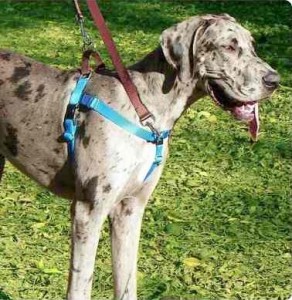
Some trainers say that this is the best harness they have used since they like the 2 stainless steel rings. This harness is also very adjustable so it fits well and the chest strap is lined with velvet, which helps prevent rubbing and chaffing. It has a control loop on the back of the harness, which tightens gently around the dog’s chest to discourage pulling. Some trainers don’t like this martingale effect though. 2 Hounds Design is the exclusive manufacturer of the Freedom Harness and is made in the USA.
This is another highly recommended harness, which was invented and made in the UK. It has three pieces – top, front and girth which clips together and can be swapped out so that any combination of size or colors can be used. What is also nice is the high quality soft, washable fleece padding which helps prevent rubs from the webbing straps. Another great feature is that this harness can be customized to fit front legged amputee dogs.
Made in Great Britain, this is another 2 point harness, (chest & back) which is adjustable within the size range and comes in a variety of colors and a padded double ended lead. Some people think that the vertical strap behind the front legs is a little too close to the front legs/elbows though.
This harness is different from the three above in that it is a side attachment harness and comes with a protective sleeve for tummy strap, a leash and instructional DVD. When the dog pulls forward it is guided round to face you.
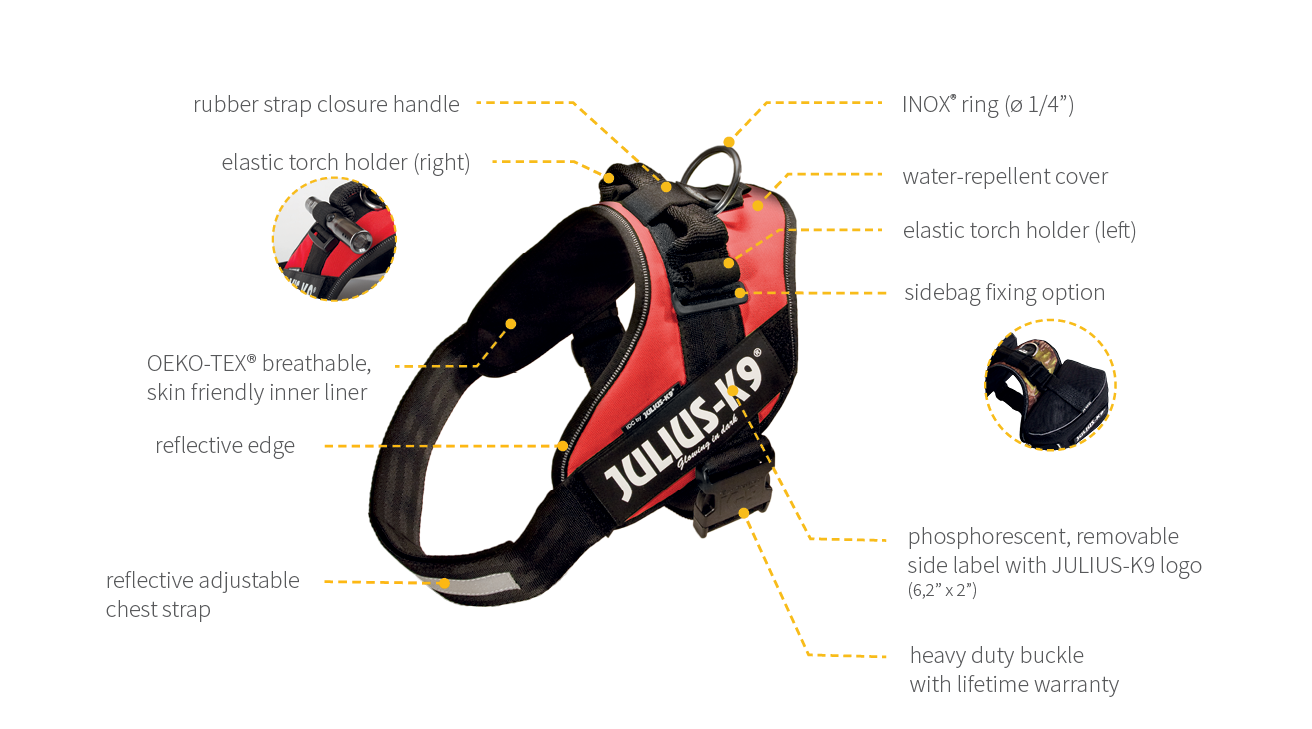
This harness is made by a company which specializes in high-end Schutzhund products. The Julius-K9 IDC Powerharness comes in lots of colors and adjustable sizes. It is well-known for it s comfort, fit and quality. There is a neat handle on top which can be used to lift dogs. The chest belt, edges and the Julius-K9 tags are reflective. There is also a loop on the top to attach a mini flashlight for those walks at night.
Whatever you choose, make sure the harness fits the dog properly and does not restrict his movement, rub or chaff him. Harnesses are a better option than a regular collar because it won’t damage a dog’s throat when he pulls. But the best way to get a dog to stop pulling is to train him using force-free loose leash walking training techniques.
What is your favorite harness and why?
Get Dog Training Business Tips!
Receive valuable dog training business tips and resources every week! Subscribe to The Modern Dog Trainer now by submitting your name and email below.
If there is one thing all dog trainers love, it’s their equipment! From collars to treats, dog trainers can obsess over many things. The line between owner and dog is something that takes many forms. Not only do leashes look different, they also serve different purposes. The following leashes have a special place in dog training.
1. Long Lines
Long lines are very important in dog training because we always want to set our clients up for success. Long lines are utilized during recall or off leash training when we want to ensure the dogs will come back to us when they are called. Lighter weight long lines can be a stepping stone to off leash work. Materials used for long lines include nylon, rope, biothane, and leather. Nylon and rope are lighter and cheaper, while biothane and leather are a sturdier, but more expensive option. Biothane is also waterproof, which can be beneficial in long lines since they drag the ground.
2. Waist Leashes
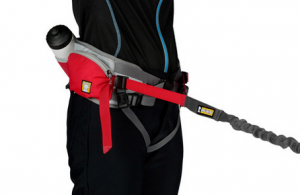
Waist leashes are good for your clients who continually ‘check’ their dogs with the leash or clients with dogs who are very strong. If your clients cannot break their habit of checking their dogs or keeping a tight leash, using a waist leash will keep them from steering their dogs. Waist leashes are also good for clients with strong dogs because it allows your client to use their whole body to steady their dog instead of being pulled off-balance with their arms. Waist leashes that I, or very close colleagues, have tested include the Ruffwear Omnijore Hipbelt and the Dog-Safe Hands-Free leash.
3. Double Hook/European Leashes
Double hook leashes are good for clients who do many different things with their dogs like hiking, dog sports, or leisure walking. These leashes have two snaps at either end of the line, with or without a handle. Different examples would be the 2 Hounds Freedom Harness Double Hook leash. This leash allows you to utilize both snaps on the Freedom No-Pull Harness. You can also attach both hooks to one ring to make a shorter leash, or you can attach only one hook for a longer line. Another double hook leash is the police lead or the TTouch leash. They are usually leather or biothane and have two hooks and a few o-rings on the leash. You can make it a shorter or longer lead or use it over your shoulder (so it hits across the chest like a seatbelt) to become a hands free leash. There are many makers of these leashes, but I would recommend a well-known leather or biothane crafter, such as Paco, Ella’s Lead, TTouch Leash, or Karma.
4. Bungee Leashes
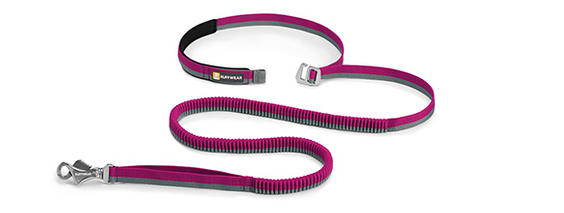
Bungee leashes are exactly what they sound like. These leashes have a bungee portion that absorbs shock. These are good for your clients with dogs who are heavy pullers. They absorb the shock when the dog bolts out and reduces the amount of jerk that makes it to your client. While your clients are training with their dogs, these may be a good idea in case an accident occurs. A bungee leash that I have personally used with success is the Ruffwear Roamer leash. The nice thing about this leash is that it can also be used as a waist leash!
5. Obedience Tabs
Just like with long lines, obedience tabs can be used when perfecting off leash work without the leash in the way. These are very short leashes that can be attached to the collar and left to hang there when not held. They are short enough that they do not impede the dog’s legs or paws, but a good safety back up to have in case your client needs to quickly grab their dog. These come in many sizes and material such as nylon, rope, leather, and biothane.
These five types of leashes all serve different purposes in dog training from lessening the amount of strength an owner needs, to advanced obedience work. What is your favorite leash and what purpose does it serve in dog training? Do you prefer one material over the other? Why?
Get Dog Training Business Tips!
Receive valuable dog training business tips and resources every week! Subscribe to The Modern Dog Trainer now by submitting your name and email below.
Do you find some clients saying: “I just want my dog to calm down”? I often think they are really saying they wish their dog would listen to them rather than lose their spunk or nuttiness. Often times when dogs are aroused by their environment be it a squirrel, another dog or a human, the behaviors that they know well in their day-to-day life such as sit and down, go right out the window because they’re so aroused and excited.
As a trainer we can help their brains comprehend what arousal feels like so that the pup can perform all his basic tasks when aroused. Tug-of-War is a tried and true way to teach impulse control when aroused. It is incredibly important as a trainer to watch the dog’s behavior change as you tug and to remember that in the beginning it can be pretty intense for the pup, so taking breaks to reduce stress from the intensity is also key.
Darth Vader vs. Luke Skywalker
Tug-of-War can sometimes be viewed as the Darth Vader of games for dogs; designed to encourage aggression, when in fact it isn’t evil at. Take it from me: if tugging made dogs aggressive then I would have the most aggressive dogs on earth. When tugging is used properly it serves as a game of bonding between you and your client’s pup. Tugging can be used as a wonderful tool to create what I call “synthetic arousal”. Granted; arousal is arousal, but when we can incite it through tugging, arousal can help proof the behavior and make your client’s dogs super solid!
Dress Rehearsal
It’s probable that the directions and exercises we give our clients to practice throughout the week will be rehearsed in a quiet and safe area. They often choose spaces such as their living room or bedroom, which are good starts but can tend to act like a vacuum. If they rarely push their pup to practice new behaviors in more stimulating environments, the tendency is that is the dog can only perform the behavior in a quiet and calm area.
So, how do we take the show on the road? Enter, stage left: Tugging.
Establishing the rules to this kind of play first is of utmost importance. A good trainer first must institute the ground rules around mouthing, choking up on the toy, and jumping—teaching clearly what’s prohibited. Making sure too that the dog will drop the toy on cue is an example of the small, yet critical pieces of impulse control necessary for easy and successful arousal training. I’ll often make simple adjustments when unwanted behavior arises such as dropping the toy mid-game and walking away—remembering that I’m the one making the toy dance and without me it’s just a rag on the floor.
Just Before the Curtain Goes Up
After your client’s dog has the foundation of tugging with rules, it’s time to move on to doing a type of circuit training where basic commands such as sit, down, stay, and leave it are added to the tugging games. Prime the pump by asking your client’s dog to sit a few times rewarding each time with food. Then present the tug toy and tug with the pup for a short time. Follow by asking for a drop and a few sits. If you notice that the pup has some difficulty sitting or holding a sit because they are aroused, slow down on the tugging, as this is no different than fine-tuning the equalizer on a Hi-Fi stereo.
Opening Night
Just as all successful performances are the result consistent and fun rehearsal after rehearsal, we know that dog-play is no different. The circuit training allows for dogs to continue thinking even when they are aroused. With this type of training you’ll be setting them up for amazing amounts of success where they will be able to do more than just stay at home. They’ll probably even lose the old title of “crazy” and maybe even be nominated for an Oscar.
How will you be using tugging in your training?
Get Dog Training Business Tips!
Receive valuable dog training business tips and resources every week! Subscribe to The Modern Dog Trainer now by submitting your name and email below.
“Lazy Dog Training” is a term I use when working with clients. Clients often feel overwhelmed by the amount of training that is truly needed. Because we are trainers and know the importance of training, it’s easy for us to show up with the energy of Richard Simmons; hitting them with a barrage of knowledge when we walk in the door. Sometimes this amount of information can overwhelm certain families making the task of training seem very daunting. For these folks lazy training can be an amazing tool for both you and your client’s toolbox since it is passive training.
Inadvertently Rewarding Other Behaviors
There are certain behaviors that can be taught and various exercises that can be done in which you are rewarding the main behavior while “secondary” and “tertiary” behaviors are also being rewarded. This is “good fallout”; a happy trickle if you will. These lazy techniques give you a 2-for or a 3-for, for the work of one.
Why not hit two birds with one stone?
One of my favorite examples of this is the Elevator Game. In this game, you are specifically teaching a dog not to jump. You begin by lowering a treat from above a sitting dog and click and treat for being able to lower the treat to the dog’s face without him jumping. Although you are rewarding the main behavior, what else is the dog learning simultaneously? The beginnings of a stay! (The staying part of the behavior would be the “secondary” behavior being learned simultaneously.) As you add a little distance and duration and, eventually, distraction, you will end up with a great little stay!
Another passive game I play is Kong-to-go-to-bed. I often start with this when doing a consult. Have the family stuff a Kong and then set up a bed or a crate a few feet away. Give the Kong to the dog and notice the dog will generally go and lay with its new stuffed Kong in bed. At first glance it might seem like that’s all that’s happening but in actuality you’ve got a magic Kong! It’s dispensing rewards for being in a down in a dog bed!
Continue the exercise by periodically walking over and exchanging the Kong for a treat. Walk away with the dog following you and then give the Kong back. The dog should return to his bed. After some repetition, cue “go to your bed” and give the Kong and watch the owner’s jaws drop as he goes to his bed on cue.
Change The Client’s Perspective
Another way I teach passive training is to change the client’s perspective by asking them to catch their dog being good. So many dog families are so quick to punish a pup when they do something wrong but rarely do they reward when the dog is doing something right. I will generally ask them to ask themselves this question, “is your dog being good or naughty this second?” If the pup is being good, feed and praise him! With a treat pouch on their hip, have them click/mark and capture moments in the day when their pup is being good. By doing this you will have a pup that is actively engaging with its owners trying to figure out “what makes them click?”
The moral of the story is to remember that just because it’s lazy training doesn’t mean the job isn’t getting done. Let’s teach owners how to train smarter, not harder.
What are some ways you will use or are using lazy training?
Get Dog Training Business Tips!
Receive valuable dog training business tips and resources every week! Subscribe to The Modern Dog Trainer now by submitting your name and email below.
Relaxation is something a lot of dogs do not know how to do in many different environments. It is also something most owners do not think they have to teach their dog. Relaxation is important because it helps lower the chance of reactivity when dogs are able to be level-headed in many different environments. Relaxation exercises are also important to help prevent separation anxiety. A dog’s ability to learn is also higher when they are relaxed versus when they are anxious or hyper.
There are many different ways to teach a dog to relax. Here are three techniques to try.
1. Relaxation Protocol
Dr. Karen Overall’s relaxation protocol is a very popular method to teach relaxation. You can find mp3’s of the relaxation protocol here. Below is a video with an explanation of what the relaxation protocol entails. You can also perform the relaxation protocol on your mat so you can relate relaxation with the mat wherever it is taken.
2. Capturing Calmness/Default Settle
Kikopup has an excellent YouTube video on how to capture a dog’s calmness. Rewarding the dog when they are not expecting it when they are calm. This is something the owners can do while watching tv at night. Teaching a default settle is a great behavior for owners who enjoy taking their dogs to outside patios for meals. These behaviors have the dogs working on relaxation because they enjoy the behavior, not just because food is present.
3. The Calm Chin Rest
Another of Kikopup’s videos touches on ‘the calm chin rest’. This is teaching a chin rest, usually without a clicker because they have a tendency to excite dogs, and working towards moving the dog’s neck and feeling for their body being loose and relaxed.
These are just three methods that can be utilized to teach relaxation. It’s important that all dogs learn how to relax in different environments as it is not healthy or fair for a dog to live in an anxious, stressful environment.
What other relaxation methods do you utilize with your clients?
Get Dog Training Business Tips!
Receive valuable dog training business tips and resources every week! Subscribe to The Modern Dog Trainer now by submitting your name and email below.
Clicker training does not mean you will never tell a dog “no.” Behaviors that are reinforced with a click/treat will repeat; behaviors that are ignored will go away. Ignoring behaviors and/or NOT clicking/treating is telling the dog “no, that’s not what I want.”
2. A Clicker Is Forever
Some people think, “I will have to carry a clicker and treats with me everywhere for the rest of my dog’s life.” Once the dog’s history of reinforcement for a behavior is built and the behavior is on stimulus control, the click/treat reinforcement is no longer as important. It is, however, important to remember that to maintain behaviors, reinforcement of the behavior should still occur.
3. It’s A Juggling Act
You need to have three hands (or more!) to clicker train. Practice clicker mechanics just like you practice “sit” and “down.” Get your leash, clicker, and some treats (candy or something rewarding for you) and practice without a dog (hence the treats for you!). Another way to practice is to have someone bounce a ball while you click/treat when the ball hits the ground.
4. It’s Bribery
Some people also think, “My dog will only listen to me when I have a clicker/treats.” Dogs will not do what they are asked to do until they have learned the cue and the behavior. Once dogs understand the cue and know the behavior, this is no longer an issue. Using proper clicker training mechanics is also an important part in preventing bribery – keep those hands out of the treat pouch!
5. It Isn’t Applicable To Other People
Do you want your dog to listen to someone else? Then have that person train with your dog. Or if what you want is a dog who will listen to a variety of people (vet tech, groomer, dog walker, etc.), have a variety of people train with your dog so that your dog gets used to listening to a variety of people. It is not about training method — it is about generalization and training in general.
6. A Classroom Full Of Clicking Will Confuse A Dog
Life is not lived in a vacuum and dog training is not done in a vacuum. Dogs pay attention to the whole picture – body language, verbalization, emotion, clicker, treats, etc. Your dog absolutely knows which click is for her.
7. Clicker Training Is Limited
You can train everything with a clicker – from sit to housetraining to dog sports to working dogs. Everything.
8. You Can’t Use A Clicker For Dog Sports Or Therapy Dog Work
Clickers are not allowed in the ring or on therapy visits (with many registering organizations/groups). But you can certainly utilize clicker training to train and prepare your dog for these things (remember it’s about history of reinforcement and stimulus control). Fortunately, you can utilize the clicker in your warm-up routine (at competitions it is polite and good trial etiquette to warm up outside or away from the ring(s) if you are using a clicker so as not to distract the working dog(s)).
9. Clickers Won’t Help With Reactive Or Aggressive Dogs
Using a clicker to work with a reactive or aggressive dog can be very calming for the dog. Once the dog understands that click means reinforcement, it helps the dog feel more comfortable and confident. They enjoy knowing that a click means the same thing in the training space, at home, on the street, alone, with other dogs, etc. A clicker increases comfort and confidence in reactive dogs because it consistently reinforces the behaviors they should do in a trigger situation while creating a positive association.
10. Sound Sensitive Dogs Hate Clicker Training
There are a number of different clickers with different levels of sounds for dogs and for humans. Experiment! If you can’t find a clicker that your dog is comfortable with, try a clicking pen, a canning lid, children’s toys – be creative. You can also put your clicker in your pocket or behind your back to quiet the sound a bit. Always be careful not to click too close to a dog, especially his ears.
Get Dog Training Business Tips!
Receive valuable dog training business tips and resources every week! Subscribe to The Modern Dog Trainer now by submitting your name and email below.

 1. Freedom No Pull Harness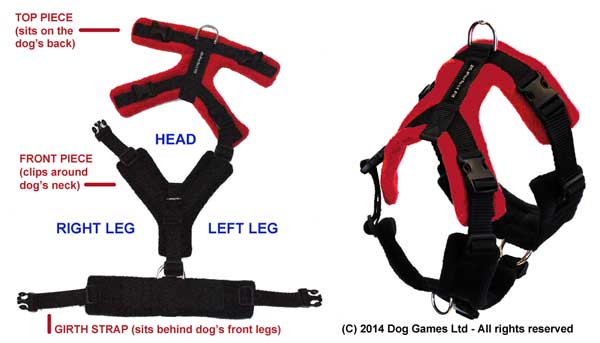
 3. Mekuti Balance Harness
 4. Ultimate Happy At Heel Dog Training Harness