![The Importance Of Feedback For Fido]()
by Jorge Melara | Apr 29, 2015 | Training Methods
Immediate, in the moment feedback is the key to Fido skipping a grade or two in the school of advanced good-behavior. In fact, dogs respond just the same to current feedback as us humans. Positive and current feedback–that is. So why don’t’ we use it all of the time? Using verbal praise effectively in dog training is extremely important.

Use the Force
Imagine for a moment that you were blindfolded and I was to ask you to navigate through an already familiar setting such as your regular supermarket with a list of items that you needed to quickly gather. Without any help.
Now imagine that although you were blindfolded, I would offer you feedback through word or sound to clue you in to on-coming people, carts, or even through the isles and the items that were in them. Which would be more effective in getting you to respond in the desired manner, and how much feedback would you want? Of course your answer would be: “A metric ton!” We should consider the value of positive immediate feedback in working with pups in the same way. If I let you stumble through the supermarket for 20 minutes before giving you feedback, you can imagine how ineffective the feedback would be. And, more than that, if I only said: “no, not that way” instead of telling you what TO do, you’d be almost as lost.
Bad Feedback
It’s true: dogs often receive feedback. However, it’s generally when they have done something wrong. We tend to use bad or negative feedback to tell our dogs when they have done something wrong, such as: “What did you do?!”, in that familiar low and grumbley tone. Sometimes even pain or fear are paired with the tone to send a message to the pup that they did wrong. It’s common that the habitual immediate feedback is negative and that the good feedback generally happens after the fact or is expressed later during snuggle time, unrelated to the desired behavior on the spot.
So, how do we change this?
What Just Happened?
The simplest example of common feedback that a dog often receives is leash-walking feedback. The pup is likely to be familiar with the “eh-eh” and a tug on the leash when they pull, but what about all those well-behaved steps they took while they were on the walk? Enter positive immediate feedback!
Chances are, you or your client are going to be walking a dog today. During the walk while the pup is walking nicely, sweet words of encouragement in a nice tone should be offered. Reward the pup with happy feedback as they offer good behavior such as a well-paced walking or a simple look-up and acknowledgement to the walker. The beauty of positive feedback is that it can be given frequently. Pair a happy tone and excited voice with a tasty morsel and the pup will be well on his way to responsive good behavior. With positive feedback and food rewards it’s easy to catch a dog being good–and reward the behavior right then and there.
Going for Gusto
I’ve mentioned tone, but the energy and volume behind the positive feedback shouldn’t take a back seat. I often notice at first that when my clients are doing an exercise and they give praise and positive feedback, it’s generally always either muted or audibly non-existent. I often ask my client, “Why are you whispering, are you in a library?” As easy as it is to shout “no”, it should become easier to exclaim, “yes!”
Another place positive verbal feedback is wonderfully effective is during a “stay”. I’ve experienced new clients often asking their pup to sit and then have observed them back away saying “stay, Staaayyyy, STAY….”. Try having them say long slow praise words to give the pup info about what it is that they are doing right instead of repeating the stay cue. If the pup pops up from a “sit” or a “down”: pause the praising. Stopping the praise can be a better way to let the pup know that they have made a mistake.
Fast Food vs. Fine Dinning
Fast food is usually unmemorable and lacks stimulation, while fine dining leaves memorable, impactful and exciting memories leaving us wanting more. In the same way that both are food but one is nutritious; so is the way we prepare and serve our praise and positive feedback. If the praise falls flat, the pup will have the same unmemorable, processed experience that fast food delivers instead of the satisfying, nutritious and pleasing feeling that fine dining offers.
Pitch & Tone
The effectiveness that pitch and tone have on informing a dog of the desired behavior is often overlooked. In Patricia McConnell’s book, The Other End of the Leash, she describes cues such as the “mouth clicks” we make to have a horse move faster and the slow and low “whooooaaa” that get an animal to slow down as universal sounds. Using universal sounds with your voice such as a slow: “gooood dog” for praise or a higher pitched and quick “pup-pup-pup” during a recall that matches the speed and cadence of your desired result for the specific behavior works wonders.
Using verbal feedback as a reward in place of paying with a treat is also effective when working towards getting a behavior to a place of maintenance or mastery. The verbal feedback allows the pup to receive positive reinforcement without having to always treat. The power of pairing an enthusiastic tone and pitch with the treat will soon condition the dog to understand the good job they’ve done, even when a treat is offered more randomly. For the pup, a happy voice is like holding their paw: they listen and pay attention and even get happy when they hear “Good boy”, or “Who’s my shnoopy-woopy??” Remember to remind your clients that if they don’t look a bit silly while delivering their positive verbal feedback, they’re doing it wrong! 😉
The Cliff Notes for Solid Behavior:
- Praise Immediately
- Reward the Desired Behavior
- Reinforce with Treat, Tone, & Touch!
Get Dog Training Business Tips!
Receive valuable dog training business tips and resources every week! Subscribe to The Modern Dog Trainer now by submitting your name and email below.
[mc4wp_form]
![Behavior Adjustment Training (BAT) – What Is It?]()
by Liz Wyant | Apr 21, 2015 | Training Methods
As a modern dog trainer, you most likely enjoy learning about new techniques, or new twists on more classic techniques. If you have not yet heard of Behavior Adjustment Training (BAT) by Grisha Stewart, you are in for a treat. This will be the first of a three-part series discussing BAT, its applications, and most common mistakes made by trainers/owners.
BAT My Dog? What?
Grisha developed BAT after studying similar techniques and seeing how they could be tweaked to improve upon them. Her own reactive dog, Peanut, was very fearful of people, and she was seeking a way to help him live his life safely and happily. She is a firm believer in force-free training and empowering dogs, so she wanted a technique that would teach Peanut to acclimate to and even learn to like people, while always giving him the option of approaching or moving away.
BAT Basics
BAT is, quite simply, allowing your dog to make choices. Permitting dogs to make choices empowers them, making them more confident. So often, people want to control every aspect of their dog’s lives, thereby shutting their dogs down because they have learned that communication of their needs will just be ignored. A conscientious trainer will help people learn where they can offer some leeway to their dogs and allow them to express their needs safely.
BAT can be quite dull to watch to the untrained eye! In short, what it looks like is a dog wandering around on a long leash in an open area, occasionally glancing at whatever the item of their reactivity is. It’s much more complex though. As a trainer, you are teaching your clients to be lifeguards to their dogs. Let’s consider that the small waves at the beginning of the ocean are a visualization of the dog’s threshold and under threshold means being several yards up on the beach away from the ocean.
When the dog is safely under threshold, owners follow their dogs and allow them to move where they’d like, sniffing what they like, peeing where they like. In essence, being dogs. However, at a distance at which your dog is still comfortable is their trigger, what they are fearful of or frustrated towards or aggress towards. We’ll say it’s another dog for this article.
On The Shore Or Drowning?
So your client’s dog, Fido, notices his trigger, the other dog. If he glances at it and continues wandering around, that’s great. You’ve started at a safe distance. At some point though, Fido is going to meander closer to the other dog. Your job as a trainer is to help your client keep Fido from getting too close, beyond where he can handle it. Dogs can and will take themselves over threshold without our guidance. Essentially, keep him from drowning. We want Fido at a distance where he has noticed his trigger and is interested, but can easily disengage on his own.
If Fido starts getting overly interested or too close to the other dog, the lifeguard (his owner) needs to step in and save him. This is done through a variety of BAT leash skills that encourage Fido to turn away, rather than force him. What you do not want is to get to the point where your client needs to haul Fido away on a tight leash.
A “perfect” BAT session should consist of Fido being able to explore his area and gather information about the other dog, on a nice loose long line. Fido will sniff around the ground a little bit and then perhaps air scent the dog. Because he is not too close, he will return to calm exploration of his area. When permitted to move freely, you will see Fido approach the other dog in a gentle curve, without anxiety, fear, aggression, etc. As Fido sniffs his way slowly to the other dog, his handler will get more involved, keeping him from going faster than he can safely and calmly manage. With the help of his handler, Fido won’t get closer than he can handle, but he does notice his trigger. Your client will only guide Fido if he starts stepping off the beach and into the water, getting too close to his trigger.
Stay tuned for part two of this three part series on BAT!
Want To Learn More?
BAT is very complex and one little blog does not do it the justice it deserves. To learn more, you can watch a lovely free BAT Overview video that Grisha offers.
You can also watch a full 2 hour BAT Intro Webinar that Grisha put out. It is $29 but well worth the money if BAT is something you’d like in your toolbox.
Finally, to get the full immersion and become more proficient and comfortable in its use, you can take an online course called BAT 101.
Get Dog Training Business Tips!
Receive valuable dog training business tips and resources every week! Subscribe to The Modern Dog Trainer now by submitting your name and email below.
[mc4wp_form]
![How To Socialize Puppies Before Getting Them Fully Vaccinated]()
by Jorge Melara | Apr 9, 2015 | Training Methods
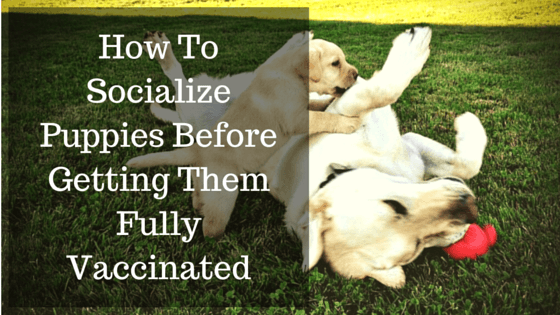
Early Socialization and Vaccination: Risk-Free Puppy Socialization
One of the most effective (and easiest ways) to prevent a huge slew of behavioral problems in dogs is to socialize them early. By “early socialization”, I do mean before the pup may have had all of their vaccines; which I do believe should happen on a responsible schedule. To help take the worry and confusion out of my client’s minds around vaccination & socialization; I’ve put together simple and safe guidelines and alternatives that you too can share within your doggie-loving circle.
Early Socialization Myth #1: Public Grounds Are Off-Limits
It’s a common misperception among dog-owners that having their puppy outside on the ground or anywhere in public is dangerous until they’re completely and entirely vaccinated. If we as dog-owners wait to begin socialization, our pups are at a much higher risk for any behavioral issues to strengthen and take hold. The good news: There’s a happy medium. It’s all about discernment and caution.
Myth #2: Puppy Classes Are A No-No Without Vaccinations
Clients often ask me if it’s safe to take their puppy outside. The simple answer is: OF COURSE IT IS! It’s equally important to expose them to their new world AND to begin the first rounds of vaccines. A great start is to encourage the practice of the first round of vaccinations because Parvo and Distemper can be quite violent in the body of a puppy. Taking action with the first round coupled with erring on the side of caution with common sense will keep the risk of both at nil while setting the tone for social integration at the onset.
Myth #3: You Must Stay Off My Property!
Rather than go extreme, it’s most important the dog owner knows who’s been ON the property. Having a fenced-in property is an ideal way to manage this without the stress of guessing. A fenced-in property is awesome, because it keeps the pup contained while keeping other unwanted critters out! Additionally it can assure that the puppy will have a private play place where he can learn about different surfaces and textures. You’ll find the pup can learn about other noises and be able to see the great outdoors safely and freely. Most importantly it makes knowing who has been on the property easy. Use caution though, if your client’s uncle brought Boomer, their family’s lab, up from the big city recently, some precautions might need to be in place for in and around the home.
Myth #4: The Mall And My Mutt Don’t Mix
The Mall is what I like to think of as the “Not so Beaten-Path”. It can be a wonderful place for all types of socialization to occur. Today, there are a ton of big named stores that allow pups through the doors that are so infrequently used! Macy’s, Lowes, Nordstrom, and Old Navy are perfect, just to name a few. So, pack up the puppy and get to the stores! So often people find a puppy in a store so novel that they will scurry over to meet your client’s pup making the “people meeting” part of socialization super easy. You might even find that the clothing racks and the hustle and bustle of the stores provide excellent learning opportunities. In an environment such as The Home Depot or Lowes you may get the added energy of a burly contractor eagerly offering a puppy petting session.
Here is a great list of pet friendly stores that will keep your client’s pup safe with good socializing to boot!
Myth #5: Costume Parties Are for Halloween
What happened to the days of costume parties?! Have your clients dig out those old Halloween costumes, get out those groovy bell-bottoms and have a ball! If anyone needs a reason to invite some friends over for a little shindig, now they’ve got the perfect excuse. Make the new pup the guest of honor and have the treats flow from the guests while exposing the pup to all different kinds of people and outfits!
Myth #6: Kids And Puppies Don’t Mix
Responsible kids make great teachers. Ask your clients if they know any kids that are well-mannered and responsible around dogs, and have them over for a play date with your client’s pup. Because puppies can get nippy and excited around bubbly kids, it will be important to teach the pup from a young age that kids are people, too.
It’s true: The World is our Playground, and it doesn’t have to wait for the new pup to be all grown up!
Check out this handout with safety tips and guidelines for new puppies, socialization, and vaccination.
What are some of the ways you socialize your clients pups before they are completely vaccinated?
Get Dog Training Business Tips!
Receive valuable dog training business tips and resources every week! Subscribe to The Modern Dog Trainer now by submitting your name and email below.
[mc4wp_form]
![5 Tools To Aid Loose Leash Walking]()
by Liz Wyant | Mar 27, 2015 | Training Methods
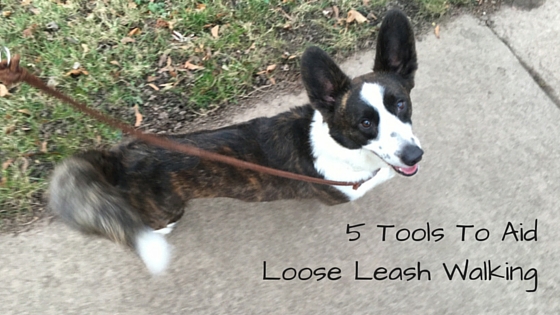
As discussed in a previous article, helping clients teach their dogs to walk nicely on a leash can be a struggle. But there are some tools available that can help your clients manage their dogs and make walks more pleasant while assisting with loose leash walking.
Front Clip Harness
Harnesses are wonderful for keeping pressure off of a dog’s delicate and injury-prone neck area. However, to make a pulling dog easier to walk, you want to make sure the harness clips in the front, at the chest, not at the back. Having a front clip harness can make loose leash walking easier because when the dog pulls, the front clip swings the dog around to face you which keeps them from getting a lot of leverage. The most popular front clip harness is probably the Freedom Harness by 2 Hounds Design.
Waist Leash
It is remarkably frustrating for your clients to have their arms yanked around while walking their dogs. Hand-held leashes can actually hinder loose leash walking a bit because there is no set length for the dog to learn to work within; the leash is perhaps 6′ long when the arm is at the side, but when the dog pulls they can gain another 18-24″ from the arm getting yanked! A good waist leash can provide consistency for the dog to aid in their loose leash walking skills while keeping your clients safe. Not only do their arms not get jerked around because the leash is around their hips, if the dog does lunge they are much less likely to get pulled over because the leash is at their center of gravity. A good waist leash that is safe enough for even the strongest dogs is the Dog-Safe Hands-Free Leash by Blue Dog Training.
Target Cue
A very simple hand targeting cue that has been heavily reinforced can make loose leash walking much more attainable. When your client’s dog starts getting close to the end of the leash, they can cheerfully request a target and the dog will come back and bop their hand. When rewarded for this frequently enough, the dogs will learn it might just be easier to stay closer in case their owner decides to cue them again. Most dogs think hand bopping is great fun!
Large Safely Contained Area Or Long Line
Having access to a fully enclosed field or tennis court has multiple benefits when it comes to loose leash walking. Your clients can allow their dogs off-leash safely to run some of the crazies off before going on a more structured walk. Or they can stroll around the field and reward heavily when their dog comes by them. This creates a dog that loves being around its owner! If the area is not 100% safely contained, a long line can provide the same benefits. Sturdy 50′ lines can be made very inexpensively from items at any large home improvement store. Remember – a 50′ line actually gives the dog 100′ of running room, plenty to allow the dog to zoom off some of that energy.
Clicker And Treats
These are counting as one “tool” because they are a set. Though all the above tools will make loose leash walking more comfortable for your clients, you still want to show them how to use their clickers and treats to train an actual loose leash walking behavior with their dogs, not just manage it. Management is great. Training is better.
What tools have you found that help your clients manage comfortable loose leash walking?
Get Dog Training Business Tips!
Receive valuable dog training business tips and resources every week! Subscribe to The Modern Dog Trainer now by submitting your name and email below.
[mc4wp_form]
![5 Things Missing From Your Training Bag]()
by Kat Camplin | Mar 23, 2015 | Training Methods

What’s in your training bag? You may be missing some helpful tools!
Are you having difficulty doing set-ups that allow the dog to succeed? These items are terrific for creating intermediate steps while training impulse control and desensitizing for reactivity.
1. An External Speaker
There is a big gap between playing scary sounds on your phone or tablet and the real, live version of the same sound. Sometimes you just can’t get enough distance to the sound source to not see a backslide in fearful reactions. An external speaker can bridge this gap for you. Hook it up to your phone or tablet and you get to use the same sounds at a slightly higher volume. This OontZ speaker is small, portable, and connects via bluetooth which can make it easier to hide for more realistic set ups.
2. Tasty Goop
Biting puppies need to learn licking is better than biting. Smearing yummy stuff on your hands and arms while working on friendly greetings, putting on collars and leashes, or playing with toys, redirects biting to some reinforcing licking. While peanut butter is tasty, it’s not particularly nice to smear all over yourself. Kong Spread or canned cheese are better options and they don’t need to be refrigerated. Plus, the puppy seems to get all of it off, whereas peanut butter always seems to leave remnants.
3. A Flirt Pole
Flirt poles are awesome. You get to teach impulse control, tug, appropriate play, and chase and grab bite away from human hands and legs. The best part is you get to use your client’s own dog toys, so there isn’t any chance you’ll have to replace toys if they’re shredded due to tiny puppy teeth. If you’d like to make your own, you can find instructions here: How To Make A Flirt Pole. Manufactured flirt poles are available on Amazon, but you can make one yourself easily for under $10 with PVC and rope from Home Depot or Lowes.
4. Wildlife Scents
Whether you’re working on “Leave It” with loose leash walking, or using the opportunity to sniff as Premack reward, knowing where the wildlife scents are is extremely helpful. You can set them up next to specific trees, mail boxes, or cars, and know exactly where they are so you can give the cue well in advance. Recommended scents to start with would be rabbit and squirrel. In areas with more diverse wildlife, look at scents that replicate animals in your area. Wildlife scents are available on Amazon and GunDogSupply.com online.
5. Remote Controlled Car
Remote controlled cars are one of the more useful tools you’re probably missing. They make little engine type noises so you can work on sound sensitivity or socialization. They move so you can work on motion sensitivity and prey drive. You can control them from a distance so you can work on desensitization at a successful location. Use them to work on barking out front windows. You can make the car move while inside with your learner so you can teach an alert or “look at that.”
Putting Items Together
Is your learner succeeding too quickly? Put items together to make things more difficult. Strap a stuffed squirrel to the top of your remote-controlled car, add some squirrel scent and your phone with squirrel chatter sounds, and you’ve got an awesome tool to work on impulse control around prey.
Get Dog Training Business Tips!
Receive valuable dog training business tips and resources every week! Subscribe to The Modern Dog Trainer now by submitting your name and email below.
[mc4wp_form]
![5 Great Games To Play In Your Obedience Class]()
by Monica Callahan | Mar 16, 2015 | Training Methods

Fun Games To Play In Obedience Class With Your Clients
Obedience class can become repetitive and boring pretty quickly for our students if we do not make it fun for them. Games are a great way to get both the dog and the owners invested in training without making it hard for them. Both dogs and owners will be getting great recalls and loose leash walking without even realizing it due to some fun games. Here are five games that are great to play in obedience class to get our students excited about learning.
1. How Do You Sit?
This game can be played two different ways depending on your end goal. If you want to work on the speed of the dog’s sits, then you can set a timer for two minutes and have your handlers ask their dogs to sit as many times as possible in the two minutes while reinforcing each sit. Don’t forget to count your sits! This works on heavily reinforcing the behavior and can get your owner’s excitement up.
Another way to play is working on stimulus control and context. How many different ways can your students ask their dogs to sit and their dogs comply? You give the position and the students give it a try. Some examples may be, facing away from the dog, sitting down, bending over, doing jumping jacks, clapping their hands over their heads, etc. This is a fun one and really lets you know how well their dogs are understanding the behavior.
2. Relay Walks
This is a good way to practice loose leash walking in a fast paced environment. You can either have the handlers relay around a small obstacle course (weaving between cones or around objects), or have them hold a golf ball on a spoon. They must move down and back without dropping the golf ball. If the ball is dropped, someone will retrieve it and they must wait until the golf ball is back on their spoon. Whichever team finishes first is the winner.
3. Leap Frogs Down
This game is played in the similar fashion of the game Leap Frog. Split your class into two teams and have them gather at a start line. Have a set finish line. The team member that is up first must down their dog and have the dog hold a stay. The next member does the same thing. Each member goes down the line with a down stay until the last member performs the down. Now the first team member moves to the end of the line and repeats the down stay. The rest of the team follows. The first team to cross the finish line wins. If a dog gets up during the game, the whole team must go back to the start line and start over.
4. Recall Races
Have two dogs hold a stay and have the owners walk a good distance away. Have both dogs recall to their owners. Gates may be used for novice dogs who may veer from course. As the dogs get good at this game, begin to introduce distractions along the way, whether it is someone sitting in a chair, a ball on the ground, or even a treat. Work from easy distractions to hard.
5. Musical Hoops
This game can be played with many different things as the ‘safe zone’ such as, hoops, mats, towels, or low platforms. We will use hoops for this example. Set up hoops in a straight row, one less than the amount of dogs you have in class. Have someone play music while the students and their dogs walk around the hoops in an organized fashion. Students can use clicker/treats to reinforce. When the music stops, students and dogs must make their way to the hoop and get their dogs to perform a behavior requested by the instructor. Whichever dog is left that doesn’t perform the behavior in a hoop is out of the game. Remove a hoop and repeat. Repeat this until you have one dog left, he is the winner!
All of these games can be made harder as your students progress in the class. Keeping the students invested in learning and challenging them will help your students retain what they learned and want to train with their dogs. These are only a few games that can be played in obedience class. What are some other games that you enjoy playing in your obedience classes?
Get Dog Training Business Tips!
Receive valuable dog training business tips and resources every week! Subscribe to The Modern Dog Trainer now by submitting your name and email below.
[mc4wp_form]