The APDT offers a fun and challenging CLASS curriculum for new pet owners.
The Association of Professional Dog Trainers is the leading organization for professional dog trainers in North America. They offer a wonderful program for trainers to get involved with local rescues as well as increase their income by teaching a specific kind of class. Canine Life and Social Skills (CLASS) is targeted towards shelter dogs who need to build their life skills and social skills to successfully get adopted or stay adopted. Becoming a CLASS Instructor & Evaluator is a great way to set yourself apart from your competition.
Becoming an Instructor
To become a CLASS instructor simply sign up for an account. Once you’ve registered, you have access to the CLASS curriculum so that you can easily begin teaching. The APDT also supplies advertising materials so you can help clients or potential clients learn about the CLASS program. CLASS for shelter dogs is a great program to use if you want to begin a relationship with your local rescue or shelter.
Certification for Evaluators
To become certified as a CLASS Evaluator you’ll need to pass a video exam, be the minimum age of 21, have at least 60 hours of training experience, and maintain liability insurance either through the company you work for or through your own business. The cost is only $40 to become certified. Once your students complete the CLASS curriculum in class, being certified allows you the possibility to graduate your clients and help them become certified as well! Getting their dog certified is a fun way to encourage excellence in pet ownership and responsibility.
Here’s our favorite explanation to the common question: What is clicker training?
Clients always ask: What is clicker training? Even if they don’t ask, what they think they know may be incorrect or incomplete. This video by Kristin Crestejo is our favorite video explanation of what clicker training is and how to use it to train animals.
Clicker training is a wonderful training method that precisely identifies what behavior the animal performed that earned them the reward they were working for. This allows them to acquire the behavior accurately, quickly, and with great enthusiasm. The clicker is simply a piece of metal that makes a “click” sound when you press it with your thumb. The click should always be followed by a reward that the animal values. Clicker training is used worldwide to train zoo animals, wildlife for military operations, and top performance competition champions. Fortunately, it is easily applied to the needs of the common owner and their dogs.
Using food in training is your best option to create social, confident, and obedient dogs for your clients.
Many modern dog trainers utilize food in training. While food is an incredibly practical way to motivate dogs, it serves another important functions when it comes to the dog’s confidence. Simply put, food has the power to change how an animals feels about certain situations.
In the article “Preventative Counterconditioning…because bad stuff happens” by Awesome Dogs, the trainer uses an unexpected life event as a chance to countercondition her dogs before they get a chance to make an emotional connection to the situation. Her neighbors were having a huge and loud party and she took the opportunity to feed her dogs chicken. This ensured that the dogs made a good, positive association with the experience before they could decide for themselves.
Proper Socialization
Proper socialization should occur in this manner as well. Its important to help the puppy learn about their environment and teach them that the world is a fun a safe place. Socialization will occur either way so you need to step in and make sure they are creating positive connections with their discoveries by using food in training. In other words, this is also a form of “preventative counterconditioning.”
Chicken Is Powerful
Food has the power to change a dog’s emotional reaction towards stimuli (people, dogs, and other possibly scary things). It is easily deliverable to the dog’s mouth as they observe their environment which makes it an ideal tool to use in training. Granted the dog is not over threshold and too close to their feared trigger, food can help teach a dog new behaviors while creating positive associations and connections in their brains. Just like when people eat their favorite comfort foods, those “feel good” chemicals called endorphins are released in the brain. That warm fuzzy feeling is then paired with the dog’s trigger to make a new connection – “that scary thing makes awesome stuff happen, maybe it isn’t quite so scary anymore!” Basically, food has the power to make the world less scary for any dog.
Breaking down dog-dog play is an important part of teaching dog training and socialization classes.
In this video, Donna Hill narrates two dogs playing together. She helps us identify what dog play body language is occurring.
These two dogs demonstrate appropriate and reciprocal dog-dog play. The narration describes what is occurring as it happens. Rolling over, initiating play, and chase should be reciprocated by each dog. If one dog is doing most of the chasing or tackling, the pair maybe an uneven match and one dog may be bullying the other. The most important thing to remember is that each dog should take turns reciprocating the play and breaks should be taken frequently. Intervene using only positive interrupter to keep the interactions fun and upbeat while initiating breaks for the dogs.
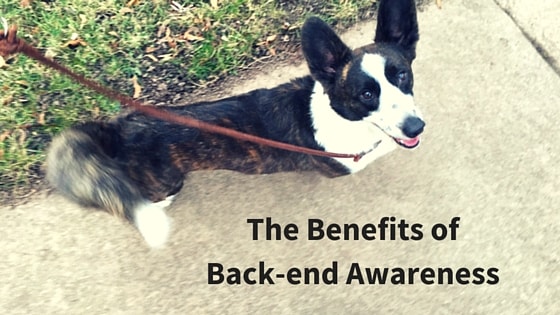
Increase a dog’s accuracy in competitions by practicing back end awareness exercises.
Back end awareness is not something that comes naturally to dogs. Most dogs don’t realize they have anything behind their shoulders. Back end awareness exercises help dogs learn how to move their back end in order to increase accuracy in obedience, agility, and other dog training competitions. Donna Hill demonstrates several types of back end awareness exercises for dogs in this video:
Walking over ladders, over agility obstacles, and backing up over steps are some of the 22 exercises that are demonstrated in this video. Fortunately, you don’t have to purchase any special equipment to work on these exercises. Your students will likely enjoy watching their dogs discover this whole other part of their bodies which can make for great comic relief in class!
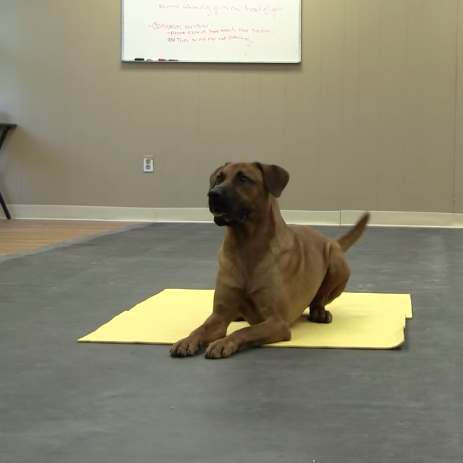
“Place” is a behavior in which the dog goes to lie down on a mat and remains there until released. Here are the three best ways to teach your client’s dogs how to go to their place using modern dog training techniques. There are 6 different ways you can get a dog to do a behavior: luring, shaping, capturing, targeting, modeling, and prompting. Modern dog training should utilize only the most non-physical and non-forceful method possible. Here, we’ll discuss how to lure and shape the “place” behavior.
Luring Place
In this video by K9-1, they demonstrate how to use a food lure to teach a dog to go to their mat or “place.” This is probably the simplest way to train “place” since it requires no guessing from the dog. The dog simply follows the treat to the desired location and recieves the treat when they are correctly placed. Fading the lure can be difficult which is why it should be done after the first few repetitions. Using the lure treat too long can create a dog that only works for a visible treat.
Shaping Place
This method requires a basic knowledge of clicker training. The clicker is activated when the dog does the correct behavior and recieves a treat. Timing with the clicker can make or break this training method which can make it difficult for clients to pick up quickly. However, if you have a clicker-savvy client, this method can create a very solid and accurate behavior in the dog.
This video by Kikopup shows how to shape the “place” behavior and also provides great ways to utilize this skill for other obedience behaviors once it is aquired.
This video of the shaping method by the Pam’s Dog Academy demonstrates how quickly dogs can learn to repeat behaviors in order to make the clicker and treats happen. The clicker has been proven to work more accurately and effectively than a verbal marker, but it can be difficult to juggle for new clients.
There isn’t a “one size fits all” method for training dogs. Each dog and owner will have specific requirements and different paces of aquiring new behaviors. Both of these methods are quick, easy, and fun for all dogs. Using treats in training builds the bond between owner and dog because as the dog is learning new behaviors, they are making positive associations with their owner, enviornment, and the mat. The mat will soon be the most fun and exciting place to be for the dog.

 Here’s our favorite explanation to the common question: What is clicker training?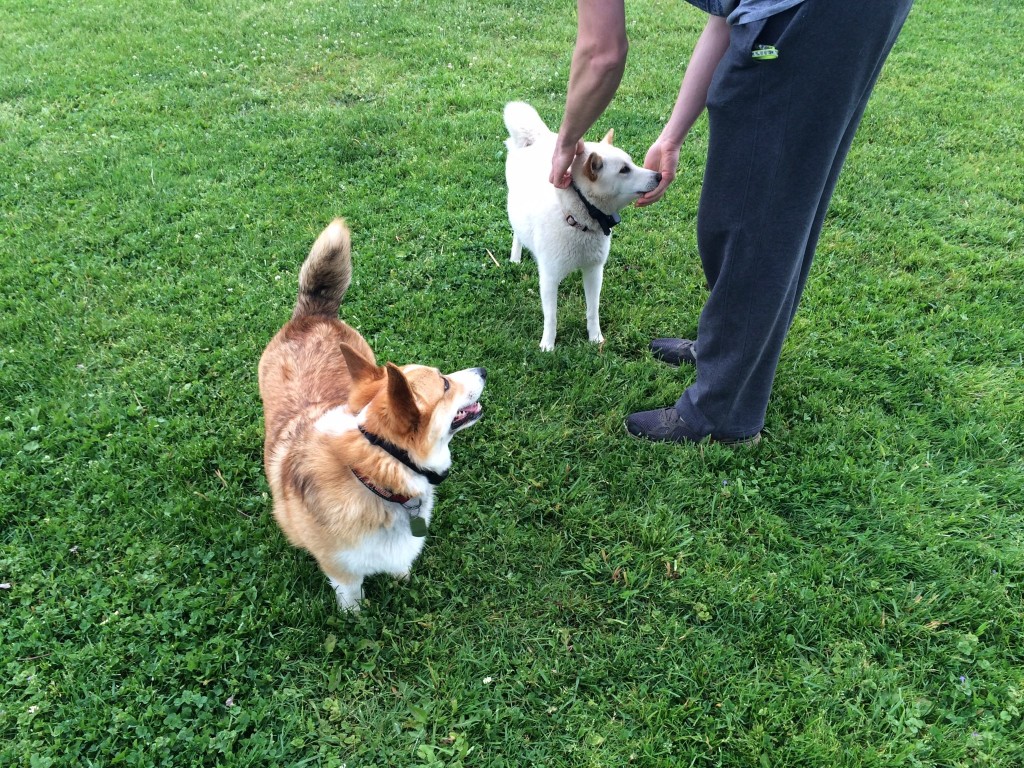
 Breaking down dog-dog play is an important part of teaching dog training and socialization classes.