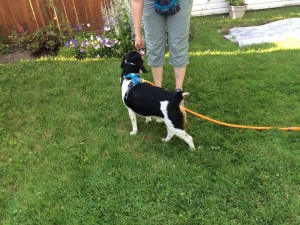
Building Online Dog Training Courses with Helix Fairweather
Helix Fairweather teaches dog training classes remotely with the help of email and webinar software. Listen to this podcast to learn more about how she teaches classes online successfully.
As mentioned in the podcast, be sure to check out her online Start Smart coursefor owners and dog trainers.
Reach out to her at HelixFairweather at gmail. com if you’d like speak with her directly.
In this podcast we invited Molly Sumridge, board member of the IAABC, to talk about their new shelter animal behavior program for shelter volunteers, staff, and trainers.
Episode 4 – The IAABC Shelter Animal Behavior Program
Molly Sumridge runs Kindred Companions in Frenchtown, NJ. We discussed all of the information available to members. Animal shelter volunteers can receive a discount. The IAABC library contains a tremendous amount of reading and handout materials in addition to access to world-renown animal behavior experts. We also discuss how Molly juggles the challenges and benefits of having a business that involves dog training, pet sitting, and a physical pet store.
Receive valuable dog training business tips and resources right in your inbox! Subscribe to The Modern Dog Trainer now by submitting your name and email below. Don’t forget to let us know what you want to learn more about!
The internet is a powerful resource for continuing education. As our industry progresses into the modern age, trainers are discovering new ways of learning, including online classes. One class that has really struck me is Michael Shikashio’s class on dog aggression through Dog Trainers Connection. The DTC is an online course platform where you can find a variety of mini-webinars by world renowned professional dog trainers.
What Makes an Online Class Great?
While nothing beats a hand-on approach to learning new dog training skills. Online classes allow trainers from all over the globe to access teachers and education they might not otherwise have the ability to access. Additionally, online classes are usually less expensive than in-person seminars.
What makes an online class stand out though? How do you know you’ll get valuable information from it? You’ll want to make sure the class includes some or all of the following:
Video – Dog training is a very visual skill. Most trainers need to see it in action to understand new concepts so video allows people online to watch and learn.
Written Material – Whether the written material is a copy of the slides or additional handouts, written material will help you refer back to what you learned for years to come and is extremely helpful.
Live Instruction – Some of the best online courses offer a live webinar portion. You can learn a lot from watching a trainer work with a dog live – with no edits. Dog training is all about problem solving so watching an instructor problem solve in real time can be very valuable.
In-depth Structured Outline – Just like any class, the online class should also have a structured outline or curriculum of the skills you can expect to learn.
Q&A with the Instructor (Live or Forum) – There is no reason an online class can’t offer you the ability to ask questions to the instructor. Good students will have questions about the material. Questions also help learners process the information they are absorbing.
Transcripts of the Recordings – Transcripts allow you to go back and search for things that were said. Video recordings are great but you can’t easily search for information like you can with text.
CEUs from Certifying Organizations – CEUs are important to track and gain to maintain your certifications. They also are a good representation of the quality of the class your thinking about taking. Lots of CEUs generally mean very high quality material.
How to Work Aggression Cases A-Z with Michael Shikashio
Michael Shikashio is the president of the International Association of Animal Behavior Consultants (IAABC). He is a Certified Dog Behavior Consultant and specializes in dog aggression. He is the epitome of a knowledgeable, qualified, and professional dog trainer.
https://youtu.be/p9jWtlbd5Bg
Michael has impressed a lot of trainers with this new course. In fact, before I even got the chance to write this article, the first course has already sold out! How to Work Aggression Cases from A-Z contains all of the qualities of a great online class I listed above. Thankfully, Dog Trainers Connection is opening up a second session so that more trainers can access his in-depth course on working aggression cases.
How to Work Aggression Cases A to Z is a five-part video series. It includes everything you need to know about before taking aggression cases.
Considerations Before Taking Aggression Cases
Initial Phone Call Process
Initial Assessment and Evaluation
Safety Precautions and Protective Gear
Collaborating with Veterinarians
Case Studies
Making a Prognosis
Classical and Operant Conditioning Training Methods
Behavior Modification Plans
Trouble Shooting
and more!
If you’re considering adding aggression cases to your services, this course will set you up for success. Learn more about the course at Dog Trainers Connection.
Dog Training Business Tips
Receive valuable dog training business tips and resources right in your inbox! Subscribe to The Modern Dog Trainer now by submitting your name and email below. Don’t forget to let us know what you want to learn more about!
The Modern Dog Trainer blog contributors invite professional dog trainer, Dearing English, KPA CTP, to discuss The Bucket Game and its uses in animal husbandry.
The Bucket Game is centered around giving your dog a choice to cooperate or walk away. At any point, they can walk away and remove themselves from anything uncomfortable. By giving them this choice, you give them control over what is done to their body. A dog that volunteers to participate will be a much better patient and will be less stressed than one that is forced to hold still with physical restraints. The Bucket Game can be used in other training scenarios which we also discuss in the podcast.
Receive valuable dog training business tips and resources right in your inbox! Subscribe to The Modern Dog Trainer now by submitting your name and email below. Don’t forget to let us know what you want to learn more about!
I don’t believe that there is such a thing as a perfect reactive dog class. Humans will be humans, dogs will be dogs, and real life training means unexpected situations will arise. However, there are some expected situations we can prepare for to ensure success and progress with our reactive dog clients.
Management Solutions for Teaching a Reactive Dog Class in Imperfect Locations
Not all of us have an ideal environment to host group classes for reactive dogs. The dream is to have a large covered outdoor area that is fenced in to keep loose dogs and curious owners at a distance. This is not the reality for most group classes. However, the demand for classes or semi-private lessons for reactive dogs is high so sometimes you it makes the most sense to provide your clients with an affordable group class.
I have taught classes outside in fields and in small, echoey rooms, but neither is really ideal for reactive dogs due to the chance of off leash dogs coming up in one case and being in close proximity to other dogs in class in the other. Fortunately, all of the dogs in both of these situations can make progress thanks to creative management solutions you can put in place.
As a trainer, your first step is to break down the triggers a dog typically reacts to (in this case other dogs) enough so that when the reactive dog is exposed to it, they don’t have a reaction. In reality, all group classes will set the dogs up to get excited and aroused at first.
Most reactive dogs will get anxious and aroused at the mere thought, smell, or sound of another dog. This means that they don’t actually have to see each other to start the counter conditioning process. Visual barriers are a necessity for every group class with reactive dogs. The dogs will be able to smell and hear, but not see each other. This will reduce their arousal, increase their focus, and allow you to begin the counter conditioning process.
Barriers can be made out of all kinds of materials. You can use PVC pipes to make a frame and then hang fabric from the frame. I have used and recommend getting large panels of insulation and duct taping them together so they can make an L shape and stand alone. The insulation is strong enough to stand by itself and helps reduce noise, but should be stored in a location where dogs cannot get to it and eat it. If you have a larger budget, you can consider making panels out of solid corrugated plastic.
Entering and Leaving Reactive Dog Class
This can sometimes be the most challenging part of reactive dog classes. Everyone has to come through the same doorway to enter and exit the room. There are two approaches you can use to avoid this potentially dangerous situation.
The first is to ask clients to keep their dogs in their cars until you come out and ask them to come in. Most dogs feel safe in their cars. For added precautions, remind your clients to keep their dogs in a covered crate in their cars so the dog does not look out the window and bark at other dogs going by before class. Reactive incidences before class could stunt a dog’s progress during class.
Another idea I got from fellow professional dog trainer, Sarah Fulcher, CDBC, KPA-CTP, is to stagger your group class arrival and departure times for each dog so that no one enters or exits at the same time. Sarah says, “I found that when I had the dogs enter and exit the class room [at set intervals] really helped to keep the classes calm. It also became a valuable exercise for each dog in class – the first dogs in the room had the challenge of staying settled when they could hear or see another dog entering (depending on their progress level, they may or may not have had a visual barrier set up). The dogs that left first had the challenge of possibly walking past another dog, and those staying had to work on being calm while they could hear or see another dog enter or exit. I was always careful to set the dogs up for success, knowing what their triggers and thresholds were, and setting up the entry and exit portions of class so that each dog would be challenged just enough.”
Set Strict Rules for Your Clients
During group classes, don’t be afraid to give your clients strict instructions to ensure their dogs are not set up to fail outside of class. Instead, give them a list of alternative methods to wear their dogs out without having to expose their dogs to triggers. I always recommend that clients avoid dog parks, busy neighborhoods, remind them to block off windows, and other situations that could trigger their dogs to react. Your clients will be overwhelmed with information so break instructions down and make them as specific as possible to set them up for success.
What Your Reactive Dog Clients Do Outside of Class Matters More Than What They Do During It
Sometimes you might be so focused on setting the dog up to be successful that you might forget to set the owner up to be successful, too. As clients become more aware of their dog’s needs, they may take to doing some research for themselves. They may seek out guides, resources, and videos online to learn from. If you have a client like this, consider yourself lucky. They’re demonstrating their commitment to working with their dog, but it can also leave you in a sticky situation.
We all know the internet holds a wealth of knowledge when it comes to dogs. Unfortunately, a lot of the information that is readily available is incorrect, outdated, or untrue to the real science behind dog training. The success of a reactive dog team relies on making sure they stick to your proven plan that revolves around desensitization, counter conditioning, classical conditioning, and some foundation obedience cues. The last thing you want is for the owner to start trying new things they saw online. So what do you do?
You can recommend books, blogs, or Youtube video channels that follow your training approach, but some times that can confuse your client’s even more with terminology or exercises that aren’t part of your program. Ideally, you’d have one place online to send them to so that they could review the exercises you teach in class with more explanations, videos, and graphics to further demonstrate your class’s material.
What is the most challenging thing you find about teaching reactive dog training classes? Comment below!
Sign up below to stay up to date with modern dog training business practices and dog training methods!
Dog Training Business Tips
Receive valuable dog training business tips and resources right in your inbox! Subscribe to The Modern Dog Trainer now by submitting your name and email below. Don’t forget to let us know what you want to learn more about!
2015 has been an eventful year. In celebration, we’ve put together the top 10 most popular dog training business articles from this year. We are so thankful to have such a supportive readership and appreciate all the kind words you’ve shared with us this year.
We strongly believe that by sharing our knowledge of dog training business ownership we will help more positive reinforcement based trainers grow their businesses and reach more dog owners. All of the following articles received over 2,000 unique views and we’re extremely excited to see where the next year takes us!
I, as founder of The Modern Dog Trainer blog, would personally like to thank all of the blog contributors who share their knowledge, skills, and experiences with us all every month. The Modern Dog Trainer blog & podcast would not be where it is without their generosity and expertise!
Sign up below to stay up to date with modern dog training business practices and dog training methods!
Dog Training Business Tips
Receive valuable dog training business tips and resources right in your inbox! Subscribe to The Modern Dog Trainer now by submitting your name and email below. Don’t forget to let us know what you want to learn more about!

 Helix Fairweather teaches dog training classes remotely with the help of email and webinar software. Listen to this podcast to learn more about how she teaches classes online successfully.
 Molly Sumridge runs
  Q&A with the Instructor (Live or Forum) – There is no reason an online class can’t offer you the ability to ask questions to the instructor. Good students will have questions about the material. Questions also help learners process the information they are absorbing.