
How to Create Your Own Dog Training Group Class Curriculum

How to Create Your Own Dog Training Group Class Curriculum

dog training group class curriculum creationCreating a great group dog training class curriculum involves a lot more than what behavior’s you’re teaching the dogs. You’ll need to consider the people you’ll be teaching as well so you can set everyone up for success! Below you’ll find the many aspects that should go into your group class curriculum planning.

Set Expectations For Your Dog Training Clients

Arguably, the most important part of establishing a group class curriculum is to set expectations for the clients (and yourself). Be sure to include the following information in your class handouts so that they know how to prepare, what to expect, and what they’ll be working towards. It is also a good idea to review this in class before training begins to make sure the students have all heard the material at least once. Attendance – Describe where classes will be held. Include whether they’ll be indoors, outdoors, or if you’ll hold classes in different locations depending on the week. Explain what your cancellation or no-show policy is, but include steps your client can take if they have an emergency or change in schedule. Explain when they should or should not bring their dog. Include your policy about bringing family members or friends. Location – Clearly identify where the group classes will be held and include specific navigation tips if the location is difficult to find, in a large park, or if parking is restricted to certain areas. The last thing you want to clients to experience is getting lost trying to find the class or coming back to a parking ticket on their car. Materials – You’ll want to be clear about what tools and materials students should bring to class (and what they shouldn’t bring). Be specific! Don’t just say “treats.” Explain that they need 100 or more m&m sized treats in a quart sized plastic bag. Explain that they need a 6ft non-extendible leash with a harness or buckle collar on their dogs. You can get even more detailed by including information on what kind of footwear they should wear, whether they should bring a jacket, a chair, a mat, or a bowl for water for their dog. Entering & Exiting Class – The most hectic time of a group class is the time students enter and exit the class. Consider establishing a policy or formal process for how to do this. Which door should they enter or exit through? Who will exit first? What should students do while they wait for class to start? Think ahead to common scenarios your students may experience to help them navigate this situation more easily. You may even want to explain how to get out of the car so the dog stays focused right off the bat. (Check out Leslie McDevitts’ reorienting default behavior in her book Control Unleashed: The Puppy Program.*) Behaviors – You’ll want to include a list of behaviors you’ll be teaching in the class. You can use images to demonstrate what these behaviors are or describe them in detail. Will you be training a sphinxed down or a relaxed down? What does “loose leash walking” look like? What does “leave it” look like? First-time dog owners may not understand what some common dog training terms mean so put yourself in their shoes get a better understanding for what they’ll experience. Goals – Why should people attend your group class anyways? What is the point of all this training? Speak to the client’s needs and personal goals such as to train your dog to be a great community member and companion, to have a dog you love to show off to your friends, to have a dog that’s a pleasure to walk with every day. Your clients are looking into training because they are experiencing a certain issue. Whether it is hyperactivity, pulling on the leash, or jumping on guests, make sure your group class curriculum highlights the point of all the work they’re about to put into training their dogs. Think along the lines of “how will this group class improve their lives?”

Provide Dog Training Instructions (In More Than One Format)

Before you dive into teaching classes, take some time to think about how you’ll teach the behaviors you’re aiming for. Consider whether your clients will be more effective with luring or shaping and whether you’ll use verbal marker training or if you’ll add a clicker to the mix. Once you have a list of behaviors you’ll be working towards, describe them in detail and note the progression you’ll expect from the dogs as they work towards the final goal behaviors. Break down each behavior into several steps, jot down some ideas for how you’ll change things up if a dog isn’t progressing how you’d like, and include details about how you’ll proof the behaviors as the weeks go on. (While you may not go into this level of detail in student handouts, it is important to think through these scenarios before class so you’re prepared.) Take into consideration how people learn differently. Some people learn better by watching videos, others by hearing instructions, and some by trial and error. Your students may not remember exactly what you said in class so, in addition to written instructions, you may want to create some instructional or demonstration videos to help your students practice at home in between classes.

Prepare Dog Training Exercises For Students

Think about what kind of exercises you can have clients do to practice their new behaviors. Will you set up cones for students to walk around? Will you line them up and have one student walk by with their dog? Will you have one person work on recall while others practice stay? Think about ways you can increase the challenge a little bit to help them work through day-to-day real-life situations they may encounter. This is a great time to review the goals of the class and create some scenarios that can help them work towards their end goals.
Implement Group Class Games For Proofing Behaviors

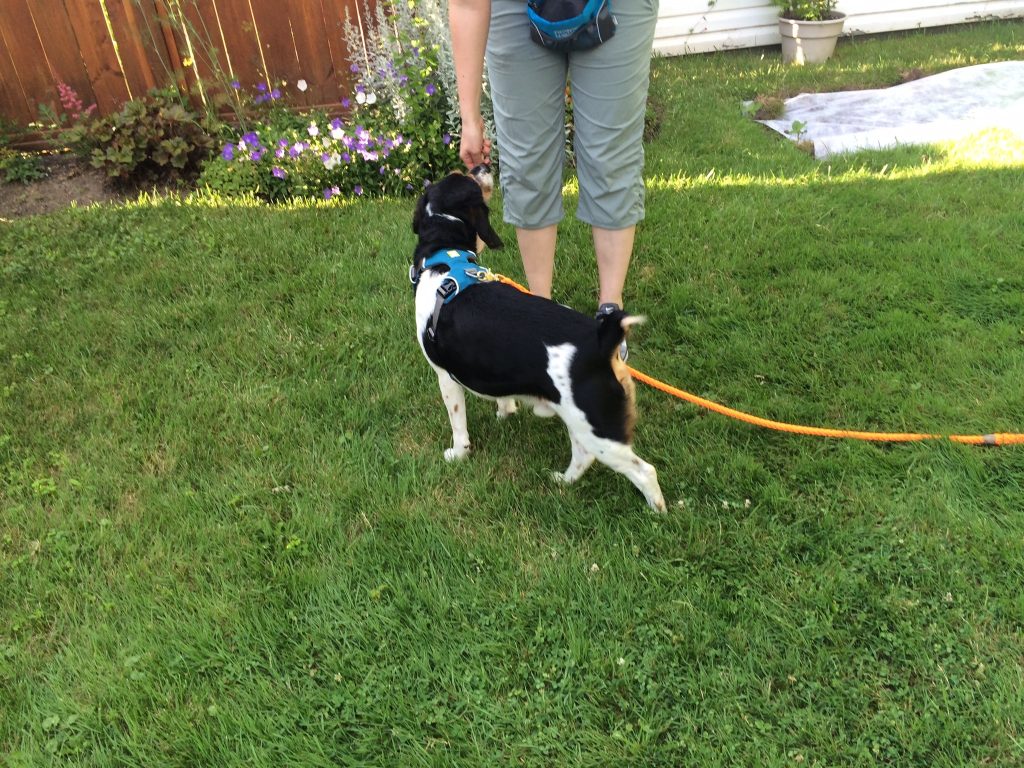
One way to make training fun and keep people engaged in class is by incorporating group class games. Once the dogs (and their people) are past their basics, you can begin to include games in each class. Check out Terry Ryan’s book, “Gamify Your Dog Training” for game ideas or create some of your own!*

Offer Next Steps For Group Class Graduates

Students that have a blast in your dog training class will want to continue training. Once they realize that training can be fun, that it can improve their dog’s behavior, and that it can be a great reason to get off the couch and enjoy some time outside, they’ll appreciate having a next step to take with their dog. Think about how you can encourage them to come back for more training. Will they be able to “level up” to a new class? Will you introduce them to dog sports? Will you host group community walks? What activities, group classes, or events can you organize to keep them coming back? Don’t forget to sign up for our monthly newsletter below to see more dog training business tips and resources! * This is an affiliate link. These links help support the blog so that I can continue to create helpful materials for you!
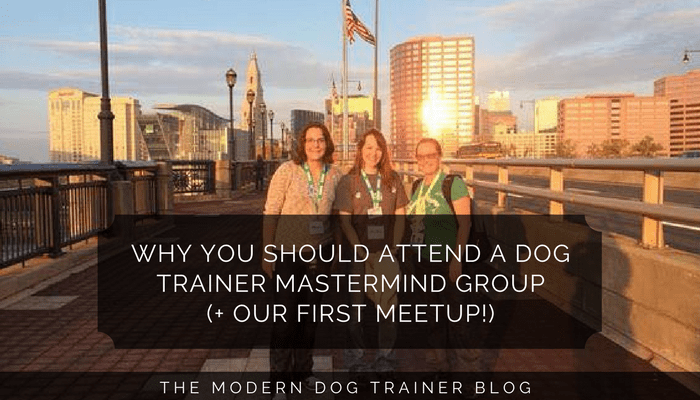
Why You Should Attend A Dog Trainer Mastermind Group (+ Our First Meetup!)

Why You Should Attend A Dog Trainer Mastermind Group (+ Our First Meetup!)

Ever wish you had a group of local, friendly dog trainers to talk to? What about a group of dog trainers you felt comfortable bouncing ideas off of?

A networking event, or better yet a Mastermind Meetup (otherwise known as a peer advisory board), can be extremely useful to gain traction when you’re first starting out or even if you’re stuck in a rut in your current businesses. Getting an outsider’s perspective from someone that’s been in your shoes can be the best way to open new opportunities for you and your business.

mastermind group for dog trainersA mastermind meetup is a group of like-minded individuals that get together from time to time to share their goals, obstacles, experiences, and insights to benefit the group as a whole. You learn from each other, you keep each other accountable, and you support and help each other. There are many benefits, both tangible and intangible, to having a group like this to turn to as you start your own dog training business or grow a business you already have.

1. You Can Make Life-Long Friends And Partnerships

When you’re meeting with like-minded people that are passionate about the same things you are, you’re able to connect on a whole new level. You’ll feel like you’ve found “your people” and share business and personal challenges, goals, or experiences that are helping you succeed or inhibiting your progress. You’ll have an instant, reliable, supportive network to turn to as you start and grow your business.

Not to mention, the endless opportunities for collaboration and cross promotion that will result in having a strong support network of like-minded trainers in your area! Just because a group of trainers service the same area doesn’t mean you necessarily overlap in target audiences, skillsets, availability, types of services, and more! These days, there is usually more business coming in than many dog trainers can handle. The mindset you should have if you’re looking to network and find a mastermind group is that there truly is an abundance of business and dog training clients that need your help.

2. You Discover New, Creative Solutions For Your Business

The benefit of speaking to others who have been in your shoes and are like-minded is that you can collect valuable, honest, and relevant feedback about your business choices and initiatives. You can hear how others of similar backgrounds and passions would approach your challenges and generate ideas to overcome them.

When you’re surrounded by other like-minded individuals, you’ll feel validated that you’re on the right path to reach your goals and your dream. Seeing others succeed will help to motivate you to keep going as well.

Additionally, a facilitator or someone who hosts/organizes the mastermind meetup, also has a wealth of knowledge and resources to share with the group and is going above and beyond to help others grow and succeed as well. They bring their own skill set and experiences to the table.

3. You’ll Be Accountable To Make Improvements

Ideas are great, but taking action is better! 

One of the most valuable aspects of having a mastermind group is that you can hold each other accountable so you all make progress in your businesses. 

Mastermind groups are more than just a networking event. You actually sit down, share your goals, and work together to make actionable plans to make improvements within your businesses. When you share your goals and action items with someone else, you’re more likely to take those steps and reach your goals!

The connections you make in a mastermind group go much further than a handshake at a networking event. You’re truly in it together to help each other stay accountable so everyone in the group can succeed. 

7 reasons to attend a mastermind group for dog trainers4. You’ll Gain Industry Insights Found Nowhere Else
When you get together with other people from within your industry, you can gain insights you won’t find online, in books, or in seminars. Each person brings their own unique learning experiences to the table for all to learn from. One person’s challenge becomes a learning experience for everyone in the group. There is just nothing like it! There is nowhere else to find this kind of knowledge.

5. You Find Relief In Knowing You’re Not Alone

Typically, when you’re starting your own dog training business, you’re considered a “solopreneur” or solo-entrepreneur. It can be isolating when you have no one to turn to or relate to. You have to figure everything out on your own and while you should always trust your gut and do what feels right, you don’t know what you don’t know. Speaking to others who are or have been in your shoes is a great way to build connections and find relief in knowing you aren’t completely alone in this adventure. Others might bring up experiences or insights that you hadn’t thought of or experienced yourself. Mastermind groups help you expand your awareness of what it takes to run a successful dog training business.

6. You Get To Work ON Your Business Instead Of IN Your Business

While learning how to post on Instagram or writing up thorough client notes is important, mastermind group discussions should focus more on the bigger picture. You’ll be able to take a step back, reflect, analyze, learn, and plan your next big business goals.

Many times as solo business owners we spend a lot of time working in our businesses – creating documents, sending emails, working directly with clients. This time away from the office allows you to refresh and reinvigorate yourself for your next business steps.

7. It’s Electrifying

When else will you be able to be completely honest with a group of people? Share the highs and lows of starting your business. Share your expectations versus the reality of what it actually is like. Vent about the challenges your experiencing or share your success with others who understand what it means! Finding your “kind” of people is invigorating! You don’t have to go at it alone.

One of my main missions with this blog is to help other positive dog trainers (or whatever you want to call dog trainers that follow Least Intrusive, Minimally Aversive (LIMA) principles in training) succeed with their businesses. There is often a ton of focus on learning the science of training dogs with little acknowledgment of how to run the business side of things. However, if you’re in this profession for the long haul, you have to pay attention to both. Without a thorough understanding of how to run a business, you will not be able to take your passion for dog training full-time or be able to sustain it full-time for many years.

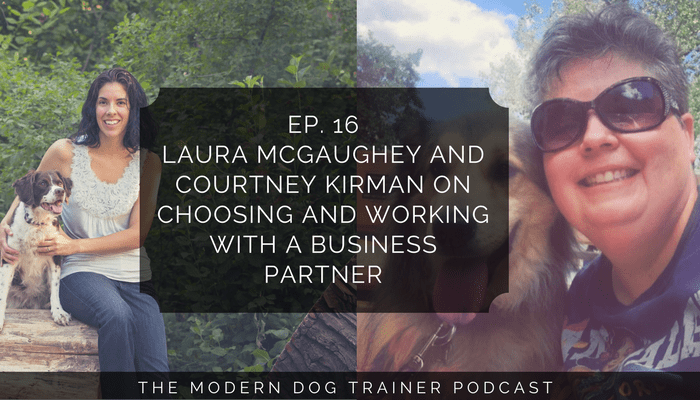
Ep 16 – Laura McGaughey and Courtney Kirman on Choosing and Working With a Business Partner

Ep 16 – Laura McGaughey and Courtney Kirman on Choosing and Working With a Business Partner

choosing a dog training business partnerOn this episode, we had Laura McGaughey and Courtney Kirman on the show to discuss the things you should consider if you’re thinking about bringing a business partner into your training business. There are a lot of things to consider before bringing in a business partner into the mix, here are some things to consider before bringing someone else into your business.

Laura McGauhey and Courtney Kirman run Delightful Doggies in Lakewood, Colorado where they specialize in helping dogs with fear, anxiety, reactivity, over arousal, and aggression.

Laura is the owner and head trainer at Delightful Doggies. A Certified Professional Dog Trainer – Knowledge Assessed (CPDT-KA), her specialty is working with reactive, fearful and aggressive dogs. She obtained her CPDT-KA certification in October, 2014, and certifications as a dog trainer and veterinary assistant from Animal Behavior College in August, 2012 and January, 2013, respectively.

In March, 2013 Laura also achieved primary certification in TAGteach. She is also a professional member of the Pet Professional Guild and co-founder of the Colorado Progressive Reinforcement Trainers group, dedicated to adhering to and promoting force-free training methods.

Laura started on her career path as a dog trainer after spending time as a shelter volunteer. Through the shelter’s training program, she found a whole new love and purpose, and vowed to learn as much as possible about dog training and behavior so she could work to keep more dogs in their homes and out of the shelter and rescue system.

A native of Kentucky, Laura relocated permanently to Denver in 1996 and currently resides in Lakewood with her husband, Chris, and her three dogs, Jasper the “fluffy butt shelter mutt,” Hidalgo the Chihuahua and Kali the terrier mix. Together they enjoy hikes in the hills and doing nose work both for fun and competition.

Courtney Kirman, owner of Tender Hands Animal Training, has dedicated her life to improving the lives of pets and their people. Her passion and affinity for animals was present from a very early age. Courtney has been studying dog obedience since 2006, when a young Husky named Bailey entered her life. Courtney worked as a dog trainer for a large commercial chain before breaking out on her own and discovering the powerful benefits of the Tellington TTouch approach. TTouch was the missing link that Courtney felt was needed to truly help pets and their people. Courtney believes in a positive and gentle approach to pet training that will build a relationship of trust and respect between animals and the people they share their lives with. She is a native of Arizona and a University of Arizona Alumni. Courtney’s passions include animal rescue, hiking, and being in nature with her adopted Brittany and Bluetick Coonhound.

Subscribe to The Modern Dog Trainer Podcast on SoundCloud or iTunes. Follow The Modern Dog Trainer Blog on Twitter at @ModernTrainer, on Facebook at The Modern Dog Trainer Blog Page, and on Instagram at @TheModernDogTrainerBlog. Don’t forget to join our FREE Facebook Group, “Startup Tips for Modern Dog Trainers.” We love hearing from our listeners!

Please leave us a review on iTunes to help support our podcast!

Video versions of the podcast are available on YouTube. Don’t forget to subscribe to The Modern Dog Trainer for notification when a new video or episode is added!

Show Notes

You can find Laura and Courtney here:

Ep 15 – Rachel Golub on In-Home Board and Trains and Aggression Cases

Ep 15 – Rachel Golub on In-Home Board and Trains and Aggression Cases

offering a dog board and train programThis episode we had Rachel Golub back on the show to discuss all of the things you should consider when offering a board and train program and taking on aggression cases. Rachel was previously on the podcast discussing how to manage dog training with a family and has written a guest post for this blog providing tips for positive trainers that are just getting started.

Rachel Golub and her husband, Dillon Horgur, run San Diego Animal Training, a facility that specializes in a variety of behavioral training, including working with aggression cases and board and trains. Rachel started her animal training career at the Escondido Humane Society in 2008. She began as an Adoptions Counselor and was quickly promoted to Assistant Trainer in the Behavior Department. Rachel went on to apprentice under some of the top trainers in Southern California, receiving her certification as a Professional Dog Trainer from the CCPDT in 2010, and in 2016 she received her Certified Dog Behavior Consultant certification through the International Association of Animal Behavior Consultants.

Subscribe to The Modern Dog Trainer Podcast on SoundCloud or iTunes. Follow The Modern Dog Trainer Blog on Twitter at @ModernTrainer, on Facebook at The Modern Dog Trainer Blog Page, and on Instagram at @TheModernDogTrainerBlog. Don’t forget to join our FREE Facebook Group, “Startup Tips for Modern Dog Trainers.” We love hearing from our listeners!

Please leave us a review on iTunes to help support our podcast!

Show Notes

You can find Rachel here:

Guest Post: Don’t Get In Over Your Head When You’re Starting Out

Guest Post: Don’t Get In Over Your Head When You’re Starting Out

Today, I’m honored to have a guest post from someone that’s been on the podcast twice (once in 2016 and once in 2017) to talk about a unique challenge that new dog trainers face – taking on clients that you’re not ready for to make ends meet! This scenario has a multitude of implications that I’ll let Rachel explain below.


Some of the most frustrating situations I’ve encountered in my career as a professional dog trainer is when a positive reinforcement-based trainer takes on cases that they don’t have the skill set for. Don’t get me wrong– these trainers have the best intentions and they genuinely want to help these dogs– but a lot of the time they end up doing more harm than good.

We are all, for better or worse, in a highly-competitive field with a high overhead and relatively low-income potential. To compete in an oversaturated market, most of us rely on social media in some aspect or another to increase our visibility. However, we must accept and respect when we post on public forums, groups, or even our own Facebook account and get questions or unsolicited criticism about our methods. Without this system of checks and balances, our careers would be even more susceptible to “whisperers,” dominance trainers, and untrained hacks. While I agree that positive reinforcement trainers should be working together for the greater good of the movement, constructive criticism delivered in a non-confrontational manner encourages learning, improvement in training, and continuing progress in the field.

Aside from inter-industry drama, newer trainers might wonder why it’s a big deal if they take on a dog that exhibits problem behavior beyond that trainer’s particular skill set or comfort level. After all, how are we supposed to learn without experience? Isn’t stepping outside our comfort zone how we all continue to grow? My view is that if the desired behavior change isn’t achieved, we’ve taught the pet parent that positive reinforcement doesn’t work. Not only can this harm how the public views positive reinforcement training, a trainer taking on a case above their experience level inherently places the trainer’s learning experience and income potential above the well-being of the dog and expectations of the owners. This is antithetical to our commitment to our craft, our clients, and the animals themselves.

As a thought experiment, imagine a novice dog owner who has a dog displaying “aggressive” behavior, such as snapping at strangers visiting the house. She’s not sure how to address this behavior, and after doing some research she decides to go with a trainer who markets themselves as R+ savvy and force-free. Many, if not most, of these pet parents have at least one acquaintance or a family member who’s told them to use a shock collar or prong collar when the dog aggresses or states something along the lines of, “You just need to be dominant and show that dog who’s boss.” In fact, any day of the week you can turn on the television at a given time and see this advice peddled on TV shows or infomercials. Despite this, the pet parent isn’t comfortable with heavy-handed methods and ends up hiring the R+ trainer. The pet parent works with the trainer for months, sometimes years, but the dog just isn’t making a quantifiable change in the behavior. The pet parent has spent thousands of dollars, but they still don’t feel confident in the dog’s training. The pet parent is now discouraged and believes that R+ doesn’t work for “aggressive dogs.” Out of desperation, the pet parent hires an aversive-based trainer.

This is where good intentions become damaging: that well-meaning trainer was the catalyst that turned this client– a pet owner who wanted to go about training in a non-confrontational way– into a confrontational-based trainer because the R+ trainer didn’t have the correct skill set for that particular client. Had the trainer been honest with themselves and referred the client to a trainer or behavior consultant who specializes in aggressive behavior, the client would have gotten the help they needed using positive reinforcement methods and achieved timely results.

Just as animals need to learn from small approximations and positive experiences to shape behavior, so do we as dog trainers. A trainer with little or no previous experience with aggressive dogs is taking a huge jump in approximation by agreeing to consult on such cases, and the willingness to take such a leap is as much a sign of training naivety as it is a representation of the person’s enthusiasm and excitement to be working in an industry that we all love. Being well-versed in respondent and operant conditioning and canine behavior is the first step, but slow, gradual, and preferably supervised hands-on experience is just as important with cases where the consequences of making mistakes or simple lack of progress is so dire.

I am the first person to admit that there are many situations outside of my experience base. For example, competition and canine sport training is not my forte. Could I train a dog to compete in obedience and agility? Yes. Are there many others who could train that dog more efficiently? Absolutely! And that’s why I refer out those cases to trainers who are better than me in that particular realm without any hesitation.

So please, if you’re a newer trainer who really wants to help pet parents and their dogs succeed with positive reinforcement-based training methods, refer the difficult cases to someone who knows how to handle them and shadow the trainer or behavior consultant that you refer your client to so that you too can learn how to work these kinds of cases. Don’t try to learn by doing and figuring it out as you go; learn by observing a behavior professional through the lens of your understanding the science of behavior.


About Rachel Golub,  CDBC, CPDT-KA

Rachel started her animal training career at the Escondido Humane Society in 2008. She began as an Adoptions Counselor and was quickly promoted to Assistant Trainer in the Behavior Department. Rachel went on to apprentice under some of the top trainers in Southern California, receiving her certification as a Professional Dog Trainer from the CCPDT in 2010, and in 2016 she received her Certified Dog Behavior Consultant certification through the International Association of Animal Behavior Consultants. In addition to her expertise on dog training, Rachel also has training experience with cats, parrots, exotic animals, and domestic livestock such as horses and pigs.

In 2009, Rachel founded her own company dedicated to rescuing, rehabilitating, and placing dogs with behavior issues. This company evolved into San Diego Animal Training where she continues to consult with rescues, shelters, and private individuals to transform difficult dogs into adoptable, loving companions.

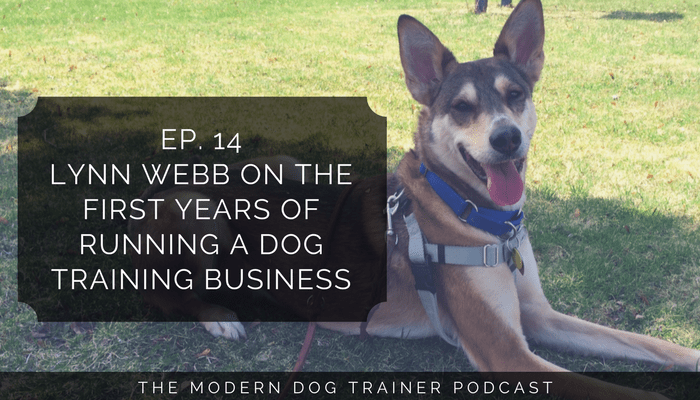
Ep 14 – Lynn Webb on the First Years of Running a Dog Training Business

Ep 14 – Lynn Webb on the First Years of Running a Dog Training Business

This episode we had Lynn Webb on the show to discuss what it was like to work through all the unexpected challenges of starting up your own dog training business.  Learning how to train dogs is the easy part. Knowing how to run a business with consistent income is the difficult part. Listen as Kat Camplin and Ines McNeil discuss the challenges that come with starting up your own dog training business.

Lynn Webb is the owner of The Proficient Pup Dog Training and Massage in North County San Diego. She has over 17 years of experience with animals, much of that time spent with birds, mammals, and reptiles at the San Diego Zoo Safari Park. Working in a zoo gave her the ability to wear many hats, which is also needed when starting and running a dog training business!

Lynn’s education includes a Master’s Degree, certification in dog training through Karen Pryor Academy, certification in Canine Massage through Rocky Mountain School of Animal Accupressure and Massage, and certification in Pet First Aid and CPR through PetTech. Her passions include dogs, learning, and teaching.

Subscribe to The Modern Dog Trainer Podcast on SoundCloud or iTunes. Follow The Modern Dog Trainer Blog on Twitter at @ModernTrainer, on Facebook at The Modern Dog Trainer Blog Page, and on Instagram at @TheModernDogTrainerBlog. Don’t forget to join our FREE Facebook Group, “Startup Tips for Modern Dog Trainers.” We love hearing from our listeners!

Please leave us a review on iTunes to help support our podcast!

Show Notes

You can find Lynn here:

Pin It on Pinterest