![6 Lessons Learned From Ian Dunbar – Dog-Dog Aggression]()
by Ines | Oct 22, 2014 | Events

Dr. Ian Dunbar is the founder of the Association of Professional Dog Trainers (APDT). He is known as a leader in the humane training movement and is a national advocate for proper puppy socialization. We attended his talk during the APDT Conference in Hartford and have consolidated some of the best points.
Preventing Your Dog From Being Attacked
One behavior that is so incredibly simple its scary can save a client’s dog from being attacked. One of the biggest triggers for fights is hard eye contact from one or both dogs. Asking your dog or a clients dog to turn in front of you and give you eye contact can single-handedly prevent dog fights. This behavior keeps you dog’s eye on you and their back to the other dog. This behavior doesn’t have to be on cue. Simply lure the dog in to the position and continue feeding until the strange dog has passed. This behavior sends the message that your dog is not interested in engaging in any way with the strange dog. What kind of dog is going to instigate a fight with a dog who’s turned his back?
Continuous Training Isn’t Optional
Just like in people, anxieties get stronger as the dog ages. Puppies and children are not born with phobias or fears, but as they get older their anxiety increases. This is the reason clients must understand that training is not a one time commitment – it is a lifetime commitment. It should continue throughout the dog’s life to prevent regression.
5 Reasons Puppies Are Not Socialized Correctly
Dr. Ian Dunbar mentioned that owners have 5 usual excuses for not properly socializing a puppy.
- Fear of disease.
- Fear of overwhelming a puppy.
- Puppy already seems to be well-adjusted.
- Unable to recognize puppy’s warning signs.
- Denial and the expectation that the puppy will grow out of problem behavior.
Dr. Dunbar claims that socialization is very important in preventing dog-dog aggression, but many owners fail at doing this correctly. Owner education is the solution to this.
Differential Classical Conditioning
While classical and operant conditioning are not exclusive from each other, you must give rewards to the dog no matter his behavior in order for classical conditioning to occur. Differential classical conditioning means treats when the dog is showing desired behaviors (no barking, sitting, etc) and verbal praise or lower valued treats when the dog shows a slight reaction such as growling. Here is the breakdown:
- No trigger – No rewards.
- Trigger present, small reaction – Give verbal reassurance. Increase distance in the future.
- Trigger present, no reaction – Jackpot with rewards.
This process allows the trainer to reward desired behaviors more strongly while maintaining classical conditioning during all exposures to the trigger.
Using Secondary Reinforcers For Classical Conditioning
We all know that bringing food into a strange group of dogs can cause issues. Using a secondary reinforcer that is only valuable to your client’s dog and not other dogs will help prevent resource guarding issues. Lots of work must be put into making a secondary reinforcer strong enough to use for classical conditioning, but it is a great alternative to using food in training.
The Jolly Routine
This training technique was founded by Bill Campbell in the 1980s. Stiffness and anxiety fuel reactive dogs. Clients can overcome their anxiety by putting their training to a rhythm. This makes their learning progress more smoothly as well as their dog’s. The jolly routine involved acting very excited and happy when the trigger appears. Dancing is usually involved to truly get in the groove and eliminating anxiety. It is very difficult to feel upset if one is dancing. Dancing and treating are perfect accessories to a classical conditioning protocol.
We enjoyed learning about Dr. Ian Dunbar’s perspectives on dog behavior and his concepts behind treating dog-dog aggression. What do you think about these main points?
Recommended Articles
![APDT Conference – Day 1]()
by Ines | Oct 16, 2014 | Events
This week we are attending the APDT Conference in Hartford. As day one comes to a close, we want to share some of our favorite moments.
Conference Opening Ceremony
Amber Burckhalter from the APDT Board of Trustees gave a beautiful introduction and moment of silence for Dr. Sophia Yin who passed away just a few weeks ago.


Jill Marie O’Brien, also a member of the Board of Trustees, awarded Don Hanson with the member of the year award.

Karen Pryor, who was currently hosting a workshop in Europe, accepted an award of Lifetime Achievement from the APDT. Then Patricia McConnell, Phd., gave a heartfelt speech as the keynote speaker.

Dr. McConnell’s speech was followed by Ray Coppinger who spoke about the evidence that supports the evolution of dogs – which he showed was little to none!

After a brief 1.5 hour lunch break the seminars began. Among the variety to choose from, we chose to attend Ian Dunbar. His talk about puppy socialization and dog-dog reactivity was entertaining. The practical applications of his discussion points will be interesting to put into place, but we enjoyed his straight forward perspective about dogs.

Day two will commence shortly and we look forward to sharing more information and pictures later. Make sure to follow up on Twitter @ModernTrainer.
![First Annual Pet Professional Guild Convention]()
by Ines | Oct 11, 2014 | Events
The Pet Professional Guild Convention
It was recently announced that the Pet Professional Guild, founded by Niki Tudge, will be hosting their first annual convention next year. The PPG was founded to support force-free training techniques and promote education and research in the dog training industry.
A world where people and pets can live together to their mutual benefit and where pets can live and function free from physical and mental pain, stress and fear as valued family members.
It was established in 2012 and has since grown to over 900 members. The PPG abides by a few Guiding Principles that resonate with science-based training methods.
The Force Free Summit – Reaching for a Higher Standard
 In 2015, their first annual convention will be held in Tampa, Florida during November 11, 12, and 13. They are planning a live streaming event and have come up with three concrete goals for the event:
- Help build awareness of our organization and build a stronger collaboration of force-free pet professionals.
- Help build communication and networking opportunities with the veterinary community and veterinary educators.
- A very interactive and fun educational format.
The development of an organization composed of force-free training professionals who choose to base their techniques on science is truly something remarkable. We are looking forward to seeing how the pet professional guild convention will pan out and will keep you posted here as well as on Twitter.
Recommended Articles
![5 Dog Training Supplies You Should Ask Your Clients To Bring To Each Lesson]()
by Ines | Oct 10, 2014 | Business
Prepare Your Clients As Much As You Prepare Their Dogs
When you’re starting out as a professional dog trainer, you probably come to lessons prepared with extra treats, a treat pouch, and a clicker. You might even bring a variety of toys in the trunk of your car. This is a wonderful way of being prepared to train your client’s dog, but you can miss out on excellent learning opportunities for the client if they know you always bring the goods anyways.
Create Expectations
 Ensuring that you have the proper tools for training is important to accomplish the training goals you set out to achieve, but we’d like to advise that you let that preparation fall in your clients hands. Encouraging your clients to provide all the necessary equipment helps them in these ways:
- It teaches them to think about their dog’s perspective. Reinforcers should be items their dog wants to work for. Ultimately, your clients need to be able to figure this out on their own.
- It teaches them how to be prepared for anything. Having them be responsible for supplying a variety of reinforcers and management tools helps them learn about when and how to use the tools you ask them to provide.
Dog Training Supplies Your Clients Should Supply
Treat Pouch
We’ve taught classes and lessons with and without recommending a treat pouch. We’ve found that, by far, clients who use pouches are less likely to bribe their dogs than those that don’t wear them. Clients that don’t wear treat pouches are more likely to hold a baggy of treats in their hands while training which is essentially bribery. Pouches help keep the food out of the clients hands as they learn how to juggle the leash, clicker, and reinforcers.
Clicker
Not all positive trainers use clickers, but more and more trainers are incorporating them into their training. Having a dog (and owner) that is “clicker savvy” can help address behavior issues down the road. We recommend teaching owners and their dogs at least one behavior with the clicker so that both are familiar with the concept and implementation of it. Check out our favorite explanation of what clicker training is so you’re sure you know how to explain it before you work with your next client!
Low and High Value Treats
One of the most important lessons you can teach a client is how and when to use each treat. Therefore, asking them to bring multiple types of treats to class or to a lesson is a great way to show them when each one will work and why it matters.
6 Foot Leash & Harness
Clients can now purchase a variety of tools to attach to their dogs. You must be extremely specific when recommending a leash and harness. Leashes come in a variety of lengths and structures. If you just say “a leash and collar” you can end up with endless combinations including a flexi-leash with a prong or choke chain! Your directions should get as specific as “Please bring a 6 foot, non-retractable, nylon or leather leash and a front attach Easy-Walk harness.” Anything less and you could end up with a harness that tightens around the dog’s body when it pulls or a double attachment retractable leash!
Relaxation Mat
While you’re speaking and giving instructions in class, the dogs usually get ignored as their humans (hopefully) listen. Providing them a mat to lie on while waiting for the next exercise communicates to them to be patient and gives them concrete information about what they should be doing. It is fairly easy for owners to reinforce their dogs while they continue listening to you speak. This relaxation exercise will help dogs learn how to just “hang out” while their owners pay attention to something else.
Ultimately, placing more responsibility on the client will teach them more important lessons than always bringing the necessities for them. They will be continuing on the training in the future without you so they need to learn those skills sooner rather than later. Share your thoughts about this idea in the comments below!
Recommended Articles:
![Best 3 Ways To Accept Mobile Credit Card Payments]()
by Ines | Oct 9, 2014 | Business
Dog Trainers On The Go: Here are the best 3 ways to accept mobile payments.
Most of our time is spent out and about in client’s homes or teaching classes. Taking mobile credit card payments has become necessary, but there are some options that are much better than others. Don’t let companies take more than their competition would! These are our top 3 recommendations to accept credit card payments while you’re on the go.
The Square Up mobile payment system is one of the original mobile payment systems. Its design and system is intuitive and easy to navigate which is great when you’re juggling clients, dogs, and payments at the same time! Here are some of our favorite features about this system:
- Quick and automatic transfer to your bank account in 1-2 days.
- Works on and off-line.
- Email or text receipts.
- Request client’s feedback on their receipts.
- Fee: 2.75% per swipe or 3.5% + $0.15 per manual entry.
PayPal has been a leading force in online payments, but they were not the first to tackle the need for mobile payments. Their system is great to send invoices that are quick and painless to pay which is ideal for client convenience.
- Clients can pay from their own mobile app which eliminates the need for swiping credit cards.
- Get a PayPal Debit Card and use them like a bank account. Receive 1% cash back on signed purchases.
- Fee: 2.7% per swipe or 3.5% + $0.15 per manual entry.
 Flint was founded in 2011 and is a solid alternative to Square Up and PayPal. It allows customers to easily pay in person or online and you don’t have to remember an extra attachment for your phone!
- No card readers! Scan instead of swipe.
- 1-2 day deposit into your bank account.
- Connects with Quickbooks.
- Can accept coupons.
- Send automatic reminders and track tools.
- Fee: 1.95% per scan for Debit and 2.95% for Credit.
Accepting mobile credit card payments is an ideal way to make sure you receive payments for your services. Having to constantly email clients to remind them to pay an online invoice is no longer necessary! These companies are here to stay and help with mobile businesses like dog training. Compare the benefits of each and decide which one suites your particular needs the best.
Recommended Articles
![No Shock Here: Electronic Collars Are Risky For Dogs]()
by Ines | Oct 8, 2014 | Research
Are Electronic Collars A Welfare Risk To Dogs?
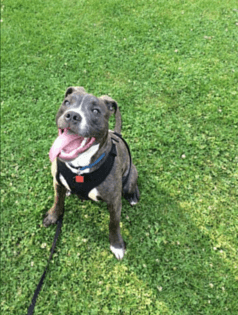
A recent peer-reviewed study explained by Science Daily analyzed how electronic collars used to correct undesired behaviors effected a dog’s anxiety and stress levels. The dogs stress levels were measured by cortisol levels in their saliva and by observing calming signals such as sniffing and yawning. Behaviors that were addressed included chasing livestock and poor recall.
Misuse – The Biggest Threat With Electronic Collars
The trainers in the first study did not use the collars within the recommended guidelines from the manufacturer. We’d like to claim that many average dog owners are not very likely to utilize these collars exactly as the instructions said due to their desired for improved behaviors quickly or simply a lack of understanding about how sensitive dogs can be without showing obvious signs of discomfort.
The second study, which included over 60 dogs, used the collars as directed by the manufacturer. This resulted in less stress than the first study, but did not eliminate all anxiety. They consistently showed more tension and less engagement with the environment than those in the control group.
Ultimately Electronic Collars Are Unnecessary
The study concluded that there are more hazards with electronic collar training than with consistent positive reinforcement based training. The risk of side effects due to electronic collar training increases if the guidelines from the manufacturer are ignored. Ultimately, we must understand that most normal dog owners cannot be trusted to have the correct understanding of timing and intensity levels that most pros still have yet to master; therefore, making this tool risky and unnecessary.
Lead author Jonathan Cooper, Professor of Animal Behaviour and Welfare at the University of Lincoln’s School of Life Sciences, said: “e-collar training did not result in a substantially superior response to training in comparison to similarly experienced trainers who do not use e-collars to improve recall and control chasing behaviour. Accordingly, it seems that the routine use of e-collars even in accordance with best practice, as suggested by collar manufacturers, presents a risk to the well-being of pet dogs. The scale of this risk would be expected to be increased when practice falls outside of this ideal.”