Dogs provide non-judgemental respite in a complex world. Examples of beneficial dog-human relationships:
Autistic children – helps with socialization.
Military veterans
Students facing exams
Busy professionals – bring your dog to work.
The Other Side of the Dog-Human Relationship
Dog Bites – Children bitten by dogs. Usually family dogs. Good dog has been great with the family for a long time. Big event/celebration. Stressed dog reacts unusually to known child due to trigger stacking.
Behavior Issues
Household destruction – does not reduce the person’s stress.
Compulsive behaviors associated with stress
Products that help reduce stress are endless. Some products may actually contribute to some stress.
What is Stress?
Stress is an inferred internal state. Stress denotes a real or perceived perturbation from physiological homeostasis and psychological well-being.
Distress is when the animal cannot cope with the stress.
HPA axis & Fight/Flight Response – Adrenaline is short-term response. Cortisol is longer term response.
Arousal and Context
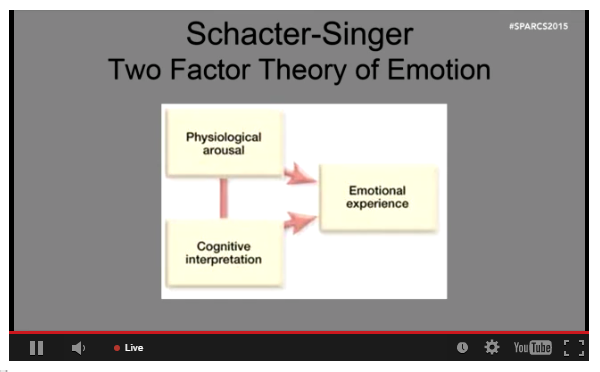
Arousal is neutral. Context (cognitive interpretation) and arousal determine the emotional response.
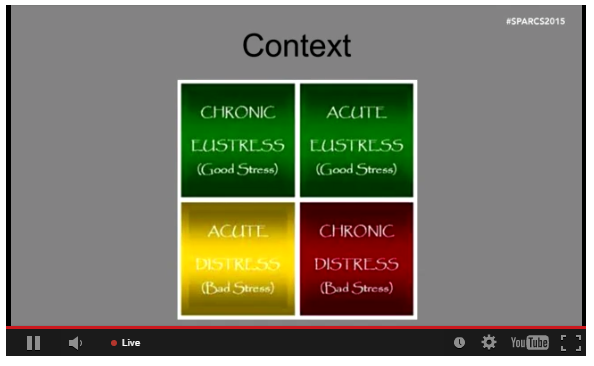
Context
Chronic Eustress (Ex: Good housing)
Acute Eustress (Ex: Playtime)
Acute Distress (Ex: Sudden injury)
Chronic Distress (Ex: Poor housing – old shelter design)
Arousal & Behavioral Performance
Low arousal leads to low performance. Some arousal is necessary to success. However, once arousal becomes too great, distress sets in, and performance declines. Higher skill leads to higher tolerance of stress and a better ability to perform well under higher levels of stress.
Treatments for Stress
Common stressors:
Foreign people/dogs
Fireworks
Injuries
Impoverished environment
Common Treatment:
Desensitization
Counterconditioning
Operant conditioning
Medications
Treatment Ideas
Work on arousal and cognitive interpretation separately.
How does breed effect arousal?
Do beagles respond more strongly to smells?
Do guard dogs respond more strongly to strangers?
Modern dogs are not using the skills they were bred for anymore.
Future Dogs
Better understand dog’s mind.
Better understand bonding with people and dogs.
Better breeding for companionship.
Better roles for dogs – working dogs – search and rescue, drug detection, etc.
Take Home
How can we provide opportunities for Eustress?
Puzzle toys that are too hard can cause distress.
Cats can get distressed with laser pointers because the cat cannot ever “catch” the laser. Make the laser pointer lead to the treat so that there is an end to the chase.
Provide pathways for the animal to find fulfilment.
Yes, but it produces a lot of another physical annoyances (pain, heart beat, insomnia).
But it is also more than a headache.
Chronic and severe stress can cause a number of conditions.
Affects mental and physical health – PTSD, heart disease, arthritis, asthma, and more.
Research study on monkeys by Uno andSapolsky
Stressed vs normal monkeys – hypocampus was very physical different.
Abnormal response – no one is ever that stressed, but impressive result
Consequences of Stress
Stress related illnesses in US cost us about 100 billion dollars annually.
Our response to stressors is what makes us sick – the stressors don’t make us sick.
Every vertebrate has the same response to stress.
Stress is a label, but it doesn’t describe what is actually happening physically and mentally.
Definitions
A stressor is a perceived threat to homeostasis – a stimulus. The stress response is an attempt to restore homeostasis. The stress response is the release of stress hormones.
Homeostasis is a property of living organisms to regulate their internal environment in order to maintain stability. Blood pH is an example. If the pH changes from “normal” levels, the body adjusts to return it to normal through a physiological reflex.
A stressor is perceived by the brain, it is processed, and triggers the stress response (fight or flight). Behavior response helps us survive threat.
Stress Response is a physiological response known as HPA axis. The HPA axis is when the hypothalamus releases CRH, the Pituitary gland then releases the ACTH (a neuroendocrine cascade of chemical releases and reactions), the then the Adrenal cortex releases cortisol (corticosterone). This cascade of reactions supplies the body with the necessary tools to evade a perceived threat.
There is also a daily rhythm of cortisol release. Levels peak just before onset of activity (for example, just before waking up).
Stress can be related to reproduction. It can be a threat to one’s ability to reproduce because threats can affect long term success. For example, taking an exam is stressful because can determine your success and ability to reproduce with your desired mate in the long run.
Role of Cortisol
Lion vs. Zebra Chase: Prey and predator both have a stress response during hunt. Cortisol redirects response (energy) towards dealing with the threat.
Increase in glucose in the blood stream which generates energy to escape/move (lion needs energy to catch zebra, zebra needs to move to escape)
Increases glucose in the body.
Increases sympathetic system.
Decreases parasympathetic system response to turn off unnecessary functions for immediate survival.
Stress related behaviors increase to escape the threat.
Alertness increases.
Once the threat is gone, negative feedback of the HPA axis to turn off stress response.
Part 2 – Importance Of Contexts When Studying Stress
Context
Context matters when determining stressors in an environment. One study by Romero, Reed, and Wingfield in 2000 discovered that tropical birds were more affected by weather changes than arctic birds. Bad weather did not produce a stress response in arctic birds.
Predictability
Predictability is important in stress. One species of birds stressed about weather changes that were unpredictable. The other species of birds unpredictable weather was predictable and did not stress them out.
“Controllability”
Some highly stressful events are predictable (like one’s parents becoming elderly), so there must be other things that contribute. Controllability is important, even when things are predictable.
Example: In a study where rats were put in a wire cage and shocked. The rats that had the ability to control the shock which meant evading the shock were significantly less stressed than rats who had no control. The stressor was the same, but the stress responses were different.
Ability to escape it with control reduced stress.
Those that could not control the shock had compromised immune systems.
“CORT is not always anti-reproductive. Neuroendocrine context is important.” Miles Orchinik
Stress Responses
Most vertebrates are highly resilient with stress.
Stress as a child can create “abnormal” responses to stress in adulthood. The prefrontal cortex doesn’t act “normally” in adulthood.
Nurture vs. Nature: One’s stress response depends on the environment one grew up in. Birth mother does not matter as much as the nurturing environment one grew up in as a young child. The environment in which they are raised influences their physiological response to stress as adults. (Kim, P. et al., 2013, PNAS)
Is stress a killer?
Stress increases mortality but only among those who perceived that stress affected their health.
If they didn’t think it affected them, they did not die at any different rate.
(Keller, A. et al., 2012, Health Psychology)
Anti-Stress Hormone – Oxytocin
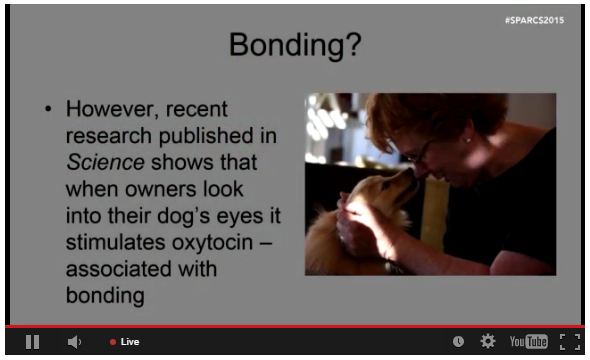
The gaze of a dog increases oxytocin levels in dog and the human – increases the bond. (Nagasawa, M. et al., 2015, Science)
Take-Home Concepts To Consider
Stress is critical in survival and reproduction.
Stressors produce context specific effects. Context is incredibly important when analyzing the stress.
Business cards should quickly show who you are, what services you provide, and legible contact information. You should include a phone number, an email address, and your website at the very least. Your brand should show clearly so that people have an idea of what they can expect from you. An outstanding business card can set you apart from other businesses in your area. The following dog training business cards go above and beyond the norm.
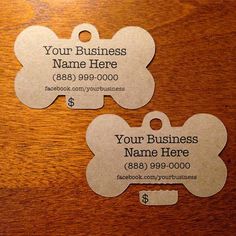
Dog Tag Mimic
The price tag tear off can easily be turned into a discount amount if someone sees your card and calls you for dog training help. The size and shape of this card can come in handy when determining where to leave it around town.
Kraftcuts
Oddly Shaped + Oddly Eye Catching
This cat tail business card idea can easily to altered into a dog’s tail to have the same effect. Its unusual size and shape can help you stand out, but might also cost a few extra dollars to produce.
Quick Sprout
Dog Behind Glass Card
This adorable card really captures your attention. It provides the viewer with a unique perspective while providing important contact information.
Design Crowd
Clicker Business Card
While most pet owners won’t know what the clicker is for, this can be a unique way to grab their attention. Accomplish two tasks at once with this clicker business info idea!
Pet Expertise
Fun + Durable
This kind of card is sure to stand out from the crowd. They are a bit more expensive, but they really make a statement.
Plastic Card Online
Clean + Informative
This card provides all the necessary information with a clean and colorful design that is pleasing to the eye.
Chelsea McKenna
Modern + Professional
Potential customers know they are getting someone who values professionalism when they call the contact info on this card.
Design Crowd
Unique + Fun
While I don’t think most people would feed this one to their dog, they might pick it up to do so before they notice the information. This business “card” is a great way to get your information into someone’s hand.
Personality + Eye Catching
This card shows a lot of personality and brings out good emotions in the person looking at it. It also makes the person curious about what it might be about.
By JB Pictures
Folded Ears
This is my personal business card that I made recently. It has received lots of positive feedback and I’ve already had one client mention that they saw my card at a local coffee shop. I’m offering the dog face and ears design for free to anyone who wants them on their business cards and you can click here and here to download them.
When you’re designing business cards, don’t be afraid to go for a 3D design. They don’t necessarily cost more if you cut or fold them yourself!
Get Dog Training Business Tips!
Receive valuable dog training business tips and resources every week! Subscribe to The Modern Dog Trainer now by submitting your name and email below.
We reached out to Nicole Larocco-Skeehan, CPDT-KA, to discover more about her success in the dog training world. She is the on that board of the Certification Council for Professional Dog Trainers and runs her own company in Philadelphia called Philly Unleashed. She also is the Director of Training for a fantastic prison-dog training program called New Leash On Life. She is a leading expert in our industry and we just had to get to know her a little bit better.
You used to ride horses and teach horse camps and then you got into dog training. How did that transition go? Did you use any of your horse training skills with dogs? How was it different?
There are so many similarities between training horses and training dogs! Obviously, there are a lot of differences as well, but the transition of skills between my equine and canine training experiences was initially pointed out to me by the manager at my first training job. He and I were working dogs together and I mentioned something about horses. He quickly said “I could tell you were a rider by the way you handle dogs.”
Working horses teaches you to handle quietly and to utilize your body in a methodical and efficient manner. When riding, you must be calm, even in a stressful situation. The more loud, explosive, or frustrated you become with a horse, the more likely you are to end up on the ground instead of on the horse’s back. So working horses also teaches you to utilize body contact and space in order to teach the animal what you want from them. These things can easily transition to your work with dogs.
When you joined the Pennsylvania SPCA as Director of Animal Behavior and Training, what were your goals for the shelter? What were you able to implement to help animal behavior in the shelter?
Boy, I had no idea what I was in for when I started that job. My goals were to develop a comprehensive behavior and enrichment program for that shelter. I implemented an evaluation process, began feeding from puzzle toys, and started a walking and volunteer dog training program pretty quickly. I also started a really interesting program with clicker training the dogs in the high-security kennel (where some of the aggressive dogs or animals who were in long-term protective custody) were housed where we trained them to accept people coming up to their kennels, taking them for walks, and integrating them into playgroups if they were good candidates for it.
It looks like you’ve been featured on Animal Planet a couple of times, how was that experience? How did you get on the show?
Animal Cops: Philadelphia signed on to film the Pennsylvania SPCA while I worked there. Everyone I worked with was really excited. Filming a reality tv show is very interesting! The cameras follow you EVERYWHERE! But it was super fun! From there I did an Animal Planet special called Dogfighting: Exposed, and that was cool too!
You’re currently leading the CCPDT Facebook page and social media, how did you come about doing that? What is your favorite part about that position?
I was elected to the Board of Directors of the CCPDT in 2013, and I was quickly appointed to the head of the Professional Outreach Committee. Since then, I’ve been heading up social media. I have a lot of fun sharing articles with Certificants and just generally networking!
From your accomplishments over the last decade, it appears you’re quite the networker! What has been key to your success? What are some tips you could give to a trainer that is just starting out?
Thanks! Networking is key. Talk to your clients and get to know them. Find out where they work and who they can hook you up with. Make friends with other trainers in your area. Know that it can be a lonely profession if you are out there on your own, but it’s nice to sit around with other trainers and chat about dogs, clients, and whatever!
And if you’re starting out, get to work! There’s no secret to being a successful dog trainer; your success is directly correlated to the amount of work you do. You’re going to start at the bottom, whether you are 21 and just coming out of school, or 51 and deciding to change careers, you’re entry level. And your lifestyle will reflect that! You’re not working at a 9-5 desk job, you’re out there hustling on nights and weekends, begging friends for referrals, and stopping into local businesses to get the word out. You can make a good living being a dog trainer. . . but it’s not easy!
We’d like to thank Nicole for taking the time to share her experiences with us. You can follow her on Facebook on the CPDT page or her business’s Facebook page.
Get Dog Training Business Tips!
Receive valuable dog training business tips and resources every week! Subscribe to The Modern Dog Trainer now by submitting your name and email below.
Dogs Out Loud is dedicated to saving the last 10% of dogs who face euthanasia in a no-kill, city-run shelter in Austin, Texas. Dogs deemed unadoptable due to their behavior issues now have a chance thanks to the Dogs Out Loud program and volunteers.
We took a few minutes to interview some of the founders of the Dogs Out Loud program to learn about the work they are doing to save these troubled dogs on death row.
The Dogs Out Loud group is determined to provide quality training to the dogs who need it the most. They utilize modern dog training methods to help dogs overcome their fear or frustration issues in the shelter. This group follows through with their commitment to the dogs by providing post-adoption support and training for the new family.
Dogs Out Loud provides adopters with continuing support post-adoption:
Free group training classes
Free home visits
$100 scholarship to local training facility when dog graduates from DOL program
Lifetime adoption support guarantee including invitations to group hikes, Wine & Woof dog behavior gatherings, & free quarterly seminars
Heartworm treatment for any heartworm positive dogs paid for by DOL through Animal Trustees of Austin
Take home care packet including information folder & Patricia McConnell, Ph.D.’s Love Has No Age Limit
Their next pursuit is to get a facility in order to serve more dogs and save more lives. They are open to sharing their processes with anyone interested. They also look forward to spreading to other shelters once they’ve fully satisfied the needs of the dogs at the Austin Animal Center.
If you’ve been inspired, like we have, to start a program like this in your shelter please do not hesitate to reach out to them with questions! They are excited to share the methods to their success!
Does your local shelter have a similar program? Share your experience in the comments below!
Get Dog Training Business Tips!
Receive valuable dog training business tips and resources every week! Subscribe to The Modern Dog Trainer now by submitting your name and email below.
The Truth About Shock Collars: There Shouldn’t Be A Trade Off Between Welfare And Better Behavior
A recent article was published that discusses the humane-ness of using shock collars to train dogs. The Science of Dog Training: Is It Okay To Use A Shock Collar?discusses the research behind the conclusion that shock or ecollars as training aids are as effective as positive reinforcement methods alone which makes their use utterly unnecessary.
Jonathan J. Cooper and his research team decided to delve more deeply into the animal welfare effects of Remote Electronic Training Collars (RETC). They were on a mission to reveal:
whether shock collars used to train household pets were effective, and
what were the associated welfare consequences.
Cooper and his team paid very close attention to some of the common variables in dog training. Their experiment set up broke down the dogs into three groups. Group A was trained using a shock collar by an experienced, Electronic Collar Manufacturers Association (ECMA) nominated professional trainer, Group B was trained by the same trainer and wore an inactive shock collar, and Group C worked with the Association of Pet Dog Trainers (an anti-electronic collar group) nominated professional dog trainer. The inactive shock collars in Group B prevented observers from telling which group they belonged to. All groups utilized positive reinforcement to acknowledge appropriate behavior.
Results
No matter the method, over 91% of owners were thrilled with the results that the training had on their dogs. Surprisingly, physiological urinary stress hormones were at similar levels throughout the groups and showed no significant changes. Group C showed higher levels of salivary cortisol than Groups A and B which was unexpected, but compared to the before and after training cortisol levels, none of the groups showed significant changes.
It was observed that Groups A and B displayed more stress-related behaviors and winced from sudden movement more often than Group C did with their trainers. This was perhaps due to the trainer’s style or personality rather than due to the active or inactive shock collars they were wearing.
More important than the method trainers teach to owners is owner compliance. Without owner compliance, no method will be successful. Surprisingly, only 76% of the owners in Group A were willing to continue the training compared to 95-100% of owners from Group B and C. Group A’s lack of confidence demonstrates an average dog owner’s discomfort with using this kind of collar.
“These findings suggest that there is no consistent benefit to be gained from e-collar training but greater welfare concerns compared with positive reward based training” says Cooper.
Future Study Recommendations
This study, just like many, is limited to the techniques the trainers used. Dog training is as much an art as it is a science. While some trainers may believe in the same science behind a method and use the same tools, their application can be completely different. Trainer’s skills and approaches vary greatly and this study was limited to four trainers. A larger number of trainers from a variety of demographics is needed to draw stronger conclusions. Of course, this is usually limited due to funding, time, and resources.
In the future, we would love to see salivary cortisol samples taken more often than just before and after training. Group C displayed higher levels than the other groups which was very interesting. We would like to know the group’s salivary cortisol levels just before receiving their normal meals, during praise-only or play-only training interactions, and how food (as well as the differences between types of food) affect salivary cortisol levels.
Based on the research that is currently accessible, this study is monumental in spreading the truth about shock collars. Their effect on a dog’s mental well-being should not be ignored.
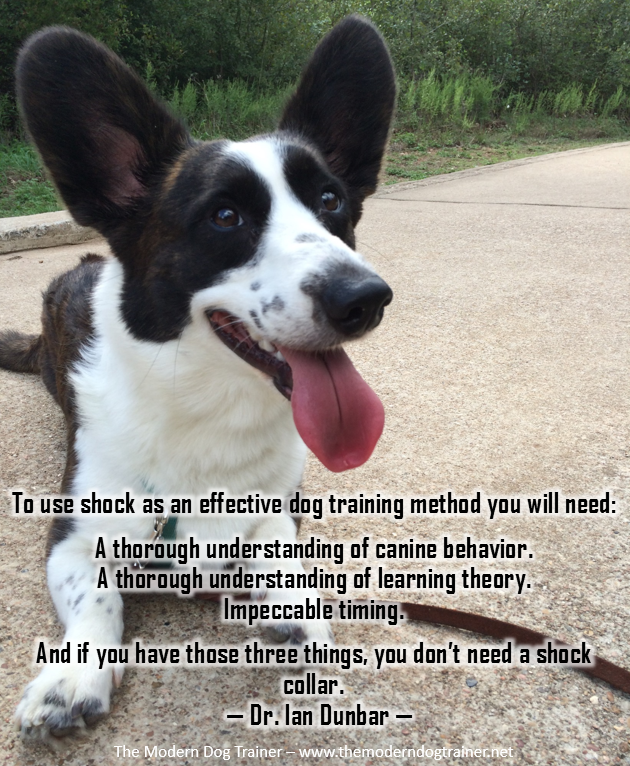
We would like to conclude by leaving this quote for you to ponder. Share your response to this research in the comments below or on our Facebook page.









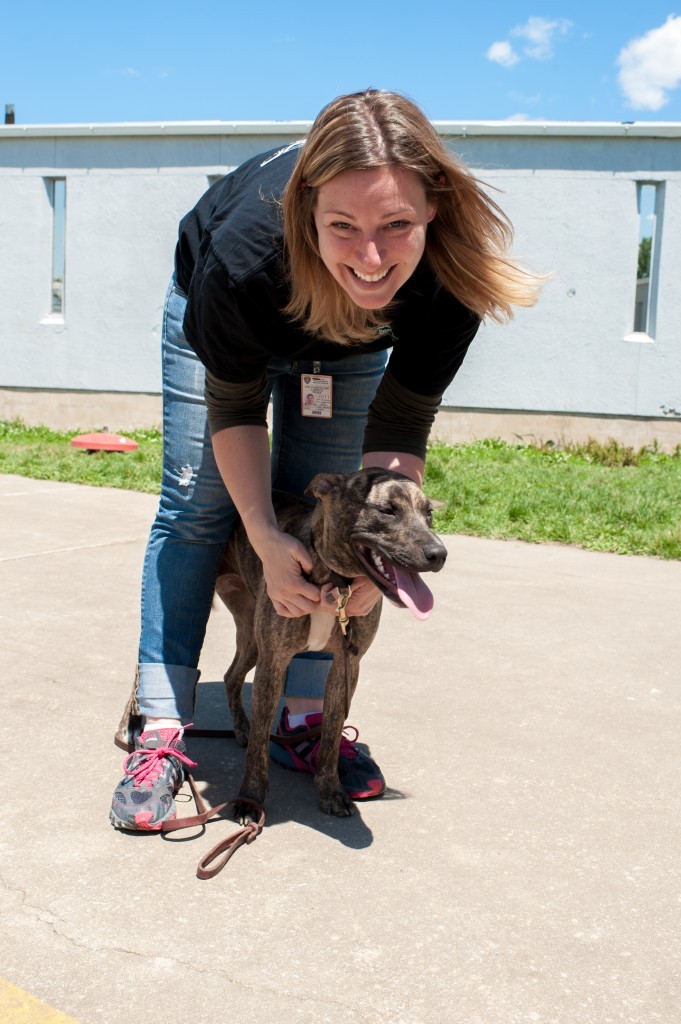 We reached out to Nicole Larocco-Skeehan, CPDT-KA, to discover more about her success in the dog training world. She is the on that board of the Certification Council for Professional Dog Trainers and runs her own company in Philadelphia called
  You’re currently leading the CCPDT Facebook page and social media, how did you come about doing that? What is your favorite part about that position?