![2015 APDT Conference – Day 2 Summary]()
by Lisa | Oct 16, 2015 | Events
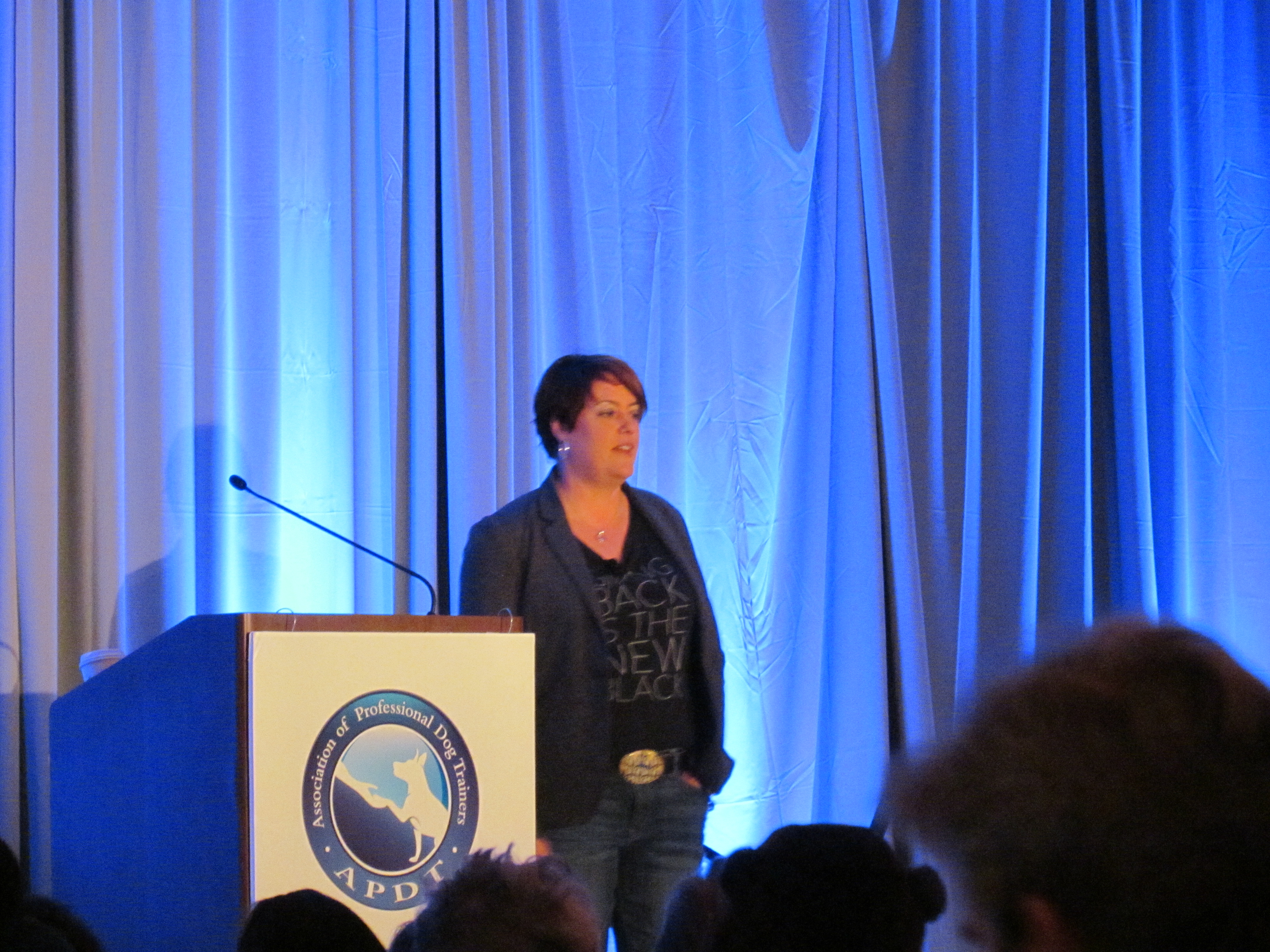
Before I get into today’s Speakers, I just want to report on what a great Conference this is! Everyone is so nice and friendly, I am rooming with Facebook friends, met lots of other friends as well as people I have interviewed. I am really enjoying the educational aspect of this Conference and the comradery of the Attendees.
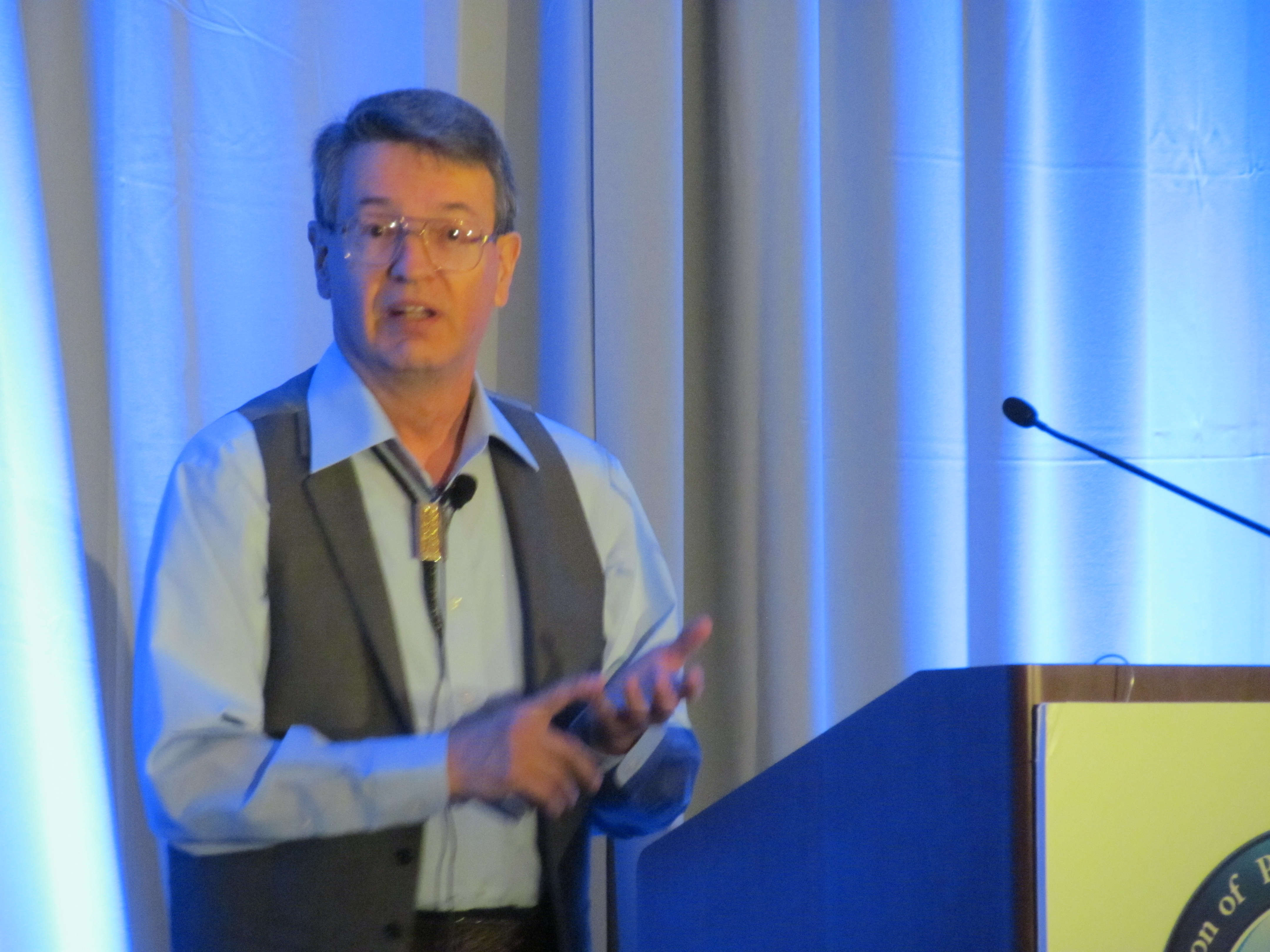
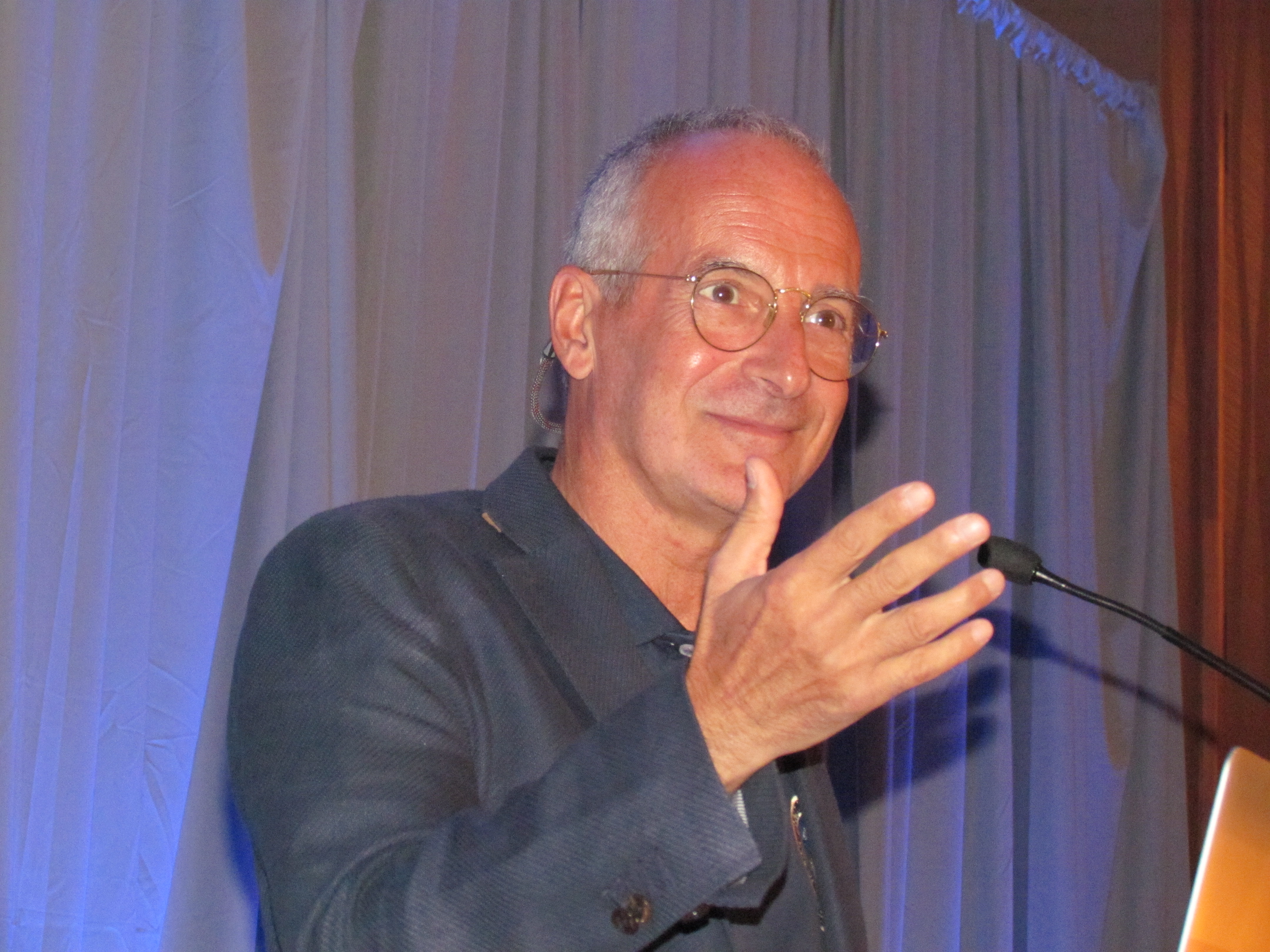
 Dr. Stephen Ledoux
My first Speaker today, was Dr. Stephen Ledoux, his topic was – Introductory Behaviorology: A Book Discussion on his latest book – “Running Out of Time—Introducing Behaviorology to Help Solve Global Problems”.
I enjoyed Dr Ledoux easy way of talking with his interjections of humor and he was very approachable. He talked about the origins of this book, the contents, the purpose of this book and other books and how they relate to dog training and other companion animal behavior training , behavior science. Attendees found out how the natural science of behavior was the common theme of many other behavior training books.
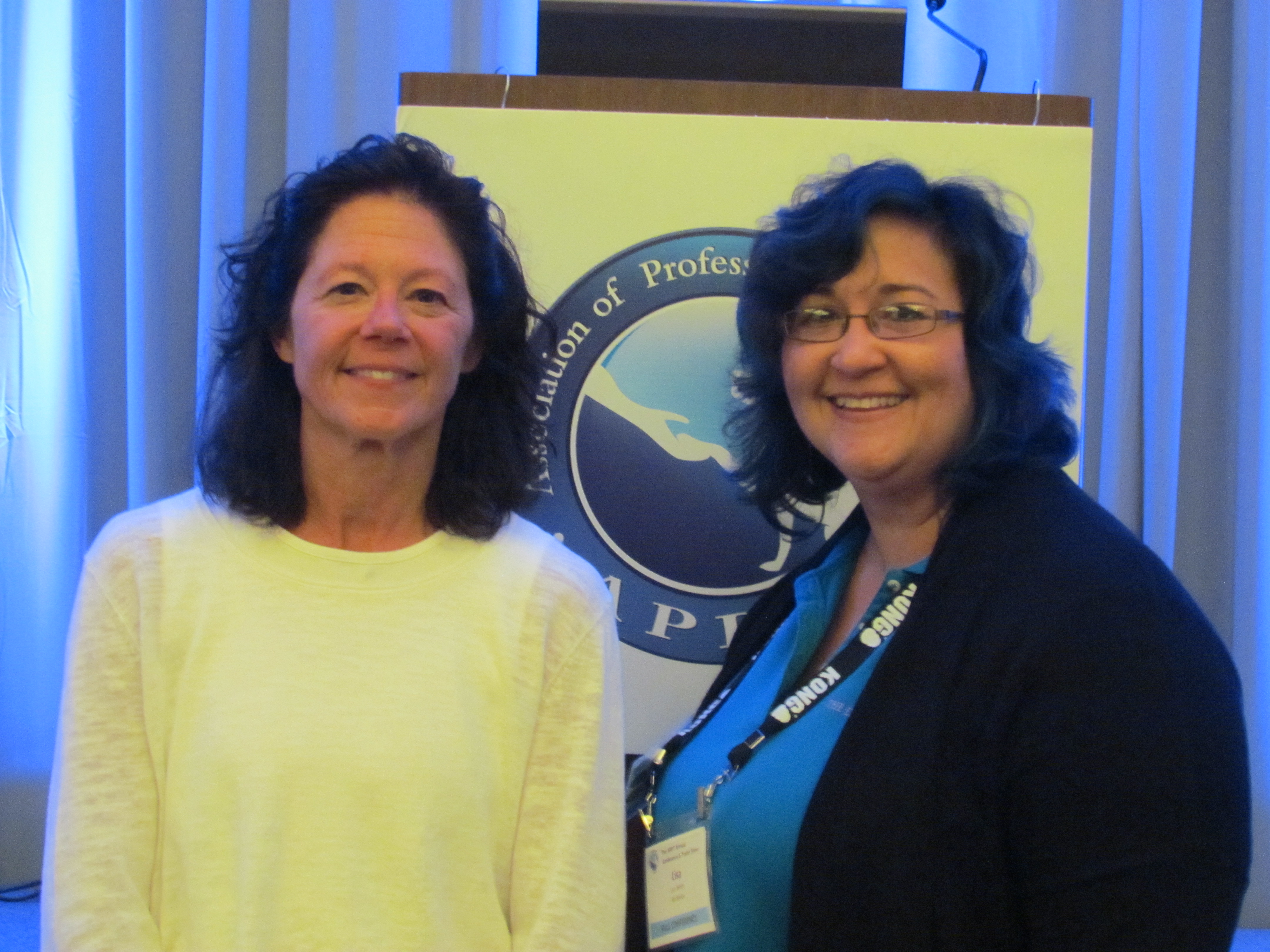
Newsletter Marketing: Help Dogs While Growing Your Business with Veronica Boutelle
My second Speaker was Veronica Boutelle, MA Ed., CTC of Dogtec fame, she talked about “Newsletter Marketing: Help Dogs While Growing Your Business”.
We learned about the different uses, audiences and goals of print and email newsletters. content and design, guidelines, best practices. Also covered was choosing an email marketing service provider, sourcing images, the structure of emails – short and sweet, whether to have a single topic or 2 to 4 topics, how often to produce your newsletter. How to get readers by interviewing, featuring dogs and dog related businesses.
85% of content should be fun and informative while the other 15% should be info on your business – services, special discounts, upcoming events. She also gave tips on how to maximize your chance of being read:
- no lecturing,
- short sentences,
- using headers,
- subheaders,
- bullets and lists,
- along with lots of photos – but watch that the dog shows the body language you want to convey.
I was so pleased to meet Veronica in real life since I had worked with her and Gina Phairas, when I won the APDT Business Makeover in 2013, she is as nice in person as she was to deal with online.
Get Dog Training Business Tips!
Receive valuable dog training business tips and resources every week! Subscribe to The Modern Dog Trainer now by submitting your name and email below.
[mc4wp_form]
![2015 APDT Conference – Day One Summary]()
by Lisa | Oct 15, 2015 | Events, Training Methods
My eyes opened up to darkness at around 6:00am and instantly I was excited when I realised I was in the Sheraton Dallas Hotel for the 2015 APDT Annual Educational Conference & Trade Show. This is the first year I have attended and this is known as being a “Puppy”.
I made my way down to the Dallas Conference Room for the Opening Session & Welcome given by Amber 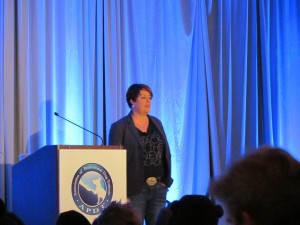 Burckhalter, Chair of the Board of Trustees, she welcomed the attendees and gave some random facts about Dallas – Barney the purple dinosaur from the very popular children’s tv show originated from Dallas along with German Chocolate Cake and the Margarita machine. She talked about the APDT Foundation and their Auction on Friday.
She handed over to the Treasurer – Robin Bennett, CPDT-KA who reported that the APDT’s pre-audit figures as at June 30th, 2015 accounts were in good standing. Casey Lomonaco, KPA CTP, the Secretary advised of the two new Board Members – Nick Hof and Megan Armstrong CPDT-KA, CBCC-KA.
The 2015 Award Members are as follows –
Members of the Year – for the first time that Casey knows of there were two winners – Sandy Crosby, CPDT-KA and Dae Grodin, CPDT-KA.
APDT Scholarship Winners – Mary Fish Arango, MA, Med, Dawn Gardner, CPDT-KA, Samantha Schinder, MA.
Dogwise Shelter – Scholarship Winner – Kim Imel, LVT, CPDT-KA.
Casey & Amber were both presented with a gift for their dedication and hard work.
Amber issued a Challenge to the attendees – Make an Impact – find 3 things from the Conference and take them home to make a difference.
2015 APDT Conference – Keynote Speaker
The keynote speaker was Stephen Ledoux, PhD whose topic – Helping our Canine Friends by Helping Ourselves with Science. His talk highlighted some characteristics of behaviorology, the natural science of behaviour, that enable us to apply it in ways to benefit our canine friends.
He talked about how to keep magical approaches to behaviour separate from scientific approaches and how to avoid a variety of unhelpful, fictional explanations of behaviour.
Scientific approaches:
Genetics – about the structural foundation of behavior
Physiology – about HOW behaviour happens or occurs
Behaviorology – about WHY behaviour happens or occurs
a. Sample – Recombination of repertoires
i. “Self-Concept”
ii. “Insight”
b. Sample – Concept formation
c. Sample – Complex behaviour
i. Multiple stimuli – affect multiple responses
ii. Coincidental reinforcers and superstitious behaviour
iii. The Law of Cumulative Complexity
The general relation of brain structures to behaviors of consciousness in humans and canine species.
Linda P Case, MS – Beware The Straw Man: Fact, Fiction & Science in the Dog Training World
1. Understand the way in which the scientific method is applied in canine science. Identify important components of a well-designed study.
2. Identify and assess various sources of information, including the “evidence pyramid” of science.
3. Appreciate and assess a research study example case – the effectiveness of “Touch then Treat” training.
Scientific Evidence Pyramid
Systematic Review
Randomized Controlled Studies with Dogs
Case Studies & Case Reports with Dogs
In vitro studies, research in other species
Linda Case then went into an example of a recently published study which examined a technique called “Touch then Treat”, a popular training and behaviour modification technique. This study was evaluated along with the results, the relevance of the results and the how further studies were needed to help -trainers, pet professionals and dog owner make well-informed, evidence-based decisions for their dogs.
Roger Abrantes, PhD – The Evolution of Canine Social Behavior
This very interesting talk covered the differences between aggressive, fearful, dominant and submissive behaviour, the variety of expressions in wolves, jackals, foxes and the domestic dog, the greeting, bonding, friendliness parental behaviour, mating strategies. Attendees learnt about dog body language, how to distinguish between closely related but different behaviors, and how to interpret dog behavior based on science rather than popular myths.
Day 1 is now over and my brain is already fried. I wonder what tomorrow will bring.
Get Dog Training Business Tips!
Receive valuable dog training business tips and resources every week! Subscribe to The Modern Dog Trainer now by submitting your name and email below.
[mc4wp_form]
![Countdown To The APDT 2015 Conference]()
by Lisa | Oct 8, 2015 | Events
COUNTDOWN TO THE APDT 2015 CONFERENCE IN DALLAS
In less than one week, I will be traveling all the way from Barbados (a tiny island in the  Caribbean) to attend the Association of Professional Dog Trainers’ Annual Educational Conference and Trade Show, which will be held from Wednesday, October 14 to Saturday, October 17, 2015, in Dallas, Texas, USA.
The Association of Professional Dog Trainers goal is to promote better trainers through education, and they welcome all trainers in their pursuit of learning modern, scientifically-based training methods.
It was through the APDT that I met positive reinforcement trainers, which started me on my journey to crossing over and I am most grateful to them for this.
Can I say how excited I am??? It will be my first APDT Conference and I have the honor of blogging for The Modern Dog Trainers Website. I get to attend some fantastic presentations by well known and reputable Speakers –
- Dr. Stephen Ledoux
- Dr. Roger Abrantes
- Dr. Chris Pachel

- Dr. Cynthia Otto
- Veronica Boutelle
- Gina Phairas
- Linda Case
- Charlene Woodward
- Sue Sternberg
- Sarah Fulcher
Check out this link for a complete list of Speakers – https://apdt.com/conference/speakers/
There will be live animal workshops where people get to actually work with guinea pigs in Dr. Roger Abrantes’ Scent Detection Workshop; Dr. Lore Haug’s IAABC Workshop – Advanced Behavior Techniques & Practices; working with dogs at the Dallas SPCA to learn new skills or hone their current skills in Teoti Anderson’s Desensitization & Counter Conditioning; Lisa McCluskey’s Troubleshooting Aggression/Anxiety; Sue Sternberg’s On Leash Dog-Dog Encounters. These Live Animal Workshops have a separate registration fee.
There are also short presentations throughout the day called APDT Shorts. Speakers will be talking about a wide variety of subjects from Aggression, Behaviorology, Business & Marketing, Dog Body Language, Euthanasia, Food, Stress, Science and so much more.
I’m suffering from “too much choice dilemma” since I don’t know who I want to see as yet. So I have to sit down, take a look at all the presentations and see which ones to attend that I can learn and benefit from the most. I really wish I could see ALL the speakers live.
But the good news is that if you want to get all the latest information and earn CEUs, you can buy their DVDs at https://apdt.com/conference/dvd/ or receive access to the Online Library at https://apdt.com/conference/streaming/
When you arrive at the conference hotel, the Sheraton Dallas Hotel, you need to check in at the Registration Desk to pick up your packet and you can ask them any questions.
Not only are the educational benefits diverse, but there are lots of opportunities to network, too:
- Scavenger Hunt
- Puppy Bingo
- Click-it With a Ticket
- Brochure and Business Card Contests
There is also the Trade Show and Exhibit Hall and I am going to enjoy browsing through and buying the books, DVDs, dog toys and other products which will be on show. Hope I don’t go over my 50 lb limit for my suitcase.
I know I am certainly looking forward to learning new things and meeting Facebook friends and people I have interviewed. Have I mentioned before that I am soooooooooo excited? LOL.
Get Dog Training Business Tips!
Receive valuable dog training business tips and resources every week! Subscribe to The Modern Dog Trainer now by submitting your name and email below.
[mc4wp_form]
![5 Must-Haves For A Seminar]()
by Liz Wyant | Oct 7, 2015 | Events
As a modern dog trainer, you most likely enjoy furthering your education via seminars. They are even better when you can score a working spot with your dog. But it is important to remember some essential supplies for both you and your dog to ensure you both have a fun, safe experience.
Crate

Image taken by Liz Wyant
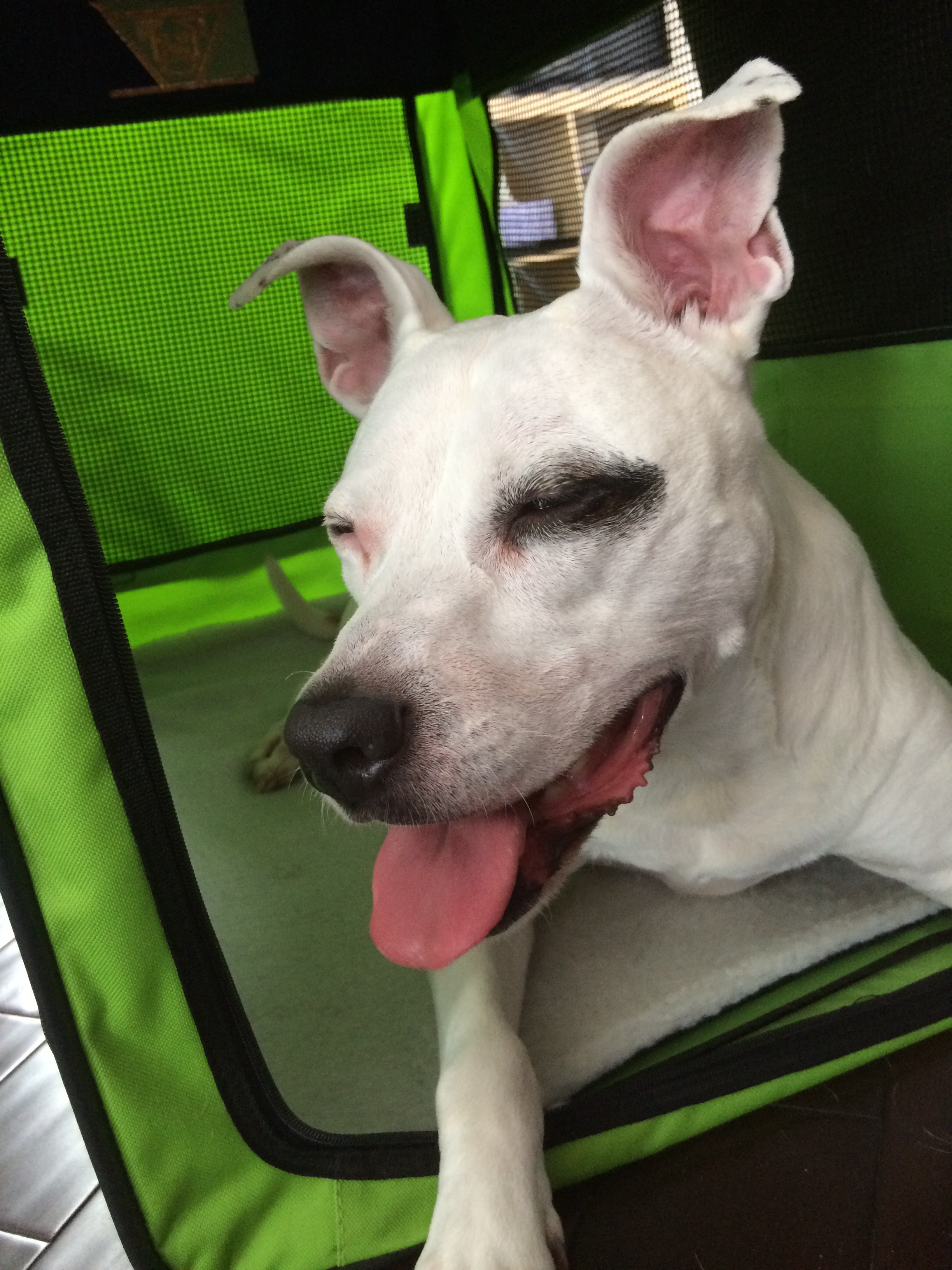
All seminars have down time between working sessions. During this time, you want to make sure your dog has a safe, comfortable place to relax and recharge. A crate is preferable to a mat because the leash can come off and they can easily curl up and take a snooze without worrying about other dogs getting in their space. Obviously it’s important to make sure your dog is comfortable being crated with other dogs around.
Water And Treats
This one is for both you and your dog. Though some seminars provide snacks and beverages for the human half of the equation, it is still a good idea to bring your own just in case. Also, you will obviously want to make sure you have plenty of water and treats for your dog. Your dog will be working hard and will appreciate fresh, cool water and plenty of treat rewards.
Pen And Notepad
If there are going to be lecture portions of the seminar, which most do have, you’ll want to make sure you have writing materials so you can take notes. Nothing worse than having the presenter say something brilliant and then not being able to remember it later.
Business Cards
Seminars are fantastic for networking! Make sure you have a stack of business cards you can share as you meet new people. And make sure to get their cards, too. It’s always fantastic to have plenty of options for referring/consulting.
Sense Of Humor/Open Mind
Murphy’s Law is right – if something can go wrong, it will. Being able to maintain a sense of humor will keep you relaxed, thereby keeping your dog relaxed. It is so important to remember that yes, you are there to learn and improve your skills, but your dog’s happiness needs to come first. You’re there to bond with your dog and improve your teamwork. If you are getting stressed out, your dog will shut down and tune you out and have a miserable time.
What do you find imperative to bring with you to a seminar?
Get Dog Training Business Tips!
Receive valuable dog training business tips and resources every week! Subscribe to The Modern Dog Trainer now by submitting your name and email below.
[mc4wp_form]
![The First Ever Force-Free Dog Training Summit]()
by Ines | Sep 21, 2015 | Events

The Pet Professional Guild’s (PPG) inaugural educational convention is taking place in Tampa, Florida on November 11-13, 2015. Professional dog trainers with a strong conviction in their belief in force-free dog training will gather to learn about science-based training.
The PPG hopes to build greater awareness about the organization and increase collaboration between colleagues. Savvy pet owners are also encouraged to attend to learn about animal training methods that build communication between owner and animal. Veterinarians who attend will have networking opportunities and learn about force-free animal handling techniques.
The PPG has stood as one of the only organizations that strongly reject the notion of using force in any way to control and train animals. They widely advertise the fall out that shock, choke, fear-inducing, and force-full methods can create. As advocates for training methods, they encourage the use of techniques that motivate animals using positive reinforcement without any use of intimidation.
The Worlds Very First Force-Free Summit
The PPG’s Force-Free Summit is the very first of its kind. Aside from the fact that all content will cover force-free and science-based animal training methods, the Summit will include a variety of educational and entertaining events for all members of the dog and pet industry.
“We can guarantee that our first-ever Force-Free Summit will be a milestone as far as advocating for force-free, positive training techniques is concerned,” said Niki Tudge, PPG president. “We can also guarantee a highly interactive and fun format for all who attend. We have placed a huge emphasis on formulating an educational event that offers a combination of lectures and working LABS, where industry professionals will have the opportunity to work with their pets under the guidance of a highly skilled mentor.”
The PPG Summit will feature more than 26 presenters over its three-day duration, and promises an enticing line-up of speakers and subject matter. World-renowned vet, applied animal behaviorist and author, Dr. Karen Overall, will deliver the keynote address, an unmissable presentation that will cover topics such as the canine brain, the neurobiology of reactivity and stress, assessing behavior and redefining humane behavioral care.

Other speakers at Summit 2015 include a who’s who of behavior and training professionals:
- Dr. Michelle Duda,
- Dr. Soraya Juarbe-Diaz,
- Chirag Patel,
- Ken McCort,
- Jacqueline Munera,
- Pamela Johnson,
- Theresa McKeon,
- Emily Larlham,
- Pat Miller,
- Nancy Tucker
- Laurie Schlossnagle (Our very own Modern Dog Trainer Blog contributor!!!)
- and many more, all of whom will contribute with lectures, working LABS, or smaller, more intimate, interactive sessions
This conference is sure to make some waves throughout the dog training industry. We look forward to hearing from Laurie about her experience as a presenter and attendee. She’ll be posting updates on The Modern Dog Trainer blog about the lectures, networking events, and accommodations so stay tuned!
Registrations for Summit 2015 are still open, with just a few spots left. Various packages are available to ensure delegates have a range of convention experiences and payment options to choose from. Continuing education units are available for PPAB, IAABC, CCPDT, KPA and PPG. For more information, see Force-free-Summit.
PPG Summit Updates
Laurie attended the PPG Summit as a speaker and as an attendee. Read about her experiences in these posts:
Get Dog Training Business Tips!
Receive valuable dog training business tips and resources every week! Subscribe to The Modern Dog Trainer now by submitting your name and email below.
[mc4wp_form]
![SPARCS 2015: “Reducing Stress of Dogs in Shelters” with Michael Hennessy, PhD]()
by Lisa | Jun 23, 2015 | Events, SPARCS
What Stresses Us?
 Types of Stressors
Psychological stressors
- Job interview
- Traffic
- Death in family
- Disease diagnosis
Physical stressors
Psychological stressors most highly activate the HPA system.
Stress Responses
- Sympathetic (adrenaline)
- Hypothalamic-pituitary-adrenal system
- Brain activity
- Behavior
Stressors elevate circulating levels of HPA
Cortisol level is (the best?) measure of stress:
- BUT, it is not a perfect measure
- Not all stressors clearly elevate cortisol
- Cortisol can increase without stress
- System can become dysregulated with prolonged exposure
Cortisol is a good measure of the effect of relatively short-term psychological stressors, when other factors affecting HPA activity are controlled.
Experimental Conditions
Handling control “Base”
- Alone home
- Alone novel
- Dog novel
- Person novel
- Threat
Dogs entering animal shelters are confronted with an array of psychological stressors (e.g., novelty, uncertainty, separation from attachment figures). On entering the shelter, cortisol is higher on Day 1 than in pets at home.
Why should high cortisol levels matter?
- Welfare of dogs
- Long-term effects on behavior
- Adoptability
- Potential health effects
White blood cells are elevated on 1st day in shelter and continue to rise.
Can human interaction reduce the cortisol response?
- Human interaction is a key factor for improving the welfare of dogs in shelters.
- Human-dog interaction can counteract stress.
- Human interaction prevents enhanced cortisol elevation.
Specific human interaction in the shelter reduces cortisol response to:
- additional stressor (venipuncture)
- additional stressor at a later time (novelty)
Presence of a human, regardless whether they ignore, pet or play with the dog, stress response is reduced for the shelter dogs. Suppressed immune systems from high CORT levels of dogs in shelters means there is a potential illness risk throughout entire shelter.
Shelter stresses:
- uncertainty
- loss of control
- social separation
- novelty
- threat
CORT levels differ depending on the kind of life the dog has and medical conditions.
Final Notes
Key ingredient: human interaction away from the main kennel area significantly reduces stress.
Relinquished dogs didn’t find human petting as reassuring (per cortisol tests) as strays.
Circulating levels of the primary stress hormone, cortisol, are about three times higher than observed in pet dogs sampled in their owner’s homes.
As little as 15 minutes of interaction between humans and dogs can reduce the circulating cortisol response.
Multiple sessions continued to produce effects, and dogs entering the shelter as strays appeared more susceptible to stress than dogs released by their owners.