
by Ines | Feb 8, 2017 | Business
If you’re starting out on your own as a professional dog trainer with your very own business, you might have a lot of unanswered questions. In this post I’ll address some of the common concerns new dog trainers have about start out on their own. (To join in the discussion – join my free Facebook Group!)
Not Knowing If You’re Qualified Enough to Be a Pro
 This subject will always be up for debate – at least until this industry becomes more regulated. It is extremely rare to find a dog trainer that could be considered 100% “qualified” to take on any case that comes her or his way. It is much more important to understand your preferences and limitations so that you can filter out cases that could be too much for you to handle.
Don’t beat yourself up because you think you don’t have exactly the right education or experience to even begin. (I know as dog trainers we can be overly critical of our skills… ) Only those who get started will ever have the ‘right” experience. You have to get started now to become great someday! At the very least, you can get started with clients that are struggling with some of the issues you first faced when you were introduced to dog training. If you’ve taken some dog training classes, read several dog training books or watched several dog training DVDs, or even taken a structured program such as KPA, you’ve got more knowledge and skills than the average dog owner out there and they sure could benefit your help!
If you’ve taken some dog training classes, read several dog training books or watched several dog training DVDs, or even taken a structured program such as KPA, you’ve got more knowledge and skills than the average dog owner out there and they sure could benefit your help!
The important part is making sure you’re not going to cause more harm than good when you take on a case. Asking the right questions before accepting a new client can help you stay in your comfort level and avoid scary situations. Find someone you’re comfortable referring out cases you don’t feel confident taking.
Not Knowing If Your Community Can Support Your Dog Training Business
Some trainers might be wondering if their local community is even big enough or wealthy enough to support their dog training business. That’s why I created a 5-day mini-course to walk you through some basic market research. The fact is that if you focus on a certain kind of person with a certain kind of problem (otherwise known as a “niche”) you can become the go-to person in your community for that specific situation.
Specializing will set you apart from any competition. No matter the size of your community, find a way to solve a specific need with your services at the right price point and you can have a successful business!
Not Knowing When to Go Fulltime
There isn’t a simple answer to this. Only you will know when it is time to take your business full-time. For new dog trainers, I recommend that you get your business set up and running for a few months before this even becomes an option. There is no need to rush into it and stress yourself out trying to make ends meet.
Once dog training becomes your profession instead of your hobby, there are the added pressures of needing to pay the bills. This can lead to taking on cases you’re not really ready for in order to pay the bills. This isn’t good for the client, the dog, or your mental health.
Establish a good client base and find some ways to generate repeat business before you go full time. Also, learn how to turn existing customers into repeat business. This is key to having a sustainable dog training business! Always needing to find and acquire new clients to fill your schedule is the hardest route to take so make sure you have services and offerings that encourage repeat business.
Once you have a more consistent month-to-month schedule, consider what expenses you can reduce so that you don’t have to make quite as much once you’re full time to make ends meet. You can also consider asking your current employer to go from full time to part time to help supplement your new full-time business. You might be surprised to find support from them. It doesn’t have to be a “cold turkey” switch to dog training full-time. Weigh all your options and set yourself up for success with small steps to reach your goals.

Not Having the Right Level of Protection From Liabilities
This isn’t a direct obstacle, but it could affect your long-term success as a dog trainer. Failing to have the right processes in place could be detrimental to you and your family financially. Don’t be ignorant to the liabilities you’re taking on as a dog trainer.
- Business Structure – Understanding the liabilities you’re taking on will help you decide which type of business structure you should choose. Being naive of the situations you could be held liable for could leave you, your family, and your personal finances vulnerable. Having the right business structure is incredibly important to having a successful business.
- Insurance – Having the right insurance is a part of being a professional in any industry, but dog trainers, especially, require some unique insurance policies. When you’re working with live animals, children, and people, mistakes are bound to happen.
- Have the Proper Policies in Place to Protect Yourself – As a service-based business, you’ll be working with people and their dogs day in and day out. You need to establish good policies before you need them or it could lead to bad reviews, burnout, or even lawsuits.
In my course, How to Start and Run a Successful Dog Training Business, I walk you through the steps to setting up your own LLC and show you exactly what you need coverage for with your insurance. If you work with dogs, you *have* to carry insurance. It’s a non-negotiable in my book.
Not Knowing The Taxes You’ll Be Newly Responsible For
Failing to file the right taxes at the right time or not charging sales tax when you should be could lead to some costly consequences and be detrimental to the success of your business.
In my course, I cover the taxes you may be held responsible for. I also provide you a checklist of questions to ask a potential CPA before you hire them.
If you’re considering becoming a professional dog trainer, check out what this course has to offer. Facebook Group members and people who have read the eBook or taken the 5-Day Mini-course get 25% off!
Finding The Right (Affordable) Software To Manage Clients
As you start to acquire customers, you’ll have an ever-increasing number of people to stay in touch with. Furthermore, you’ll need to segment your customers and potential customers so that you can provide them information that is relevant to them. A customer that is actively taking lessons with you should not receive the same messaging as someone who has just discovered your business.
In my course, I analyze some software options that are available that best-fit dog trainers’ unique needs.
Not Offering the Right Services at the Right Prices
The better you understand your customers and potential customers, the better you can serve them with solutions to their challenges at the right price point. You don’t have to offer the same basic services that everyone else offers. Get creative and find ways you can better serve your clients. Additionally, like I already mentioned above, finding services to offer that generate repeat business is critical to long-term sustainable success.
Wasting Money On Ineffective Marketing
You can live in a great community, but if you can’t reach your ideal customers with the right marketing message at the right time and place, your business will struggle. Half-hearted attempts at Facebook Ads or throwing money at Yelp will not typically result in new clients and when you’re first starting up, every dime you spend on ineffective marketing is painful.
Additionally, not implementing some marketing strategies, like email marketing, can leave you empty handed even if you’re able to generate traffic to your website. If someone isn’t quite ready to call you for help, but are still interested in hearing more from you, setting up an email marketing list is key!
In my course, I include a few modules that walk you through setting up a website, setting up your social media profiles, and how to get started with Google AdWords and Facebook Ads to generate new client inquiries quickly and affordably. (Again, join my Facebook group for a 25% discount!)
In my Facebook group, I’m working on building a community of like-minded modern dog trainers and am teaching them the ropes of starting up a successful dog training business. If this year is the year you’re committing to starting out on your own, this group will offer you priceless advice and tips for getting started.
Don’t let these obstacles stop you from having the career of your dreams! In the end, it is so worth it to be able to help dogs and their people every day. You can be your own boss and work your own hours while being a valuable part of your community. These obstacles can be easily overcome with the right resources.
If you’re serious about becoming a professional dog trainer with your own business, join this group to get detailed tips to starting up a successful dog training business of your own. Share your stories and challenges, and learn from other’s experiences.
I host the occasional Facebook Live events to walk you through some of the toughest parts about getting started!
![How to Prevent Overwhelm and Increase Compliance in New Dog Training Clients]()
by Ines | Jan 30, 2017 | Business
“Why don’t my clients follow my instructions? The training would go so much more smoothly and progress much more quickly!”
“I wish my clients wouldn’t text me 1 hour before our lessons and cancel!”
“How do I get my clients to stop calling and texting me outside of my business hours? I’m never off the clock and it’s exhausting!”
 What if there was a way to help your clients behave in the way you want them to? To eliminate their confusion and improve their compliance with your training program?
Fortunately, there is. Client’s behavior is actually remarkably similar to dog’s behavior. They behave in the only way they know how – until they’ve been taught differently.
You can put some processes in place to protect your schedule, income, and “time off the clock.” Just like when you set up the environment for a dog to choose the right behavior – you can have the same approach when working with your (human) clients.
Understand Your Client’s Whole Situation
A dog’s behavior is always impacted by its environment. The people, home, community, and so many more variables affect how you will approach their training goals. Ensuring that you gather all the right information up front in a dog training client-intake form or in-person evaluation is critical to crafting a dog training plan. (That’s one reason I created these templates for my readers.)
Family & Compliance
To get even deeper than what’s on paper, you’ll want to dig into the reasons why the family is interested in training. Often, a spouse or family member is unhappy with the current living situation with the dog. Address their concerns, understanding where they’re coming from, and showing how the training plan will address their challenges will improve compliance greatly.
It’s not enough to say, “Ok, you need to teach the dog how to sit, stay, and walk nicely on a leash.” You’ll need to explain why and how the training program will help them reach their goals. This small extra step will help get the entire family on board for training and motivate them to stick through it. Showing them why their homework is important can help reduce the feeling of overwhelm.
Lifestyle
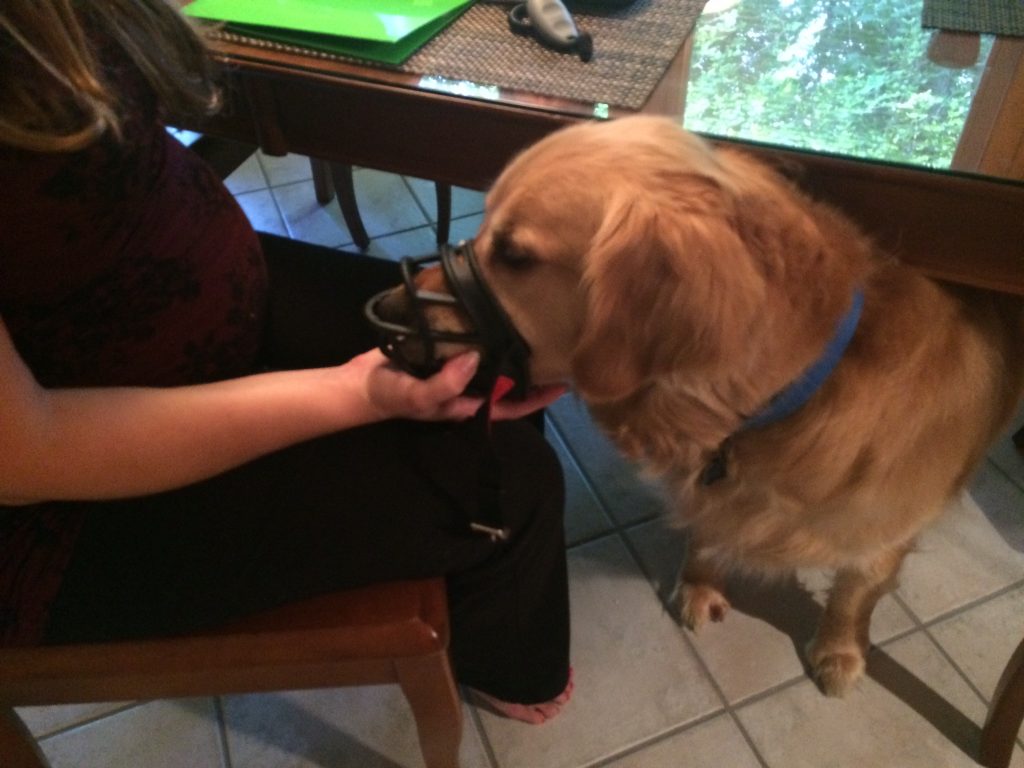 Thorough questions when you first begin working with a client will help you understand their situation and lifestyle. Whether they are a busy family of 5 always running left and right to sports practice or a busy professional that travels 3 weeks out of each month, these details on their lifestyle will help you understand their capabilities and design a training program that will best suit their needs. By truly understanding your client and being flexible, you can provide the right services to help them reach their dog training goals more quickly and effectively.
While there are compromises and improvements that can often be made, it’s not your responsibility to change someone’s lifestyle to match their dog. As a dog trainer, you have to help the dog adapt to the client’s lifestyle and goals as much as possible. (Unfortunately, when this isn’t possible, rehoming a dog might be the best solution for everyone’s mental health.)
Failing to fit their training program inside their current lifestyle could be asking your client to change too many things about themselves to have good compliance and a successful training program. Don’t try to put a square peg in a round hole. A client that is extremely overwhelmed could lead them to believe you’re not the right fit for their needs and could even result in a bad review online. Great dog trainers understand their client’s limitations and provide a plan that adds responsibilities and changes incrementally instead of all at once.
Understanding Their Priorities
Similar to understanding a client’s lifestyle, knowing what your client’s priorities are is critical to motivating them. However, understanding their priorities isn’t quite as simple as it might seem. If a client says they want to teach their dog to “sit,” you have to dig deeper into their motivation for wanting this behavior. Is their priority to have a dog that behaves around visitors? Do they want their dog to listen to them around their children? Do they want their dog to become a therapy dog eventually?
Don’t take client’s requests at face value. Ask why (a few times) and see what your client truly wants from their dog. When you understand your client’s priorities, you can create a plan that satisfies their needs and increase their compliance. Don’t just go by what you think should be the priority for their situation. They have to be on board, too.
Establish Policies to Protect Your Sanity
One of the best ways to prevent overwhelm and get better compliance with new clients is to make sure they know the “rules and expectations” before they even begin working with you. In the template bundle, I provide a welcome packet that you can use to list out your expectations around communication, office hours, how lessons or classes work, and other processes that will help your clients understand how to work with you.
Being clear, concise, and consistent with clients will help them be successful (just like dog training, right?) A welcome packet answers those FAQs and gives you a foundation in case you need to enforce one of your policies.
 Decrease Overwhelm & Increase Client Compliance with the Right Forms
As dog trainers, we know that prevention is always the best policy and preparation is the best form of prevention. I want you to feel confident and professional in your business which is why I created the New Dog Training Business Template Bundle. This bundle includes an in-depth new client intake form, in addition to 9 other templates, that you can start using today.
View the New Dog Training Business Template Bundle here.
![The Importance of Asking the Right Questions to New Dog Training Clients]()
by Ines | Jan 24, 2017 | Business
 Mentors Prevent Mishaps
Knowing the right questions to ask new clients often comes after many years of experience for many professional dog trainers. There are many situations that a new dog trainer may not be aware of or familiar with because they haven’t come across them yet. Ultimately, you don’t know what you don’t know and this can put you in an uncomfortable position if you’re not careful when taking on new clients.
This is often where working with a mentor can be priceless. Mentors can teach you how to onboard new clients, manage clients, and manage other aspects of running a small business – let alone a dog training business. A mentor can teach you what you should look out for and what questions to ask new clients before taking them on so that you can provide them with the best training program possible to get results. Their stories can give you insights into what to lookout for with your own clients so you can set yourself up for success. However, not everyone has access to a mentor which is we try to fill in the gaps with this website, podcast, and Facebook groups.
If you don’t have a mentor to teach you the ropes or what red flags to look for, the second best option is to make sure you’re asking the right questions to new dog training clients so that you’re fully aware of what you’re taking on before you commit to training their dog.
What Could Happen If You Don’t Ask New Clients The Right Questions?
Because dog training is completely unregulated, many dog trainers start out without much formal training at all – especially when it comes to business or client management. This results in well-meaning, but uninformed dog trainers taking on clients they aren’t necessarily ready for. They may not be aware of the risks or unfortunate scenarios that could result from taking on certain clients.
Fortunately, there is a way to avoid complicated or risky situations – asking the right questions before taking on a new client.
Speaking from experience, I’m quite certain that there are many new dog trainers out there that are taking on cases with a bite history too prematurely simply because they didn’t ask the right questions before working with a client. Many dog training clients leave out important details from intake forms or conversations because they assume those details irrelevant to their training goals.
For example, a client could inquire about basic obedience and manners with their dog, Fido. Fido has a long history of resource guarding his food and toys from people and other dogs. Their assumption is that Fido’s resource guarding behavior with a small bite history is irrelevant to their basic obedience goals and they choose leave out those details. A new dog trainer may not assume an inquiry about obedience requires an in-depth intake form or questionnaire and so they leave out important questions that could have uncovered these details. This kind of scenario happens all too often and leaves the dog trainer in an unsafe situation with the potential for a lawsuit if something goes wrong a group class with other students.
This is just once scenario in which asking detailed, seemingly irrelevant questions before taking on a new client can help prevent unexpected, dangerous accidents. Without a mentor to teach them otherwise, a new dog trainer may not be aware of the risks they’re unknowingly taking on.
What To Do If You Don’t Have a Mentor
Through this blog, podcast, and courses, I hope to educate those that are just starting out so that they don’t find themselves in scary situations. As dog trainers, we know that prevention is always the best policy and preparation is the best form of prevention. We work with animals and people which can lead to unpredictable situations. I want you to feel confident and professional in your business which is why I created the New Dog Training Business Template Bundle which includes an in-depth new client intake form, in addition to 9 other templates, that you can start using today.
Additionally, I’ve got some exciting events coming up for new dog trainers starting up their own business!
Join Me for Facebook Live February!
In the month of February, I’ll be doing Facebook live videos every week in our Facebook group, “Startup Tips for Modern Dog Trainers.“ Be sure to join the group so you can also benefit from all the free tips around starting up a dog training business I’ll be sharing. At the end of the month, I’ll be hosting a workshop for new dog trainers looking to start their own businesses so stay tuned!
Join the Facebook Group

by Ines | Jan 17, 2017 | Business
Ever wonder if your city is big enough for you to start your own dog training business? What about if people in your community make enough to pay for a professional dog trainer? Questions like these and others can be answered with smart market research.
If you’re wondering whether you should try to “make the leap” as a professional dog trainer with your own business or not, market research can help you confirm or refute your assumptions.
The Purpose of Market Research
Market research done right will help you understand the kind of people you want to serve and will provide answers to questions like:
- Who should I serve in my community?
- What services should I offer?
- What are people in my area willing to pay for?
- Should I specialize? If so, what specialty should I focus on for my location?
- Will I have enough customers to support my business?
- What should I charge for my services?
- How can I differentiate myself from my competitors?
- How can I serve my customers better than my competitors could?
I see a lot of these questions being asked in Facebook groups by new dog trainers, but the answers you might get on Facebook could be irrelevant or mislead you because they don’t consider your geographic area and the demographics that are represented.
Gather General Population Statistics
Some specific statistics you should pay attention to as a dog trainer and make a note of include:
- Population within your service area
- Personal income per capita – This is considered the average income earned per person in a given area in a specified year. It is calculated by dividing the area’s total income by its total population.
- Growth or decline in either population or personal income over the last 10 years.
- Percent of the population that own dogs
- General demographics of the population – Is the general population mostly families with small children or are they an aging community with lots of retirement centers?
Market Research is About More Than Statistics
The best market research involves getting out there in your community and asking real people about their lives and their struggles. Statistics are known as secondary information. Primary information is the information you gather directly from the source – your future customers!
In an effort to help my readers and new dog trainers out there, I’ve created a FREE 5-day email course to walk you through the steps of market research. I’m really excited about this course because I see so many newcomers ask if their current city can support a new dog training business if they start one. This course will make it easy to answer that question and so many more that people typically have when they’re starting out.
Learn more about the course and sign up for FREE below!
 Free Market Research Mini-Course for Dog Trainers
Sign up for my 5-day course, “Market Research Course for The Modern Dog Trainer.” In this course, I’ll send you five modules (one each day) that should take you no more than 15-30 minutes to complete.
The five modules include:
- Module 1: Ask the Right Questions to Find the Right Answers
- Module 2: Gather Important & Relevant Stats on Your City’s Population
- Module 3: Learn About The Dog Owners in Your Community
- Module 4: Research Your Competitors & Find Differentiators
- Module 5: Learn About the Factors that Contribute to Sustainability & Success as a Dog Trainer
With the help of this course, you’ll:
- Learn what questions you should ask and research before getting started.
- Find out if your city is populated and economically strong enough to support your dog training business.
- Learn about the specific challenges that dog owners in your community are struggling with.
- Understand what your community needs from your dog training business.
- Feel confident knowing that you’ll be investing time and money into a business that actually has a chance at being successful.
- Have fewer fears about starting up your own dog training business.

Fill out the form below to join the course for FREE!
Sign up for my 5-day course, “Market Research Course for The Modern Dog Trainer.” Receive five modules (one each day) that should take you no more than 15-30 minutes to complete.
Feel confident knowing that you’ll be investing time and money into a business that actually has a chance at being successful.
![Guest Post – What It’s Like to Start a Dog Training Business from Scratch]()
by Ines | Jan 10, 2017 | Business
This is a guest post by an up and coming positive gun dog trainer in California. In this post, he talks about what it’s like to start up a dog training business from the ground up. Learn about how he got started and the opportunities he pursued to help the transition.
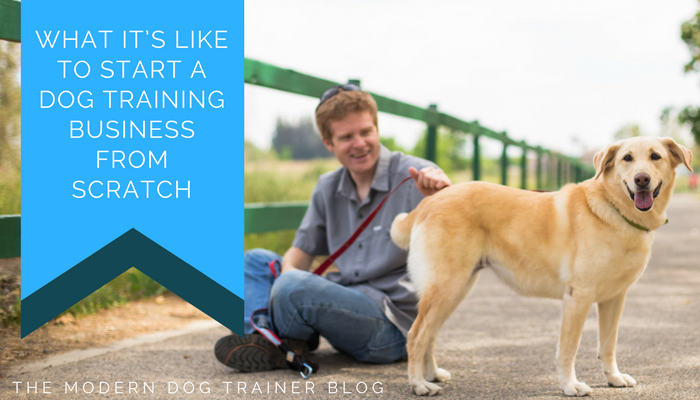 Hello! My name is Zane Brown and I own and run Reliable Retrievers LLC in Fresno, California. I opened my dog training business in late 2016. I’m here to share my story of what lead me to open my own dog training business and what it was like along the way.
The start of my journey to become a dog trainer happened at a time when I really didn’t realize how my life’s direction would change, or even what the significance was at the time. In 2014, a Labrador puppy came into my life that would change it all for me. This young pup and I had such a unique bond. He inspired me to take a positive reinforcement obedience class, and before I knew it, I was hooked. I was fascinated with what you could achieve with this revolutionary new method.
 Now, on to the events that helped me to realize my dream and take the first step. It all started in early 2016 when I got an email from Thomas Aaron of Fetchmasters LLC in Denver, Colorado. I had been emailing back and forth with Tom for several months about positive gun dog training. One of the first things that we had talked about was that he held workshops every year but he wasn’t sure when the next one would be. I kept eagerly checking his website every few weeks, but never noticed any update. Then, one day, Tom emails me and tells me that the workshop is on for this coming May, and that there might even be a scholarship available, if I acted now. I quickly emailed Tom back and said I was interested in attending!
This was what I had been waiting and hoping for, I couldn’t let this opportunity slip away. As excited as I was, I was also a little nervous because of the monetary commitment: there was the hotel (with a dog no less!), 3 meals a day, half day boarding for my dog (while we attended the lecture part) and finally the gas I would have to spend for the 9 days. However, this is what I wanted to do and positive training was my passion, so I took the leap of faith, and I haven’t looked back since. I decided that the pros would vastly outweigh the cons in taking this chance because I would get to learn a friendlier way to train gun dogs, something that was of a very personal significance to me. I grew up around the traditional way of training gun dogs, yet I had always wanted to find a friendlier, more positive way to train them. Something about the nature of positive reinforcement techniques just resonates with who I am as a person.
The 9 days were incredible. We learned so much about the fundamentals of dog training, had some fun times working in the field, and made some lasting friendships along the way.

Starting Up My Dog Training Business
When I returned home, I wasn’t really sure where to start, but I knew I wanted to get the ball rolling and start working with dogs. It was a little nerve-wracking, but I decided I wouldn’t that let stop me. To be honest, I wasn’t sure when my next day paycheck would come in, and that really terrified me because I had always been rather conservative with money.
Well, the ball took a while to “get rolling.” For my specific venue of dog training, there were certain things I would need; the main one being a safe and legal location to discharge firearms. One of the biggest challenges has been looking for land to lease that would accommodate these needs. Another major challenge has been self-confidence, which I believe goes hand in hand with the fear and uncertainty of whether or not your business is going to thrive and succeed. For a while there, I was unsure of my abilities to train dogs, despite all I had learned.
One of the things that I discovered in starting my own business is that there is a factor of uncertainty to this whole process. This is not meant to scare anyone reading this. It’s just a reality that I want to share so that you understand. You can’t let the uncertainty stop you if you want to work for yourself. With that said, I think that it is important to realize that you can ask for help, and that there is nothing wrong with that. In starting your own business, it is definitely a bonus to have support and someone who has been through the process and can guide you. If you’re starting your own business and you’re stuck, there is help and support out there. Please feel free to reach out to me.
Recommended Reading: Why You Should Do Some Market Research Before Starting Your Dog Training Business
Business Tips for Dog Trainers
Perhaps one of the most significant events in my journey so far was when I found The Modern Dog Trainer and Ines McNeil. A friend of mine invited me to join a Facebook group all about startup tips for dog trainers. Up until this point, I lacked a little bit of focus on getting things started, but with the tips from Ines, that cleared up quickly. I think the major factor that helped clarify the process and gain a good sense of direction was The Modern Dog Trainer business course. One of the main ways that it helped me was to know how to appropriately protect myself legally. It’s a topic that no one wants to talk about, but it’s a necessity if you’re going to be a dog trainer. Another way is it helped me with knowing how to build my website and how to market myself. These things are essential in today’s world. You have to have an online presence and you have to get your name out there.
Getting My First Client
 I will just share one last quick story. I was really nervous about who my first client was going to be. However, one day, a few days ago in fact, I decided to grab the bull by the horns and just go for it. A prospective client emailed me about my services and after talking with a trainer friend of mine I felt a surge of confidence and responded to the client. During this conversation, I realized that I had an idea about where exactly I wanted to start with this client in the training process. It was also the fact that he came to me not just for dog training, but also for advice on hunting itself. It hit me that I had been hunting since I was about fifteen and I knew a lot about it. I have a lot of hunting experience, and done different types of hunting (upland, waterfowl). These are the things that gave me this boost in confidence.
I also remembered words from another trainer-friend of mine, “You have to start somewhere.” So, that is my story, or at least the beginning of it. It began with the unique connection between a dog and his human, and it has grown into so much more that. However, I believe it’s important to remember where it all started, whom it started with, and remember the humble beginnings.
My Future Goals
One of my biggest goals is to spread awareness of positive reinforcement gun dog training in California. In addition to offering training services, I want to start an educational division of my business where I offer workshops and seminars to demonstrate the power of positive methods on dogs.
I also want to affect change on a national level, starting with the Boy Scouts of America organization. As an Eagle Scout, I know firsthand just how important this organization is in the lives of young people. There are a lot of critical skills that this organization teaches. I wish to aid in that effort by discussing with them and presenting them with a science-based, proven, positive reinforcement methods for their Dog Care merit badge requirements. It is my hope that positive reinforcement training continues to gain traction and a foothold in the world of hunting dogs.
 Looking into starting your own dog training business? Grab our free eBook, “10 Common Mistakes New Dog Trainers Make With Their Businesses.”
If you’re thinking about starting your own dog training business, take advantage of this free eBook to avoid some detrimental mistakes that many dog trainers make.
Are you spending your time on the right tasks to grow your business? Are you worried about making continuous income throughout the year? Will your business be sustainable for years to come? Prepare yourself with the help of this eBook!
Get the eBook
![5 Must-Haves Before Launching Your Dog Training Business]()
by Ines | Dec 19, 2016 | Business
 When you’re first starting out on your own as a dog trainer you might not have all the right forms or documents created until you discover you need them. In this article, I’m going to point out some important and necessary documents you should have ready before you start taking on new clients.
1. In-Depth New Client Intake Form
Intake forms ensure you’re aware of the entire situation before taking on a new client. Having an intake form that dives into even the most minor details can help you create a more detailed training program or behavior modification program and may bring out some details about the dog that the owner may not find relevant to their training goals. As the professional, the more details you gather the better you can perform your job.
By gathering as much information as possible before you begin training, you can make the call as to what details about the situation or about the dog are relevant or irrelevant to the owner’s training goals.
Your new client intake form should ask questions about the dog’s diet, the dog’s past behavior history, the owner’s lifestyle, the dog’s medical history, and much more. Asking questions not only gives you a better understanding of the context of the dog’s behavior, but you just might spur some old memories from the client that may be unexpectedly relevant to the dog’s behavior changes or issues.
Related: 10 Customizable Dog Training Business Templates
2. New Client Welcome Packet
A new client welcome packet is a handout that explains what it’s like to work with a dog trainer, with your business, sets expectations, and sets up the (human) client to be successful as much as it does the dog. For many of your new clients, this will be their first time working with a dog trainer.
What can they expect from you with regards to instructions, communication, and follow-up? What is expected of them? What do you need from them to do your job well and reach their training goals?
A new client welcome packet explains all of this in detail so that they can be comfortable and aren’t left with a lot of questions. Giving your new clients a welcome packet helps you look professional and they’ll feel supported right from the start. Professionalism and customer experience are some of the best ways to differentiate yourself from your competition.
3. Client Lesson Overview Handout
Most trainers will follow up lessons with an email that briefly overviews what was taught in the lesson or they jot down notes on a blank piece of paper during the lesson. This can leave the client confused and important pieces of training information could be left out of the notes.
Instead, I recommend that you have a worksheet or handout that you fill out as you’re working with your clients. This kind of handout can include specific spaces to list management requirements, steps for breaking down complex behaviors and lists of rewards that that specific dog enjoys and will work for. This makes your notes easy for the client to read. Alternatively, you could even have the client fill this out during your lesson. This sets you and your (human) client up for success.
4. Specific Behavior Modification Assessment Forms
Taking on clients with leash reactivity, resource guarding, or separation anxiety? In addition to an in-depth intake form, you should have separate forms for each behavior issue that will require behavior modification. You shouldn’t ask clients with dogs with leash reactivity issues questions about separation anxiety and vice versa. (Unless, of course, their dog suffers from both.) Creating extra handouts centered around specific behavior issues will allow you to gather the right, detailed information from clients with specific challenges.
5. Follow Up Emails
Speedy correspondence is important for landing new clients. Making sure you have some emails you can quickly pull from and edit based on the prospect’s inquiry will save you time. Having a prepared email ready means you’ll also be less likely to forget critical information you’d want your potential client to know.
Does this mean you copy/paste your email response without any kind of customization? No. You’ll still want to respond to any specific questions the prospect had or tell them that you understand their situation to start building a rapport with them, but having a template to pull from will make it easier for you to respond in a timely manner with all the right information they’ll need to begin working with you.
I recommend you check out my New Dog Training Business Template Bundle that includes these five templates and five additional templates to give your business a major jump start. Each template can be completely customized to suit your branding and messaging. These templates and forms include the most relevant and important questions that the best professionals in our industry use all the time.
View The Template Bundle
Dog Training Business Tips
Receive valuable dog training business tips and resources right in your inbox! Subscribe to The Modern Dog Trainer now by submitting your name and email below. Don’t forget to let us know what you want to learn more about!
[mc4wp_form id=”2494″]