![Chat Time Interview With Karen Deeds, CDBC Of Canine Connection]()
by Lisa | Sep 23, 2015 | Interviews

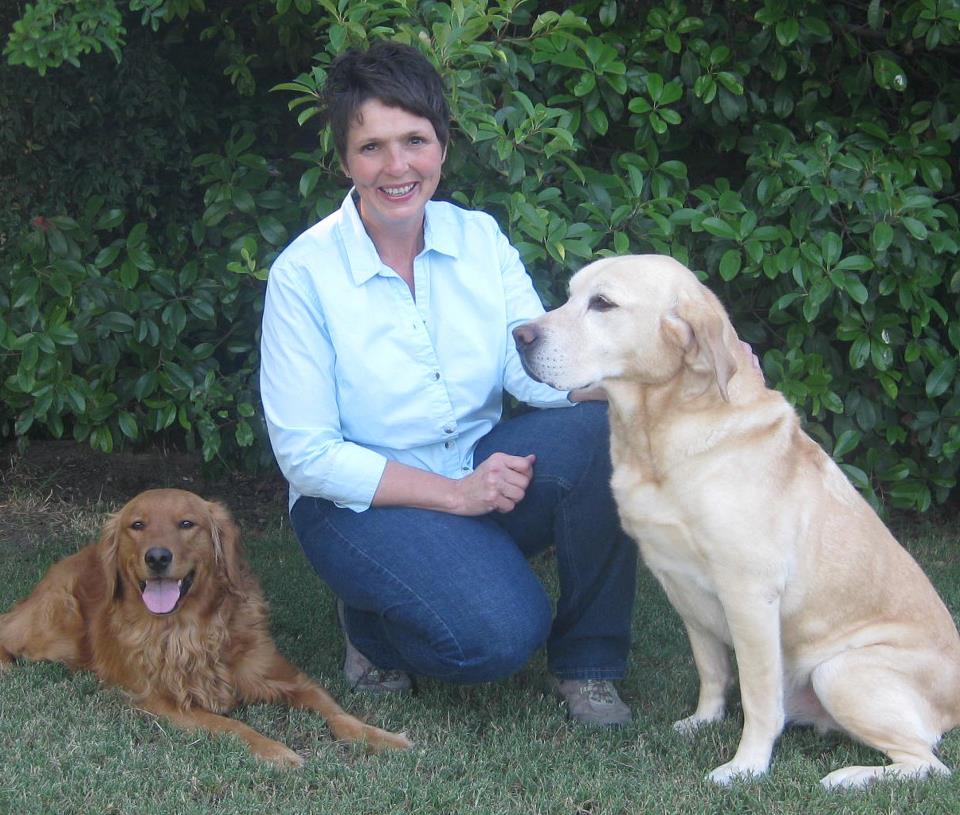
Karen with Cassidy (Golden Retriever) and Rock (Labrador Retriever); image via Karen Deeds, www.deedscanineconnection.com
Who Is Karen Deeds?
I do Facebook interviews with animal trainers, behaviourists and other professionals. I met up with Karen Deeds CDBC to chat about how she approaches aggression in dogs.
Karen Deeds became a Certified Dog Behavior Consultant, with the International Association of Animal Behavior Consultants, in October of 2013 and has taught at seminars and conferences in Texas, as well as other parts of the U.S. She is sought after for her expertise in training and behavior modification. In 2010, Karen received the Association of Pet Dog Trainers award for “Community Educator of the Year.” In 2013 she received the Dog Scouts of America “Good Scout Award,” recognizing her for her service to Dog Scouts.
You can find her –
Website – http://www.deedscanineconnection.com
Facebook – https://www.facebook.com/pages/CanineConnection/479935655150?pnref=lhc
My Interview With Karen About Dog Aggression
Lisa White: Thank you so much for joining us, Karen.

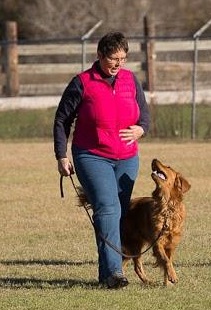
Karen with Cassidy competing early this year. Image via Karen Deeds, www.deedscanineconnection.com
Karen Deeds: Thank you for the invite!
LW: How did you get into training and behavior?
KD: It was in the early 90s when I was working with my dog on an out of sight down stay when I went behind the building and was met with an assailant. My dog came to my rescue after hearing me scream.
The next time he saw a person that was similar to the person who had assaulted me, he was aggressive. That was before I really knew what I was doing, but I brought the guy (who was a bather at the groom shop where I had taken him to be groomed), some hotdogs, and I started tossing my dog, Shoney, some hotdogs every time the kid came outside and he saw him.
Simple classical conditioning! I had taken Psych classes in junior college so I was familiar with some things!
I then started asking Shoney to perform various obedience tasks like Sit and Down in the presence of the trigger. Luckily I had a lot of good things going on with my dog in that he was a very stable boy and this was a single traumatic incident.
That is when I first realized there was a difference between training and behavior! At that time, most trainers were teaching more traditional methods that they used in competition even though that is not really what most pet dog owners needed.
LW: Indeed. So what methods do you use?
KD: I use positive reinforcement and utilize a variety of different protocols. I love to get a dog thinking so I love to free shape. It builds confidence by giving the dog the ability to make choices. I will use some luring, targeting, and of course shaping for basic skills with pet dog owners.
LW: Word is that you are well known for dealing with aggression. Can you tell us more about that?
KD: Yes, I do deal with a lot of aggression and reactivity. I guess it all started with Shoney. There was just such a need around here and I started to attend seminars, read books, and do ANYTHING I could to get more educated.
I also work with a lot of rescue organizations to help them assess dogs and that has led me to be pretty black and white about some of these cases.
LW: What do you mean by “black and white about some cases?”
KD: I think it is extremely important to understand the limitations of each case. I use a 15 point variable system to help determine what option is best for a client and the dog as well as how those variables influence the outcome.
It isn’t always about the dog – the owners and their environment play vital roles in the decision and my recommendations.
LW: What is that 15 point variable system?
KD: I’ll briefly outline them:
- Severity – I typically use the Ian Dunbar scale because it is simple for the owners to understand. The higher the number the worse the prognosis. There is also the location of the bite that I consider.
- Predictability – if the trigger is easy to predict it does make things easier to set up for behavior modification. Unpredictability is difficult, but a lot of times that unpredictability is only in the eye of the owner!
- Controllability – Being able to contain the dog for management purposes is vital as well. You can’t ALWAYS be working the program so the dog needs to be able to be contained safely. Whether it be in a crate, on a tether, in a muzzle, behind a baby gate or whatever.
- Previous training is a HUGE factor and it has become even more of a variable now that I see more dogs that have previously been trained with electronic collars or traditional ‘dominance’ methods. It diminishes trust and can often create a dog that can’t think for itself or has had the communication skills punished out of them.
- Trainability – A dog that is easy to motivate is easier to train. The lack of motivation can equal lack of desire to change behavior. Food is usually fastest, but play can be as strong or stronger for some dogs.
- Socialness – There are simply some dogs that do not have a desire to be social; either with strangers or other dogs. Unfortunately so many pet owner think their dog ‘needs’ to be social and all they really want is to be that little hermit dog that sleeps all day safely in the living room!

Canine Connection for the Real World Canine
- Children – This starts to get into the ‘people’ and environment factors which are, IMO, some of the most important. If there are children in the environment and they are a trigger then there needs to be huge consideration for what option is appropriate. There are only four options: Management (which usually fails at some point); Management and training and b-mod; Rehome; or Euthanize.
- Size of dog must be considered not only because a dog over 40 pounds can be harder to manage and contain, but perception from the public is also different. Not many people care if they get nipped by a Maltese (no offense to Maltese people!) but if it is a bigger dog then they do!
- Breed of dog – unfortunately it can matter! Because I do a lot of aggression people think I see Pit Bulls, Rottweilers and Dobermans, but my highest case loads are herding dogs, dogs under 25 pounds, and sporting breeds. Sometimes they appear to come in waves!
- Finances play a part too. An owner needs to be able to afford the medical work ups, the management systems, the training tools, and the help from a qualified trainer or behavior consultant or behaviorist. There is also the real possibility of litigation as well as medical costs if damage is done to a victim.
- Time – It is a valuable commodity and many people simply don’t have enough time to put into managing the dog let alone modifying its behavior and training them.
- Commitment – This can often be a lifelong commitment. There isn’t a quick fix and they must be prepared to go the distance.
- Compliance – Sometimes I know many of us in the field feel like marriage counselors! It is vital that everyone be on the same page in the household so that no one is undermining their success. Much like a kid that learns to go to mom when dad says no, it is confusing for the dog and creates unpredictability.
- Cognitive Dissonance – this has been something I really didn’t think would be an issue, but I have had several cases lately that one partner simply didn’t want to believe that their dog was afraid and not dominant! If they don’t buy into the science, I can’t help them!
- Duration – If the problem has been going on for a long time then the likelihood of changing it is diminished. The Matching Law is in play at that point. And some variables will outweigh the others. I have worked with clients with children in the home with a dog with a level 4 bite that I would never have worked with in a different home.
I find that the ‘people factors’ are the most vital. That is why I have had good luck with dog/dog issues doing board & trains. I can lay the foundation and then follow up with the clients.
LW: So if the owner doesn’t comply with your recommendations, then failure is the result.
KD: To a certain extent. It does depend on the severity at that point. In most cases enough improvement can be made that the owner can manage.
LW: At what point would/should one give up on an aggressive dog?
KD: I usually recommend that clients set a specific time before they reassess. 30-45-90 days, if at that point they simply can’t continue with the program, or there isn’t sufficient change, or there is another incident them we may have to come to another conclusion and different option.
LW: I find a lot of people/trainers seem to judge owners for their inability not to commit time to working with their aggressive dog. What are your feelings on this?
KD: I am not in their shoes. I will never judge them (at least not in front of them!), but seriously, I HAVE been there myself. I remember having to euthanize a dog I was fostering way back in the 80s because she had almost killed another one of my dogs and had then turned on my 3 year old son. I have been in the vet office holding many hands when they said goodbye to their family pet. I also have emails and get phone calls thanking me for allowing them to make such a decision that has freed up their lives and reduced stress in the household.
LW: It is a very stressful situation; you are on pins and needles all the time.
KD: Yes it is stressful for EVERYONE. Especially inter-housemate aggression or households with children.
LW: Unfortunately, time is up and we have to end this interview. Thank you so very much, Karen, for taking the time to chat with us.
KD: A very special thank you for considering me worthy of an interview!
Thank You
We’d like to extend a big thank you to Karen for letting us share this interview on The Modern Dog Trainer blog.
Get Dog Training Business Tips!
Receive valuable dog training business tips and resources every week! Subscribe to The Modern Dog Trainer now by submitting your name and email below.
[mc4wp_form]
![SPARCS 2015: “Reducing Stress of Dogs in Shelters” with Michael Hennessy, PhD]()
by Lisa | Jun 23, 2015 | Events, SPARCS
What Stresses Us?
 Types of Stressors
Psychological stressors
- Job interview
- Traffic
- Death in family
- Disease diagnosis
Physical stressors
Psychological stressors most highly activate the HPA system.
Stress Responses
- Sympathetic (adrenaline)
- Hypothalamic-pituitary-adrenal system
- Brain activity
- Behavior
Stressors elevate circulating levels of HPA
Cortisol level is (the best?) measure of stress:
- BUT, it is not a perfect measure
- Not all stressors clearly elevate cortisol
- Cortisol can increase without stress
- System can become dysregulated with prolonged exposure
Cortisol is a good measure of the effect of relatively short-term psychological stressors, when other factors affecting HPA activity are controlled.
Experimental Conditions
Handling control “Base”
- Alone home
- Alone novel
- Dog novel
- Person novel
- Threat
Dogs entering animal shelters are confronted with an array of psychological stressors (e.g., novelty, uncertainty, separation from attachment figures). On entering the shelter, cortisol is higher on Day 1 than in pets at home.
Why should high cortisol levels matter?
- Welfare of dogs
- Long-term effects on behavior
- Adoptability
- Potential health effects
White blood cells are elevated on 1st day in shelter and continue to rise.
Can human interaction reduce the cortisol response?
- Human interaction is a key factor for improving the welfare of dogs in shelters.
- Human-dog interaction can counteract stress.
- Human interaction prevents enhanced cortisol elevation.
Specific human interaction in the shelter reduces cortisol response to:
- additional stressor (venipuncture)
- additional stressor at a later time (novelty)
Presence of a human, regardless whether they ignore, pet or play with the dog, stress response is reduced for the shelter dogs. Suppressed immune systems from high CORT levels of dogs in shelters means there is a potential illness risk throughout entire shelter.
Shelter stresses:
- uncertainty
- loss of control
- social separation
- novelty
- threat
CORT levels differ depending on the kind of life the dog has and medical conditions.
Final Notes
Key ingredient: human interaction away from the main kennel area significantly reduces stress.
Relinquished dogs didn’t find human petting as reassuring (per cortisol tests) as strays.
Circulating levels of the primary stress hormone, cortisol, are about three times higher than observed in pet dogs sampled in their owner’s homes.
As little as 15 minutes of interaction between humans and dogs can reduce the circulating cortisol response.
Multiple sessions continued to produce effects, and dogs entering the shelter as strays appeared more susceptible to stress than dogs released by their owners.
![SPARCS 2015: “When a Stray is not a Stray” with Kathryn Lord]()
by Lisa | Jun 21, 2015 | Events, SPARCS

Kathryn Lord’s talk focused on the comparison of the reproductive differences between the dog – Canis familiaris and its other wild relatives in the genus Canis.
The genus Canis includes six incipient (inter-fertile) species: the dog (Canis familiaris), the wolves (Canis lupus and Canis simensis), coyotes (Canis latrans), jackals (Canis aureus) and dingoes (Canis dingo). There are two other emmbers of the genus, the black-backed jackals (Canis mesomelas) and the side-striped jackals (Canis adustrus).
There are many dogs on Earth. The worldwide population of the dog is unknown and difficult to calculate. One estimate is that the ratio is 1 dog to every 10 people = 700,000,000 dogs worldwide. Some say 1 billion dogs on the planet. That’s a lot of dogs.
However, only 17% dogs considered pets, 83% of 1 billion dogs are free living animals, not under human control or human care. They’re scavengers, un-medicated, they have control over own reproduction. They are found in dumps, their natural habitat.
Seasonality
Is the tendency for sexual activity – mating and parturition to occur during certain times of the year. Males and females within a species undergo biological changes to mate only during specific times to give birth, to coincide with food availability. Adaptive animals birth during food blooms.
Domestic dogs however are NOT seasonal. Females can come into estrus approximately every 7 months while males will mate whenever. Spreading pups out through the year decreases competition for food – no seasonality is preferable
Reproduction Age & Size
Simply a byproduct of size. You need to be shape of adult to reproduce.
Smaller animals reach maturity sooner, 8kg – 15kg, can reproduce within first year.
Larger animals, 30kg – 40kg, take longer to reach maturity, so 1 to 2 years old.
Free living dogs tend to be about the same size and shape, 13kg – 15kg
Mating Strategy
Pair Bonding: Mutual protection, care for young, mating strategies.
There are two kinds of monogomy: true and social and then there is polygamy.
True monogamy happens when female truly can’t raise all her offspring on her own. Parental care is necessary in wild canis: pups can’t survive until they can hunt for themselves. Wolf pups require 24/7 care, so dad has to hunt while mom nurses. Takes a long time to succeed
Wild canis tend to be monogamous. Not enough studies (except on Ethiopian wolf) to determine if social vs true monogamy. Some coyotes are truly monogamous.
Social monogamy: “don’t put all your eggs in one basket”. Ethiopian wolves socially monogamous.
Dump dogs: completely promiscuous and polygamous. No monogamy at all.
Regurgitation & Provisioning
Regurgitation very effective way to provide for offspring without theft from other animals
Regurgitation vs. provisioning because you can hide your food better. Chunk of meat can get stolen. Not if it’s in your tummy!
Bringing back meat can leave you open to scavengers stealing. Regurgitation is less able to be scavenged
Sibling Care
Help each other in good year, compete in bad years. Older siblings prioritized because closer to reproductive age.
It´s advantageous to help raising your brothers and sisters because they share some same genes as yours.
Wolves practice sibling care as well as parental care. Help your genes go forward…unless it’s a lean year, then steal!
Don’t want to share your already-eaten steak dinner? Put your face in the air and don’t let the pups lick you!
Dogs (Canis familiaris)
Dogs: indiscriminate breeders, lousy parents, opportunists.
Dogs outside human control developed improved parental skill – evolved for new environment
Dogs in dump don’t have to hunt. They can survive on their own long before adulthood. Less parental care needed
Living off human garbage is the ecological niche dogs, as a species, have adapted for – allowing them to reproduce & grow.
You can see more info here: http://www.researchgate.net/publication/232812626_Variation_in_reproductive_traits_of_members_of_the_genus_Canis_with_special_attention_to_the_domestic_dog_(Canis_familiaris)
![Chat Time Interview with Kevin Duggan of All Dogs Go To Kevin LLC]()
by Lisa | Jun 16, 2015 | Interviews

Chat Time Interview with Kevin Duggan CPDT
Chat Time Interviews are held on Facebook. During these interviews, I talk to experts about their areas of expertise. For this interview Kevin Duggan of All Dogs Go To Kevin LLC joined me to discuss blogging, the dog trainer certification process, and the ins and outs of running a successful dog training business.
Kevin Duggan is a Certified Professional Dog Trainer certified by the Certification Council for Professional Dog Trainers. He has been training professionally for 5 years. Kevin loves working with dogs and helping them mesh better into their homes. He does this by teaching the dog what we would like it to do, and reinforcing the behavior. This is also known as Positive Reinforcement. Kevin specializes in helping to build positive relationships between humans and their canine companions. He can help you with basic to advanced obedience as well as behavior modification. Along with helping people locally with his business, Kevin also writes for a variety of different websites. The most notable sites being Victoria Stilwell’s Positively.com as a Positively Contributor and the Dogington Post where he does an “ask the trainer” and writes articles.
Kevin has a popular blog of his own and creates educational viral videos to help spread the word about positive training. Don’t forget to subscribe to his YouTube Channel!
My Interview With Kevin
 Lisa G White: Welcome Kevin!
Kevin Duggan: Thank you for having me!
Lisa G White: You are most welcome. I see you are a fellow CPDT-KA trainer. Why did you decide to take the CCPDT exam?
Kevin Duggan: Hi Lisa, when I first got into dog training I knew I wanted to do it for a living and researched where to go. I came across the CCPDT and saw how it is a nationally recognized certification council. I figured it was a great place to start.
Lisa G White: What areas of knowledge does the CPDT-KA exam cover and what can you expect from a trainer with this certification?
Kevin Duggan: Great question. What I really like about the exam is that it covered so many different things. In order to pass it you need to be knowledgeable in animal husbandry, ethology, instructional skills, and learning science techniques and application. It really covers a ton. It is a great place to get started for anyone that wants to become certified. Someone with a certification like me, in theory knows how dogs learn, why they do what they do (the dogs), and how and why they are doing what they are doing, (the trainer).
This certification says all that and much more, but doesn’t guarantee the methods used by the trainer. The majority of us are using up-to-date scientific methods that do not include pain or fear. With that being said there are some that are opting to use shock collars and other devices that cause pain and fear.
Lisa G White: Here is the link to the Certification Council for Professional Dog Trainers, Inc. with regards to info to this exam. What advice do you have for trainers preparing to take the CPDT-KA exam?
Kevin Duggan: My advice would be to find a certified trainer to mentor with. (*Remember to do your research about the trainer.) I mentored for about 2 years with 2 certified trainers. This is where I learned everything I needed to pass the test. I recommend sitting in on as many private consults and group classes as possible. Additionally, I recommend reading different books like Don’t Shoot the Dog, Excel-Erated Learning, Culture Clash to name a few. When it comes to being a dog trainer, knowledge is power. (not force.)
Lisa G White: How long have you been blogging for and why did you decide to do a blog?
Kevin Duggan: When I started my website I included a blog with it. I didn’t update it much. That was about 3 years ago. Within the past 2 years I’ve used it to spread the word about reward based training. I use it to give people free advice in the form of tips, articles, and videos. I do it for a couple other reasons as well. One, I enjoy writing things. I try to deliver information to people in a way that is easy to understand. I also recommend having a blog and keeping it updated for SEO in regards to bringing traffic to your site.
Lisa G White: What is your favourite article/video for your blog that you did?
Kevin Duggan: I don’t know if I could pick a favorite. Here is one that I like though. It puts emphasis on the fact that a lot of people are comfortable giving advice to people about their dogs when they have no business doing so. Here’s the article: Dog Training: Everyone is an Expert.
In regards to favorite videos: I don’t know if I can choose one. Here is my channel. I really enjoy everything about making videos, from coming up with the content, to shooting and editing. It’s all fun for me. And it works out great because it gives people help that otherwise couldn’t afford it.
Lisa G White: What challenges do you have with blogging?
Kevin Duggan: That’s a good question. I don’t have any issues with coming up with stuff to blog about. I just write what comes to me. One challenge is dealing with trolls. Those are the people who are looking to nitpick or just read the title of an article and comment without actually reading it. With that being said, I do not read the comments of any of my blogs. My advice to anyone that writes blogs is to not feed the trolls, they thrive on that.
Lisa G White: I take my hat off to you to do this, I’m a bit of a wuss. So many people always have something to say, to criticise. You cannot cover every single thing in a blog, only your own point of view. If you tried to do so, then it would become a bloody novel.
I see you are a guest blogger for Victoria Stillwell, how did that come about and how long have you been a guest blogger for her?
Kevin Duggan: Yes, I’ve recently started writing for the world-renowned Victoria Stilwell. They actually contacted me after reading my blog on my website. They liked what they saw and asked if I would like to be a Positively Expert. I have currently written 3 articles for her site over the past month. It has been an awesome opportunity/ experience to be able to reach even more people.
Lisa G White: WOW, what an honour, you must feel so pleased!
Kevin Duggan: If you would have told me a year ago that I would be writing for her I would have laughed at you. But hard work pays off.
Lisa G White: Indeed it does!
Kevin Duggan: Here is a link to my articles for Victoria.
Lisa G White: How did you come up with your business name? It is brilliant!
Kevin Duggan: My friend’s Mom actually came up with it. When I was searching for a business name she came up with All Dogs Go To Kevin LLC and I couldn’t pass it up.
Thank you. I was lucky to be named Kevin. All Dogs Go To Eric doesn’t quite have the same ring to it.
Lisa G White: LOL, so true. Today you posted on your FB page that in the past 3 months your website has moved up 4.5 million spots in the global rank. WOW, congratulations. Can you give us some advice / tips on what you have done to achieve this?
Kevin Duggan: My website has been something I’ve been working on for quite some time. When I started it I had it set up for information about me and my local business. Since then I’ve been turning it into a site that people can visit to get free advice in the form of blog posts and videos. That has helped. Additionally, writing for other popular sites like positively.com and dogingtonpost.com allows for more reach to people. It works out well. My advice to anyone that wants to do a site, keep updating it regularly with good info. Blogs are a great way to keep people coming back to your site. Videos are another great way. Keep your site easy to navigate. I see too many sites that are hard to navigate and unappealing to the eye. That will drive people away quickly.
Lisa G White: 4.5 million is a HUGE improvement though.
Kevin Duggan: It also comes down to page views on your site. Which is another reason to write blog posts. My blog posts reach on average between 500-1000 people. That equates to page views.
Lisa G White: That is fantastic Kevin! Last question from me – What is the biggest mistake you see trainers make when communicating with clients?
Kevin Duggan: I would say, there are a lot of “trainers” out there that have no business working with dogs. It is my job as a trainer to be as up-to-date as possible when it comes to scientifically sound training. There are lots of trainers out there today that are still giving people advice based off of outdated research that has been proven to be false. The biggest mistake those trainers make are giving outdated advice because they’re too stubborn to change their ways.
That being said, a mistake that scientifically sound trainers make is talking to science-e to everyday people. It is important to be able to communicate in a way that your clients will understand.
Lisa G White: That is so true Kevin. Ok the floor is now open for members to ask questions.
Facebook Group Member: I have a dog Babs she is adopted and can tell abused in her pass! Have been handling her and socializing her for over a year she just does not want to be social. She has tendency of being very aggressive. The same group of people have come and gone all of this time and she still attacks at times and other times she is OK – very unpredictable any advice? Babs is approx two years of age! At this point she is kennelled when company comes for she has bitten well quite a few so far.
Kevin Duggan: It really comes down to pairing the scary things with good stuff. The process is referred to as Counter Conditioning and Desensitization. My advice would be to do lots of research on CC/DS and start to implement it. That is the shortest answer I can give for your question. smile emoticon Sorry to hear about your situation.
Facebook Group Member: In your experience, how much floor space do you think is an adequate amount for a dog training/day care facility?
Kevin Duggan: I just opened my training center and it is just short of 1,000 square feet. It isn’t huge but gets the job done. I am able to do about 6 full size dogs in a basics class, 8 puppies, and for my reactive dogs I do 3 max in there. This gets the job done for me. If you go much smaller things can get chaotic and there just isn’t enough space in between dogs to get things accomplished.
Facebook Group Member: So nice to meet you Kevin. I am a CPDT-KA trainer as well. I have my own Facebook page which is growing. I write tips, information, education etc for dog owners and also cross post great articles from other trainers. Would you suggest a blog for someone like me? I haven’t jumped into that arena yet. I write new posts 3-5 days a week.
Kevin Duggan: I was doing most of my stuff on FB and decided to start sending people to my site. Overall, yes I would recommend starting off with even doing tips on your site and drawing people from FB to your site. Sometimes I do little tips on my Facebook page, but most often I am just doing teasers to get people to click a link and go to my site. I have started doing graphics recently as well. But the more traffic you can bring to your site, in theory the more business you can gain in clients.
Facebook Group Member: So is it your website or a blog?
Kevin Duggan: Both. My blog is a part of my website.
Facebook Group Member: Thanks so much. I’m going to go snoop now.
Lisa G White: Unfortunately, we have to end now, Kevin has to go watch football, and he is rooting for Green Bay to beat Seattle. Thank you so much Kevin for taking the time to chat with us!
Kevin Duggan: Thank you for having me. Thanks all for the questions.
Thank You
We’d like to extend a big thank you to Kevin for letting us share this interview on The Modern Dog Trainer blog. We look forward to reading and learning more from you! Also, thank you to Lisa for organizing and hosting the interviews.
Get Dog Training Business Tips!
Receive valuable dog training business tips and resources every week! Subscribe to The Modern Dog Trainer now by submitting your name and email below.
[mc4wp_form]
![Review: DogReins No-Pull Harness]()
by Lisa | Jun 13, 2015 | Reviews

I was excited when I opened up my package, of two DogReins No-Pull Harnesses, a medium and a large, one with a bright red cozy and the other with a yellow cozy.
The color of the harnesses was all black and came with the “reins”, a long multi-functional leash that clipped on to the rings located on either side of the harness. I liked this leash since it was light weight, thin width (which fit a woman’s hand nicely) and the length adjustable from 4’ to 7’. Another feature that I liked about it is that you can attach one clasp to the two rings on the harness and clip the other clasp onto a D ring, making a handle for you to hold it as a single leash.

DogReins are Incredibly Easy to Use
I decided NOT to read the instructions that came with it, to see if I could figure out how to put on the DogReins No-Pull Harness, since most are a bit complicated. Yes, it was VERY easy to do. First indicator was the tag that said “Point To Tail” with an arrow, that’s the Top Strap you put over the shoulders/back. Then the cozy with the DogReins embroidered, that was the Front Strap that went across the dog’s chest, and the last piece went under the girth, behind the elbows of the front legs called the Belly Strap. It was also easy to adjust to fit.
DogReins in Action: How Well Did They Work?
The first dog to try the Medium Harness was approximately 60lbs, an adult Rottie mix female, who never had a harness on in her life. With her prior history of obedience, it was hard to get her to break position and pull. But she responded beautifully to a slight finger squeeze and steering using the reins in one hand as well as in both hands on the leash to change direction.
I then tried the Large Harness on a 1 ½ year old Mastiff mix, 100+ lb male, who was a puller, the owner was using a choker, but the dog was still dragging his owner around. So I said, let’s try this harness instead. He got used to it quickly and while still pulling a bit, his owner found him a lot easier to manage, to stop and to turn. We are still working on loose leash walking with him though. But the owner felt much better about using the harness to walk with him rather than choking his dog and possibly damaging his trachea.
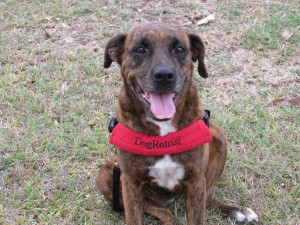
I’ve tried the harnesses on a variety of doggie clients, most having not had much time to get used to a harness, they adapted quickly and with no fuss to it at all.
When I took off the cozies on both harnesses, I found that the front straps were both crossed; this is how they are designed. They should lay flat not twisted. There is no other way to make the two front straps go to the opposite sides without crossing them. But they covered more surface area on the front of the dog and the moveable part of the strap lay on top of the stationary strap and it kept the straps on the outside.
All of the metal and plastic hardware is strong; the nylon webbing and stitching is smooth, no rough edges, no chaffing. The cozy is easy to put on and take off too, kept in place with Velcro.
Final Thoughts on the DogReins No-Pull Harness
I like how it helps to control dogs easily, that you can walk your dog next to you or in front of you on a loose leash, easy to use the reins in one hand or two, comfortable for both dog and handler, easy to adjust, put on and take off, fits a variety of different shapes and sizes of dogs. And most importantly, the DogReins No-Pull Harness does not restrict nor confine a dog’s movement.
This is a well made piece of equipment and it does work well.
My clients and I are very pleased with it and I’d definitely recommend it!
You can order this harness from their website.
Get Dog Training Business Tips!
Receive valuable dog training business tips and resources every week! Subscribe to The Modern Dog Trainer now by submitting your name and email below.
[mc4wp_form]
![9 Ways To Deal With Jealous Clients In Your Dog Training Class]()
by Lisa | Mar 25, 2015 | Communication

I am sure that we have all encountered at least one client, whose green-eyed monster has made an appearance when another client’s dog performed exceptionally well in class. What are the signs and how do we handle the situation?
Jealousy may be conveyed by:
- Smirking or making sarcastic comments
- Downplaying the success of others
- Lack of support (not complimenting or congratulating others)
- Backhanded compliments (“Oh your dog did very well, despite your messing up”)
- Tearing down others (Caustic or derisive remarks or open antagonism)
Jealousy is a normal reaction, especially when someone feels insecure about their abilities; however, we don’t want them taking it out on their dogs or making others uncomfortable.
Strategies To Address The Jealous Client
How can you as the trainer, help minimize jealousy in your class? Below are some strategies that have worked for me:
- Just as we tell our clients to ignore their dog’s bad behavior, we do the same with jealous people – ignore their behavior, NOT them.
- Look for their strengths, what they and their dogs do well, and point them out to everyone.
- Praise them for their successes and achievements (big or small).
- Encourage them when things don’t go as planned, and remind them of what they have accomplished.
- Focus your attention on their efforts (everyone can reach their potential through practice).
- Help them to improve in the areas in which they feel inadequate, you may suggest that they stay an extra 10 minutes or request a private session to catch up and feel more confident.
- Encourage a group atmosphere where everyone encourages and applauds each other and their dogs’ achievements.
- Let the group know that skills take time to learn, and through practice these skills will become second nature.
- People need to understand that like us, some dogs learn faster, while others take longer to grasp things.
And as the saying goes, no one is perfect and that includes our furry friends. So encourage them to enjoy the process of training instead of focusing on who’s achieving their goals first.
What are some of the ways you have dealt with jealousy in your class?
Get Dog Training Business Tips!
Receive valuable dog training business tips and resources every week! Subscribe to The Modern Dog Trainer now by submitting your name and email below.
[mc4wp_form]