In nature, there are many personalities in humans that clash. Just like dogs, we do not get along with every person we meet. This does not mean that you or the other person are wrong, it just happens. As the dog trainer, we need to realize when our clients are not getting the most out of our training sessions. It is our responsibility to lead these clients to someone more suited to their needs and personality, who will give the client what they are paying for. There are many signs that indicate you should turn away a client, here are five of them.
1. You Dread Your Sessions
While we will not always enjoy every one of our sessions for various reasons, if you find yourself counting down the minutes until your session begins in agony and then counting down the minutes until it’s over, this may not be the right client for you. We cannot give our very best to someone when we start to resent or despise them, and this can occur when we dread our sessions due to the client. I would suggest evaluating your sessions and your client and finding out what makes you dread your upcoming sessions. If you find that you cannot handle your sessions anymore, it may be an option to turn away your client.
2. You Feel Your Client Is Absorbing Nothing You Are Teaching
While we all want to be paid to do nothing, sometimes it just doesn’t feel right to take money when your clients are gaining absolutely nothing from you. If you feel that you are trying to teach your client and they are just not picking up on what you’re saying no matter how you try to teach them, they may be better off trying someone else who has a different teaching style. Maybe your teaching and learning methods clash. If you feel your client is not gaining the knowledge on purpose, maybe because they don’t agree with your style, then this can also be a hint that you just aren’t the right teacher for them.
3. You Feel Offended By Your Client After Every Meeting
Is your client fighting every word that comes out of your mouth? Maybe they don’t agree with your methods and they make that loud and clear. Maybe they outright call you ignorant or feel that they know better than you do. Sometimes people are so set in their ways that they do not want to learn or they don’t realize what they are saying is coming off as offensive. After trying your best to communicate, sometimes it is just easier to agree to disagree and go your separate ways.
4. You Feel Unsafe Meeting Your Client Due To Location Or Emotional Feelings
Being a trainer who does private, in-home sessions usually means that you don’t know where you’re walking into. And sometimes there are some downright unsafe places. There are also people out there who can come across as very inappropriate or just give you an unsafe feeling. If you feel unsafe at all due to either reason, I would highly urge you to find a way to make yourself feel safe or just turn away the client. If bringing another trainer or assistant along would make you feel comfortable, I would highly urge you to do so. Sometimes I get an awkward feeling before we even meet and my husband and I set up a system so he knows where I will be and exactly when I arrive and leave. Safety is always a priority.
5. You Feel You Cannot Offer Your Client The Training They Need
There are a wide variety of needs clients want met. If you have never done agility and your client is looking for agility training, it may not be in your best interest to take on that client. Another reason may be that you don’t feel comfortable training certain things that your clients are looking for. In order to gain experience with new sports or methods, you may find a local trainer who excels at that particular method and ask to shadow or attend their lessons together so eventually you can also help clients looking at that particular sport or method.
Turning away a client is not a bad thing. It shows that you are responsible, honest, and know your boundaries. It also means that you are being safe about where you are and who you are with. These are all things that successful trainers are good at doing. What are some other reasons you may want to turn away a client?
Get Dog Training Business Tips!
Receive valuable dog training business tips and resources every week! Subscribe to The Modern Dog Trainer now by submitting your name and email below.
If there is one thing all dog trainers love, it’s their equipment! From collars to treats, dog trainers can obsess over many things. The line between owner and dog is something that takes many forms. Not only do leashes look different, they also serve different purposes. The following leashes have a special place in dog training.
1. Long Lines
Long lines are very important in dog training because we always want to set our clients up for success. Long lines are utilized during recall or off leash training when we want to ensure the dogs will come back to us when they are called. Lighter weight long lines can be a stepping stone to off leash work. Materials used for long lines include nylon, rope, biothane, and leather. Nylon and rope are lighter and cheaper, while biothane and leather are a sturdier, but more expensive option. Biothane is also waterproof, which can be beneficial in long lines since they drag the ground.
2. Waist Leashes
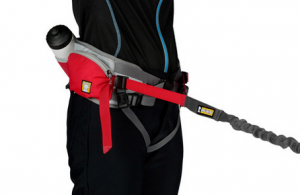
Waist leashes are good for your clients who continually ‘check’ their dogs with the leash or clients with dogs who are very strong. If your clients cannot break their habit of checking their dogs or keeping a tight leash, using a waist leash will keep them from steering their dogs. Waist leashes are also good for clients with strong dogs because it allows your client to use their whole body to steady their dog instead of being pulled off-balance with their arms. Waist leashes that I, or very close colleagues, have tested include the Ruffwear Omnijore Hipbelt and the Dog-Safe Hands-Free leash.
3. Double Hook/European Leashes
Double hook leashes are good for clients who do many different things with their dogs like hiking, dog sports, or leisure walking. These leashes have two snaps at either end of the line, with or without a handle. Different examples would be the 2 Hounds Freedom Harness Double Hook leash. This leash allows you to utilize both snaps on the Freedom No-Pull Harness. You can also attach both hooks to one ring to make a shorter leash, or you can attach only one hook for a longer line. Another double hook leash is the police lead or the TTouch leash. They are usually leather or biothane and have two hooks and a few o-rings on the leash. You can make it a shorter or longer lead or use it over your shoulder (so it hits across the chest like a seatbelt) to become a hands free leash. There are many makers of these leashes, but I would recommend a well-known leather or biothane crafter, such as Paco, Ella’s Lead, TTouch Leash, or Karma.
4. Bungee Leashes
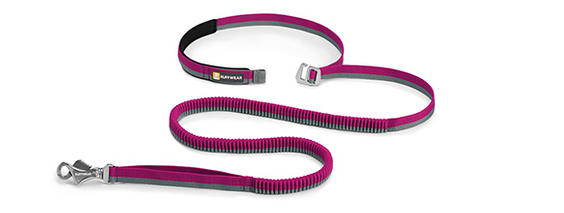
Bungee leashes are exactly what they sound like. These leashes have a bungee portion that absorbs shock. These are good for your clients with dogs who are heavy pullers. They absorb the shock when the dog bolts out and reduces the amount of jerk that makes it to your client. While your clients are training with their dogs, these may be a good idea in case an accident occurs. A bungee leash that I have personally used with success is the Ruffwear Roamer leash. The nice thing about this leash is that it can also be used as a waist leash!
5. Obedience Tabs
Just like with long lines, obedience tabs can be used when perfecting off leash work without the leash in the way. These are very short leashes that can be attached to the collar and left to hang there when not held. They are short enough that they do not impede the dog’s legs or paws, but a good safety back up to have in case your client needs to quickly grab their dog. These come in many sizes and material such as nylon, rope, leather, and biothane.
These five types of leashes all serve different purposes in dog training from lessening the amount of strength an owner needs, to advanced obedience work. What is your favorite leash and what purpose does it serve in dog training? Do you prefer one material over the other? Why?
Get Dog Training Business Tips!
Receive valuable dog training business tips and resources every week! Subscribe to The Modern Dog Trainer now by submitting your name and email below.
Relaxation is something a lot of dogs do not know how to do in many different environments. It is also something most owners do not think they have to teach their dog. Relaxation is important because it helps lower the chance of reactivity when dogs are able to be level-headed in many different environments. Relaxation exercises are also important to help prevent separation anxiety. A dog’s ability to learn is also higher when they are relaxed versus when they are anxious or hyper.
There are many different ways to teach a dog to relax. Here are three techniques to try.
1. Relaxation Protocol
Dr. Karen Overall’s relaxation protocol is a very popular method to teach relaxation. You can find mp3’s of the relaxation protocol here. Below is a video with an explanation of what the relaxation protocol entails. You can also perform the relaxation protocol on your mat so you can relate relaxation with the mat wherever it is taken.
2. Capturing Calmness/Default Settle
Kikopup has an excellent YouTube video on how to capture a dog’s calmness. Rewarding the dog when they are not expecting it when they are calm. This is something the owners can do while watching tv at night. Teaching a default settle is a great behavior for owners who enjoy taking their dogs to outside patios for meals. These behaviors have the dogs working on relaxation because they enjoy the behavior, not just because food is present.
3. The Calm Chin Rest
Another of Kikopup’s videos touches on ‘the calm chin rest’. This is teaching a chin rest, usually without a clicker because they have a tendency to excite dogs, and working towards moving the dog’s neck and feeling for their body being loose and relaxed.
These are just three methods that can be utilized to teach relaxation. It’s important that all dogs learn how to relax in different environments as it is not healthy or fair for a dog to live in an anxious, stressful environment.
What other relaxation methods do you utilize with your clients?
Get Dog Training Business Tips!
Receive valuable dog training business tips and resources every week! Subscribe to The Modern Dog Trainer now by submitting your name and email below.
It is our job to start puppies off on the right paw.
As a dog trainer, we know that those first few months of a dog’s life are the months that shape who he’s going to be for the rest of his life. Socialization and structure for a puppy are incredibly important, especially when they begin turning into adolescents. Part of puppyhood should include access to a well run puppy class which you can provide for your clients. There are many things a good puppy class can include, these are 10 of them.
1. Socialization To Touch
An important quality for a family dog to have is the ability to be handled by the family members, especially if children are present. Although tugging and pulling on puppies is inappropriate handling, we want to build a positive association with different handling so the client’s puppy can be a good family pet. Focusing on handling ears, paws, muzzles, and tails while receiving treats will help a client build a good association with their puppy.
2. Socialization to Vet Procedures
A location that quickly becomes scary to puppies can be a veterinarian’s office. Something that we can market to veterinarians is our ability to make a veterinarian’s job easier by training for a vet visit. This can include introducing puppies to low stress handling techniques, weight scales, muzzles, and routine procedures such as ear drops, teeth brushing, or nail trimming.
3. Potty Training
Everyone knows that puppies come with potty training. It’s very important in a puppy class to touch on potty training strategies like routines, management, and reinforcement.
4. Resource Guarding
This is a very important subject for all families, whether their dog or puppy currently shows symptoms or not. Going over what resource guarding is and how it can present itself is important, along with modification techniques and prevention such as adding food to a bowl as you walk by. This can easily be practiced in a puppy class.
5. Socialization to Sounds
Noise sensitivity can show up in dogs when they are not properly socialized to sounds as a puppy. MP3s on your phone or mp3 player can be used softly during puppy class and slowly made louder throughout the class to desensitize puppies to noises like thunder, construction, fireworks, and other loud noises. Calming music such as Through A Dog’s Ear can also be played to keep class a little bit calmer.
6. Focus
Before an owner can expect their puppy to perform basic obedience cues such as sit and down, we need to work on their puppy’s focus. This is something they can constantly work on throughout the whole class.
Puppies are always go, go, go. As a trainer and an owner, we have to teach them to stop every once in a while and be calm. Mat work can be a great way to teach puppies to calm down and hold still for longer than two seconds. It can also help less confident puppies feel more confident in new locations during socialization.
8. Socialization With People
As a family dog, owner’s want their puppies to be comfortable with house guests and anyone else they come in contact with. When appropriate, games like pass the puppy can help puppies meet different people in a positive light.
9. Toy Play
Reinforcement training requires many different types of reinforcement in our tool bags when we work with dogs and puppies. Having owners get down and actually play with their puppies to reinforce good behavior gives us one more tool. Keeping a puppy’s drive for toys through adulthood will make training easier. Sometimes people don’t know how to play with their dogs and it is our job as a trainer to teach them. Toy play can also teach puppies how to respect their owner’s hands when it comes to puppy biting.
I like to include touch in my puppy training because it teaches a puppy how to interact with people and hands in a positive light instead of biting. It is also a gateway to training many different obedience or modification cues. When highly reinforced, this can also become another reinforcer for the owners.
Puppy class shapes a dog’s life. When we can start a puppy out on the right paw, this will lead to better socialized dogs who can enjoy specialized classes that you offer with their owner. It’s our duty as a trainer to improve the well-being of the canine species. This starts with puppies.
What exercises do you include in your puppy class that you feel are important?
Get Dog Training Business Tips!
Receive valuable dog training business tips and resources every week! Subscribe to The Modern Dog Trainer now by submitting your name and email below.
One of the first behaviors we recommend teaching every client a nose target. There are many behaviors you can teach with a nose target, and even more you can teach with general targeting. We also believe it is a good behavior to teach in the beginning because it can help clients sharpen their clicker mechanics. Clients are able to physically feel the behavior they are supposed to click. Here are 10 good behaviors you can train with basic targeting.
1. Loose Leash Walking
Once the dog is able to nose target your hand well, it can be a big help for teaching loose leash walking. Instead of luring the dog with food, you can place your hand exactly where you want the dog to be (lined up with your leg), and click/treat them when they target your hand. If the dog is very target savvy, they can follow your hand for multiple steps before you click/treat. You can eventually fade out the hand target and have a very nice loose leash behavior. This can also help with heeling.
2. Mat Work
Mat work is very popular. It can provide a dog their own space whether in the house or in a foreign location. It can also be a helpful tool when trying to teach impulse control or relaxation methods. Instead of using just a nose target, mat work is a whole body targeting technique. You are teaching the dog that when they see their mat, they are to place their entire body on top of the mat. You can decide if you want only a down, or if you will accept a sit or stand on the mat. This can be applied to their cage, or a certain spot in the house when doing a certain activity. For example, when I’m cooking in the kitchen, you are to stay on the kitchen rug out of my way.
3. Platform Work
Platforms are very useful for many different dog sports or training techniques. You can use a platform as a ‘home base’ if you are working with multiple dogs. You are training the dog to target their whole body to a platform and to stay until you call them off. Another form of platform work is to teach the dog to target their two front paws on a platform and to pivot. This helps the dog learn hind end awareness which is very helpful for many dog sports including obedience, rally, agility, and freestyle.
4. Close The Door
A fun behavior to teach with targeting is closing the door. Using a nose target, you can train the dog to close the door through small approximations. If the dog can nose target a sticky note, have the dog target the sticky note on an open door and click for any movement of the door when they target the note. Once the dog knows what you are asking for and can close the door, you can begin to get rid of the sticky note by making it smaller and smaller until you no longer need the sticky note. People love seeing this behavior and will love to show off this skill to their friends. You can also work this with dresser drawers.
5. Recall/Come
Many people do not think of a recall as a targeting behavior, but it definitely can be. If you ask for the target cue from further and further, you are essentially asking the dog to recall from further and further away. You can eventually switch to a recall cue if you want to use something else, or you can just continue using your target cue.
6. Basic Obedience Cues
Your basic obedience cues such as sit, down, and stand can be taught with targeting instead of luring. Once the dog has the hang of a nose target, instead of using a piece of food to lure their nose up for a sit, you can just have the dog target your hand up into a sit. The same can happen for a down or a stand behavior. Some people prefer targeting over luring for these behaviors before you do not have to fade out the treat lure. It can be easier to fade out your hand movement or simply create a hand signal for the behavior.
7. Leg Weave
You can teach the dog to weave between your legs very easily with a nose target. Have the dog sit and stay and make a triangular space with your legs large enough for the dog to go underneath. Ask for a nose target on the opposite side of your legs and click as the dog targets your hand and moves between your legs. Once they catch on, you can ask for multiples weaves before rewarding. A very impressive, but easily taught behavior.
8. Saying “Hi!”
If the dog is an excited greeter, you can use a hand target for greeting in order to keep the dog from getting over excited. Having the dog on leash when guests come over gives the dog time to calm down before greeting the guests. Once they have calmed down a bit, the guest can ask for a hand target and then the dog can reorient to you for reinforcement.
9. Medical Behaviors
Targeting can be used to help a dog become comfortable with handling or procedures at the vet’s office. Targeting behaviors are used with large animals in aquariums and zoos to help veterinarians get samples or perform procedures on them. A prolonged target behavior can make it easier to give vaccines, take samples of blood, or get a physical exam. If the dog is doing a job, they will be more focused on the job than on what is occurring. A highly reinforced behavior like targeting can also help to calm the dog during a stressful situation. These targeting behaviors can even be done muzzled if you need that extra protection for veterinarians and staff.
10. Take A Bow
This cute finisher can easily be taught with a nose target. It is very similar to a down, but your precise clicker mechanics will come into play here. As the dog is going down to target your hand between their legs, you click as the behavior is happening, but before they drop their rear into a down. Too many bad clicks in down position will confuse the dog and will get you a down instead of a bow. Once the dog is getting pretty good, you can begin to fade the hand target and you will end up with a nice finishing behavior for all your future demonstrations.
Targeting is a very fun behavior for dogs and quickly becomes very highly reinforcing for them. These are ten behaviors you can teach with targeting, but the possibilities are truly endless when it comes to behaviors you can teach with targeting. What behaviors do you teach your clients with targeting? Do you prefer fun tricks or behavior modification with targeting?
Get Dog Training Business Tips!
Receive valuable dog training business tips and resources every month! Subscribe to The Modern Dog Trainer now by submitting your name and email below.
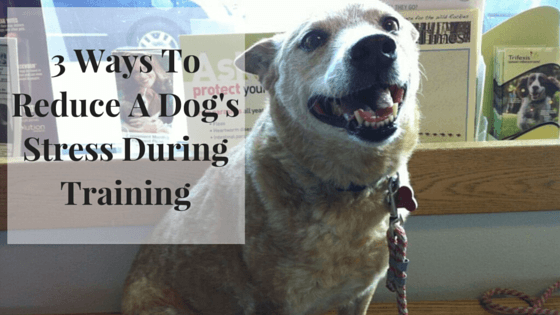
The very nature of training can be stressful to a dog. Not all stress is bad. However, when a dog has many different stress-inducing factors piled on top of each other, this can become overwhelming and cause the dog to act out or shut down. When a dog is too stressed out, learning does not occur. For this very reason, we must try to minimize the amounts of environmental stress our dogs experience during training. Here are three ways you can reduce stress in dog training.
1. Clean Clicker Mechanics
If a teacher were asking you questions in class and then having to look up every answer you gave them to make sure they were right, you’d become incredibly frustrated after a while. The same thing can happen with our dogs. If our marker words or clicks are too slow, our treat delivery sloppy, or our attention is not completely on our training session, the dog is likely to get frustrated and may stop trying. Making sure your mechanics are clean and on time will do a lot for a dog’s confidence and stress level. It’s also our job, as the trainer, to make sure our client’s mechanics are clean. Playing some clicker mechanic games before introducing your client’s newly acquired training skills to their dog can go a long way for the stress level of their dog. You can find more about clicker mechanics here.
2. Appropriate Distraction Levels
When a dog is worked in an area where there are too many distractions for their level of training, they can become incredibly stressed for a few different reasons. If the dog is prone to being anxious, too many distractions can cause them to go through information overload and they can become stressed out. When a dog is stressed, they cannot provide their owners with the attention their owners want. When the owners see their dog’s attention elsewhere, the owner can become stressed with the training process. Feeding off the owner, the dog becomes even more stressed. It is a stressful cycle to get in. To make both the dog and owner successful, lowering the distractions around the session to a level the dog can be successful is key.
3. Small Steps
When we are working with clients and their dogs, we are generally helping them build behaviors for their dogs. We have to take small steps towards the big picture goal. When we expect dogs to take leaps in training, they can become lost and get stressed when they don’t know what we are asking for. Training will go quicker when we ask for smaller steps that they can build on quickly. Taking larger steps may slow us down as the dog has to guess and interpret what we are asking for.
Some level of frustration will always be present in training, however, we should always do our best to make sure the least amount of frustration is present when training. Showing our clients how to use a clicker and how to build behaviors appropriately is our duty as a trainer. When our dogs are happy, we will get cleaner, quicker, and better behaviors.
What other ways can we lower our dog’s stress during a training session?
Get Dog Training Business Tips!
Receive valuable dog training business tips and resources every week! Subscribe to The Modern Dog Trainer now by submitting your name and email below.