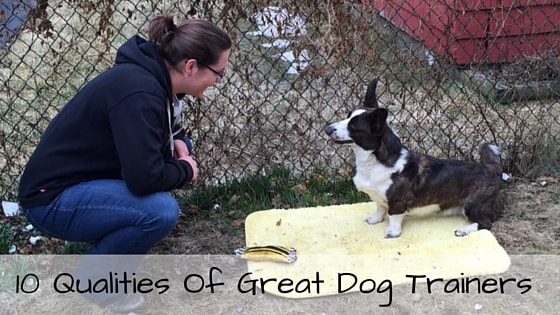
There are many dog trainers in this world. Some are amazing, some are so-so, and let’s be honest, some are downright dodgy. As a modern dog trainer, what are some traits you should possess to be considered a great dog trainer?
1. Patience
Patience is indeed a virtue, is it not? Especially when dealing with clients and their dogs. Maintaining your patience is key to helping clients learn without feeling like you are getting annoyed with them. They didn’t understand your directions the first three times? No problem, you’re willing to explain it again because you are patient and you understand that people and dogs learn at different rates.
2. Sense of Humor
Maybe this should have been number one? On those days where it feels as though everything is going wrong and like the dogs are out to make you feel like a failure of a dog trainer, keep that sense of humor. Learn to keep it light-hearted. If you get frustrated, nobody benefits.
3. Creativity
Dog trainers all have their standard ways of teaching tasks. What happens when the dog or client just isn’t getting it though? You get creative! You use butt scratches (for the dog, not the client!) as rewards. You completely revamp the environment so the dog can succeed. You use interpretive dance to explain a technique to a client. In short, you get creative to get things done!
4. Flexibility
Not necessarily physical flexibility (though let’s be honest, when an untrained mastiff is launching himself cheerfully at your head to say hello, some gymnastic skills can come in handy!), but more mental flexibility. Sometimes you will get a client that just does not want to do something the way you want them to do it. Not out of lack of understanding, but just because they don’t want to. Be flexible. Pick and choose your battles and work around your client’s desires.
5. Confidence
Have some faith in yourself! So often, dog trainers downplay their skills and training. I would bet that your clients think you are fantastic. I would bet that your fellow trainers think you are fantastic. You’ve put a lot of work into your training skills and business, so be confident about talking yourself up.
6. Humility
On the flip side, keep it humble. Don’t be a braggart. But mainly, do not take on clients that are over your head. There is no shame in saying, “you know, I’m not qualified to help you, but let me recommend you contact so and so!” People respect that. And honestly, it will keep you, your clients, and their dogs safer.
7. Open Mind
You can learn a lot from other trainers, even those who do things differently than you do, or even those who use techniques you’d never use (or will no longer use, if you are a crossover trainer). You can learn something from everybody if you just keep an open mind.
8. Diplomacy
Tact can be difficult. But you need to keep that internal filter on your mouth working. Blurting out, “you’re an abusive person for using a collar like that!” will not gain you any clients, nor will it help change any minds. Try instead, “I used to use those collars, too. They certainly do work, but do you know about the potential issues that can arise from their use?” Remain non-judgmental and be careful in your wording. That old adage of catching more flies with honey than vinegar is true.
9. Tolerance for Being Dirty
If you are a neat freak, you may be in the wrong field. Between dirty paws, slobber, dog hair, and residue from stinky treats being wiped on your pants, you don’t have a dream of staying clean!
10. Hoarder of Dog Equipment
Perhaps this is just much-needed justification for never getting rid of anything, but sometimes it can really come in handy! Having equipment on hand (different types of no-pull harnesses, head collars, flat collars, martingales, muzzles, etc) to show as examples to clients can help make things clearer for them. Also, since all dogs are shaped differently, sometimes one type of equipment will fit better than another. One size does NOT fit all when it comes to dog equipment.
So what qualities do you think great dog trainers should possess?
Get Dog Training Business Tips!
Receive valuable dog training business tips and resources every week! Subscribe to The Modern Dog Trainer now by submitting your name and email below.
Loose leash walking. *insert ominous music* Sometimes teaching loose leash walking to clients can feel like the bane of every dog trainer’s existence. It’s not that the skills needed are difficult. No, it’s the consistency and patience that are required that can make it so tedious. So, as a modern dog trainer, what are some ways you can help teach loose leash walking to your clients? Here, we’ll examine three videos that may be of benefit.
“Polite Walking On Leash” by Ines Gaschot
This first video shows how starting simple can make such a big impact. Ines starts on the porch with her dog, Loker, simply clicking and treating for a loose leash while working in a small, relatively low distraction location. Ines illustrates how to increase difficulty via distractions and duration of behavior. She then does some troubleshooting for forging and offers alternative ways to reward dogs (changing up treat delivery, sniffing breaks, etc). She offers helpful tips at the beginning and end of the video. This video is fantastic due to its simplicity. It will be easy for your clients to grasp this concept and put it into play, even after you are gone.
“Clicker Training Loose Leash Walking” by Casey Lomonaco
Casey’s approach to loose leash walking is to emphasize the placement of treat delivery. Careful and consistent treat placement means the dog learns that being beside the owner is a Very Good Place to be. She starts slow, just standing in one place. She then begins pivoting 90 degrees each time to encourage the dog to start moving into position. After the dog is confidently doing that, she begins taking large single steps, changing direction frequently. To introduce longevity into the loose leash walking, Casey uses the “300 Peck” method. By the end of this short video, her puppy, Cuba, is politely offering loose leash walking even though he is off leash.
“How Do I Teach My Dog Not To Pull On Leash?” by Kevin Duggan
Kevin takes a different approach from the two videos above. His method is incredibly useful for dogs that aren’t as food motivated, or dogs that are in a highly distracting area. He teaches the dog that all forward movement stops if the leash gets tight. He then turns and goes another direction (“penalty yards”), teaching the dog that pulling towards a desired object actually makes it go further away. Kevin uses his voice as praise a great deal, some treats, and also a toy that his dog desires.
Conclusion
These videos all are highly simple and effective even though they use three different methods. Your clients will all have different learning styles, so being able to offer them several options for teaching this skill will ensure they have success.
What other methods do you like to use to teach your clients loose leash walking?
Get Dog Training Business Tips!
Receive valuable dog training business tips and resources every week! Subscribe to The Modern Dog Trainer now by submitting your name and email below.
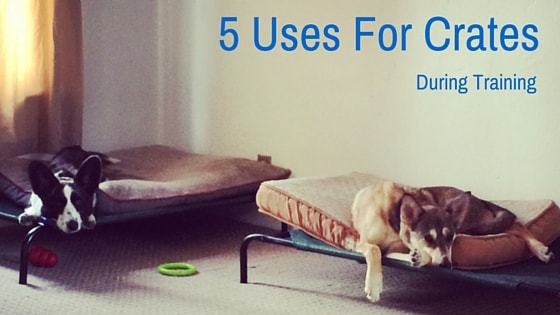
Many clients are averse to the idea of crating their dogs. Being able to explain to them how crating can help their dog’s training progress may open them up to the concept.
Housetraining
Crating can be of immense benefit when it comes to housetraining a dog, regardless of age. It keeps the dog confined to a relatively small space, keeping them from being able to roam and squat wherever they desire. Feeding the dog in the crate makes housetraining go even faster as most dogs will not go to the bathroom where they eat. Obviously it is important to stress to your clients the importance of taking the dog outside on a regular basis. Also, be sure to emphasize that crating is not to be utilized 24/7, but only when the dog is not able to be immediately supervised.
Settle
Crating can teach a dog that it’s okay to relax. Starting with very small amounts of time, clients can put their dogs in a crate with something yummy to chew on. Doing this consistently can teach the dog that good things happen in there and it’s okay to relax and settle down. This can be helpful at times when visitors are coming and going or the dog just needs to be out of the way for some reason. Having a dog that will settle in its crate can be a great management tool.
Home Base
Group classes are a great time to utilize crating. When you are talking and your attendees need to listen, they can put their dog (who knows that settling in a crate is a good thing!) in the crate so they can focus on you. The crate can also act as a home base for the dog when things get stressful or he just needs a break. Or make a training game of it – have your client do some work with the dog and then they and their dog can run to the crate together and throw a party when the dog enters.
Separation Distress/Anxiety
Separation distress/anxiety can be a nightmare to deal with, but crating can sometimes help ward it off. If your client’s dog has learned to associate the crate with Very Good Things, and has learned that its crate is used for settling in and relaxing, it can help the process of treating the separation anxiety. It is also useful to prevent a dog from pacing back and forth from window to window and barking at people/animals passing by, thereby keeping their stress levels elevated. Crating can encourage the dog to just relax and sleep or work on a chew toy. Note: Separation anxiety can be dangerous for the dog – if you are not confident in your ability to recommend a course of action that will keep the dog safe during training, please refer your client to somebody who is!
Preparation For Emergencies
Nobody ever wants a tragedy to occur, but sometimes they do. What happens if your client’s dog gets sick and has to spend the night at the e-vet? If the dog isn’t accustomed to crating, it can get incredibly stressed out, hindering treatment. If you and your clients live in a location with natural disasters that might prompt evacuation, having a crate trained dog can make it much easier to find a place that a client can go with their dog. Or even something as basic as your client wanting to take a vacation – dogs that are not accustomed to crating are more likely to panic in a kennel setting.
Crating responsibly can be incredibly beneficial to your clients’ progress in training their dogs. Being able to explain the usefulness may open some otherwise closed minds.
Get Dog Training Business Tips!
Receive valuable dog training business tips and resources every week! Subscribe to The Modern Dog Trainer now by submitting your name and email below.
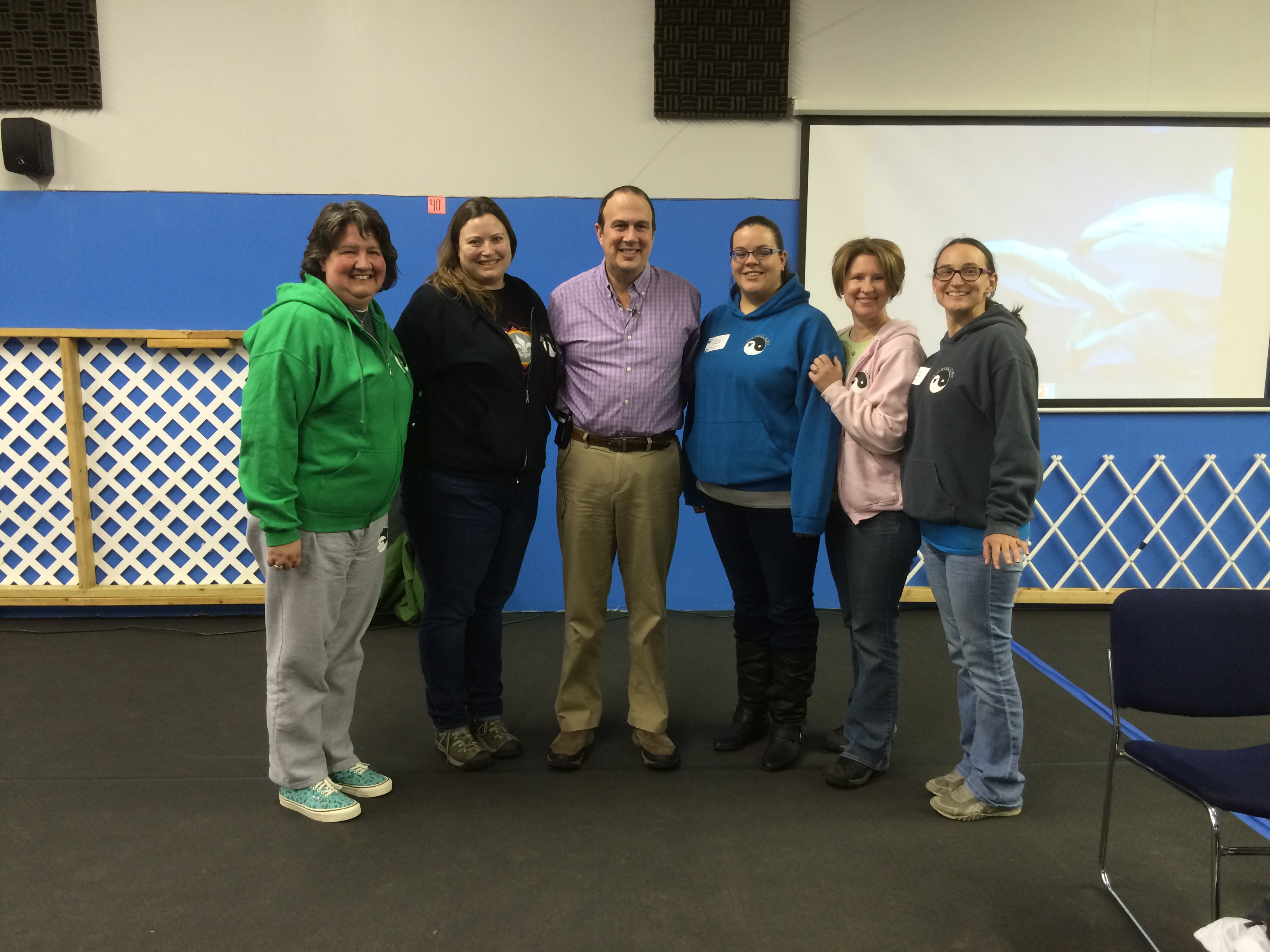
Ken Ramirez, Liz Wyant (the author of this article), and some of her friends at his Cleveland seminar.
A Weekend With Internationally Recognized Animal Trainer, Ken Ramirez
Ken Ramirez has been in the animal training/behavior world for over 35 years. He has worked with guide dogs, law enforcement K-9s, zoo animals, and marine animals. He has worked at Chicago’s Shedd Aquarium for 26 years, most recently as the training advisor. In October of 2014, he started a new role as the Executive Vice-President and Chief Training Officer of Karen Pryor Click Training. Ken is an avid proponent of force-free animal training.
In November, Ken presented a two-day seminar we were able to attend. 26 pages of notes later, here are some of the concepts we felt were most important.
Training 101
Ken describes training as teaching an animal what the rules for living in a particular space are. He emphasizes that it should be a shared process; the animal should WANT to be with that person and should WANT to train.
Ken feels the cornerstones of animal care are:
Health Care
Nutrition
Environment
Behavior Management – As Ken says repeatedly, “training is not a luxury.”
That last point is what struck me the most – training is not a luxury. So often our clients factor in costs of health care, food, and grooming, but not training. Training is only used when something goes bad, not to provide the mental stimulation that dogs need to have a basic, happy and healthy life.
Least Reinforcing Scenario/Stimulus (LRS)
Ken explained the LRS as the most positive approach to dealing with unwanted behavior. It was developed in the zoological training community as a way to operationalize the mantra of “ignore the unwanted behavior.” Though very basic, it can be a powerful tool. The Least Reinforcing Scenario is simply a 2-3 second neutral response after an animal gives an unwanted behavior, followed immediately by another opportunity to earn reinforcement. For example, you cue a dog to sit and it lies down instead. Immediately when the dog lies down instead of sits, give a neutral response for 2-3 seconds and then cue the dog to do a different cue that you are positive they can successfully complete.
So what is a neutral response? There is no straight answer to this. It is not a freeze, it is just a continuance of what you are doing – if you are looking at the dog, keep looking at the dog. If you were in the process of scratching an itch, keep scratching the itch. The key is to just maintain the environment so the dog is neither punished nor rewarded. This is only effective for a dog that is accustomed to working in a positive reinforcement environment. When you reward, reward, reward and then don’t, the dog will notice the lack of rewarding. There’s no need to extend the time or get emotional – just 2-3 seconds of a neutral response is enough feedback.
Alternative Reinforcers
Alternative reinforcers are learned reinforcers. They can be anything – clapping, toys, touch, play, words, or anything else the animal values. They give you a chance to provide some variety in your reinforcers to keep the dog excited about working with you. Alternative reinforcers need to be trained as behaviors so the dog understands what they mean. This means it needs to be paired with food and marker signals and practiced for weeks. Once the dog begins to value the alternative rewards, you should still use treat rewards 80% of the time during training sessions.
For alternative reinforcers to be effective, the trainer and animal must already have a predictable and solidly established relationship. It is incredibly important to constantly maintain the strength of the alternative reinforcer by keeping it paired with food. Also, be mindful that if a dog’s behaviors deteriorate after using the alternative reinforcer, the alternative reinforcer is NOT a reinforcer at all!
These are just a few of the topics that Ken discussed. He kept everybody captivated for two full days and we left feeling invigorated about training and ready to try his ideas. Should you get the opportunity to see him, we couldn’t recommend him highly enough!
Have you tried using LRS’s or alternative reinforcers? Tell us in the comments!
Get Dog Training Business Tips!
Receive valuable dog training business tips and resources every week! Subscribe to The Modern Dog Trainer now by submitting your name and email below.
Interacting Professionally Online and In-Person With A Variety Of Dog Trainers
Traditional trainers (those who introduce physical corrections into their training of some sort) are as passionate about their training methods as force-free trainers are about their methods. Unfortunately, this can often cause confrontations when the two types of trainers come together, either in person or via the internet. Arguing is stressful and non-productive, so what are some options for gracefully handling these interactions?
(As an aside, the vast majority of traditional trainers are not interested in arguing and being rude to force-free trainers – this article is to help when dealing with the small minority that revel in being hostile.)
Turn The Other Cheek
Often traditional trainers start slinging around names and insults to rile up force-free trainers. Though it can be frustrating, you should try to ignore this. On the other hand, take the higher ground and do not reciprocate by throwing derogatory terms and names back at them.
Don’t Get Pulled In
Sometimes the easiest option is to walk away. If you know that you are not going to be able to retain your composure whilst discussing your side, give yourself the power to remove yourself. Getting riled up is not going to affect the other person. It will simply make you miserable and possibly reflect badly on your reputation.
Agree To Disagree
Often you just reach a point in conversations where the discussion is going in circles. Your mind is not going to change and neither is their’s. At this point, agree to disagree. Continuing the conversation is going to accomplish nothing other than to annoy you and waste your time. Ending the conversation this way will preserve your sanity and reputation.
Know Your Facts
Before getting involved in discussions, make sure you know your facts. Be prepared to cite books, articles, and other reputable resources that show the power of positive reinforcement. If you are confident about your training methods and why you use them, having the resources to back up your arguments will be helpful.
Above all, remember that positive reinforcement works for people, too. So often, force-free trainers are so passionate about their techniques that they get riled up and lash out when challenged. Arguing will not change minds. Use your personal dogs and the dogs you train as good examples of the power of force-free training. Always keep in mind that everyone is working towards the same goals, you are just pursuing different pathways to get there.
What do you recommend for interactions with traditional trainers who want to argue?
Get Dog Training Business Tips!
Receive valuable dog training business tips and resources every week! Subscribe to The Modern Dog Trainer now by submitting your name and email below.
When new clients contact you, generally the first thing you will be asked about is classes you offer. Most people don’t even think about private training. Knowing whether to guide your clients in the direction of classes or private sessions will help your clients get the most bang for their buck.
Reactive/Fearful Dog
Though there are some incredibly well-run “Reactive Rover” type classes out there, for dogs that cannot be in the same building/vicinity of other dogs or people, classes can just be too much and there will be little to no benefit. Help the client get a solid foundation on the dog through private sessions. If the dog and owner have zero foundation skills, they will struggle in a group class setting.
Young And/Or Untrained Dog
Beginner Obedience classes are probably the most utilized class out there, but are they always the best option? So often, the massive distraction of other dogs and people all combined make it difficult for a young or untrained dog to focus on their owner. Doing even one or two private sessions before putting a dog into a class can make a monumental difference in their ability to focus and benefit from the class.
Owner Needs Special Attention
There are some clients that, for a myriad of reasons, would benefit from one-on-one instruction. Putting an owner like this into a group class just wouldn’t be fair or beneficial to them. This type of owner craves your full attention which cannot be provided in a group class setting. Spend some time with them in private sessions so they can be confident in their abilities before you transition them into a group class.
Specific Training Issue
If you have a client that has attended group classes and continues to have problems getting his/her dog to do a certain behavior, a private session may be in order. This will enable you to focus all of your attention on them and see what the problem may be so you can help them fix it.
Household Issues
Housetraining, intra-household dog aggression, cat/dog issues – many of these are problems that can’t always be solved in a group class. These often require you to go to a client’s home and help them enact feasible management while they work on behavior modification.
What other times do you recommend private sessions versus group classes to your clients?