![5 Things You Should Know About Being A Service Dog Trainer]()
by Laurie Schlossnagle | May 27, 2015 | Training Methods
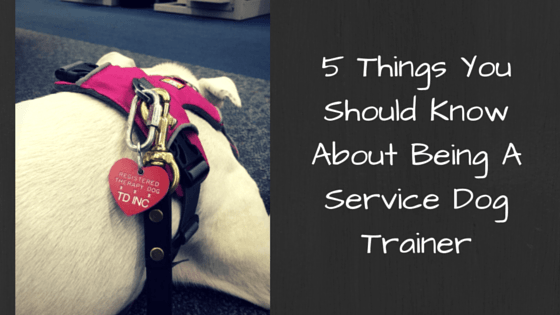
Helping someone train his/her own service dog or training service dogs for their handlers is a time-consuming commitment, but one that is extremely rewarding. This is a time for a trainer to be able to be involved long-term with a dog/handler team with specific goals in mind. Working with service dogs and service dogs in training requires a somewhat unique skill set and body of knowledge. Being a prepared service dog trainer is important.
1. Americans with Disabilities Act (ADA)
Know and understand the Americans with Disabilities Act (ADA). This is the only thing overseeing service dogs at the federal level. Also, know any legislation your particular state may have regarding service dogs and emotional support animals.
2. Document, Document, Document!
Document everything you do. This serves many purposes over time – it can help you troubleshoot, it can help you formulate training plans, it shows the work you have done to ensure a safe, well-trained, appropriate service dog, etc.
3. Be True To Yourself
Know your limits and experience. For example, if you have no experience training an alert dog, refer your client to someone who does. Then ask if you might be able to observe and learn about the training.
4. Research
Do your research. There are no particular certifications or registrations required for service dogs and emotional support animals. Know the difference between service dogs, emotional support animals, and therapy animals. Incorporate evaluations like the Canine Good Citizen and Canine Life and Social Skills evaluations into your clients’ training plans.
5. Public Access
Public Access Training is a vital part of service dog training. Having a service dog or service dog in training in the public eye is under a great deal of scrutiny and observation. Ensure the teams you work with understand this and are committed to excellence in public access. Utilize a public access test to evaluate teams. Look online for test examples such as the Assistance Dogs International Public Access Test.
Your best resource when working with service dogs and service dogs in training is the handler — the person the dog is working for! They are going to be the one living with, and benefiting from, their service dog; talk to them about their ideas for how this is all going to work to work together to a mutually beneficial end result of an awesome, well-trained service dog.
Get Dog Training Business Tips!
Receive valuable dog training business tips and resources every week! Subscribe to The Modern Dog Trainer now by submitting your name and email below.
[mc4wp_form]
![Mental Stimulation Ideas For Dogs]()
by Laurie Schlossnagle | May 21, 2015 | Training Methods
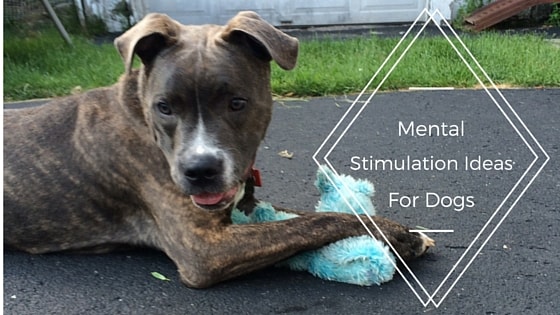
Dogs need both mental and physical exercise to be balanced and healthy. Finding ways to do this can be challenging.
Understanding the need for and providing opportunities for physical exercise is relatively common knowledge among dog owners. But the concept that having a dog or dogs is a partnership and that your dog wants and needs to spend QUALITY time with you, is more difficult. It is not enough to spend time cuddling with them; dogs want to use their brains! They have wonderfully intelligent, creative brains that need to be challenged and stretched to help prevent boredom-related behavior issues. Using some of the ideas listed will not only help dogs’ brains, but will also improve relationships with our dogs.
**Most of these ideas are intended for the owner to be involved or for the owner to supervise the dog. There is a section at the end of things to leave for the dog when s/he is left alone.
Create A Challenging Meal
Feed at least one meal a day in a mentally stimulating and challenging way:
- In a food puzzle (Kyjen puzzles and slo feeders, Kongs and Kong Wobbler, Premier Tug-a-Jug, Barnacle, Squirrel Dude, and Mushroom, Buster Cube, Treat Ball, IQ Ball, Nina Ottosson puzzles) – these are not meant to be left unsupervised with the dog (with the exception of Kongs, Barnacle, Squirrel Dude)
- Throw the food into the yard.
- Put the food in an empty, dry (labels, rings, and caps removed) pop bottles, milk jugs, water bottles.
- Put the food in boxes (see “Toys” section for more information).
- Put the food in a muffin tin (see “Toys” section for more information).
- Use the food in a training session.
- Almost any of the ideas listed below will work to feed a meal.
Games
Get creative and encourage owners to play games with their dogs. Here are a few games that are simple and quick to play every day.
- Hide and seek – with people, toys, and food
- Rapid recalls
- Round Robin recalls
- Tag
- Musical chairs – play music, play with your dog, when the music stops ask your dog to execute a behavior on a mat or a rug, when the music starts again, play again
- What can you do? – get your clicker and treats, ask your dog “what can you do?” start clicking and treating offered behaviors (your dog will probably do SOMETHING to get you to click/treat – use these behaviors to play this game – when we play this, the dogs must offer different behaviors to get the click/treat. Note: this is not a shaping exercise; this is a game.)
- 101 Things to Do With a Box (or a laundry basket)
Toys
Toys come in all shapes and sizes. They are great tools to prevent boredom and enrich a dog’s life.
- Flirt pole (make your own – directions can be found online; I like the Kong version because it’s easy to change out the toy at the end of the line).
- Long line with a grocery sack on the end – your own version of lure coursing (think greyhound racing and chasing the lure). **Don’t let your dog chew on or ingest the bag!**
- Ice sculptures – bowl or bucket or bottom half of a gallon jug – fill with water, toys, treats (carrots and apples work really well!) – freeze – put outside for your dog to play with, interact with, get the toys and treats out of.
- Boxes – start with one box, put some treats or a favorite toy in it, have your dog get the treats/toy out of the box. Progress to nesting boxes with the treats/toy in the innermost box. (This can also be used to feed meals.) Make it more interesting by using peanut butter, spray cheese, or cream cheese in one of the boxes.
- Muffin tin – put treats or kibble in each hole, cover some or all of the holes with tennis balls or crumpled paper. You can also use canned food, rehydrated foods, peanut butter, spray cheese, yogurt, and cream cheese
- Yoga mat – unroll, sprinkle treats, roll back up. Have your dog unroll the mat and get treats.
- Small round basket – put treats or a toy under the upturned basket and have your dog figure out how to get them.
- Perches – phone books covered in duct tape or small, stable stools. Play with different things your dog can do with these. Two paws on (front, back, right, left), four paws on, two paws on move around, etc.
- Hol-ee ball stuffed with fleece strips and small treats or kibble
- Make a “burrito” out of an old towel or blanket, folded up with treats in the folds.
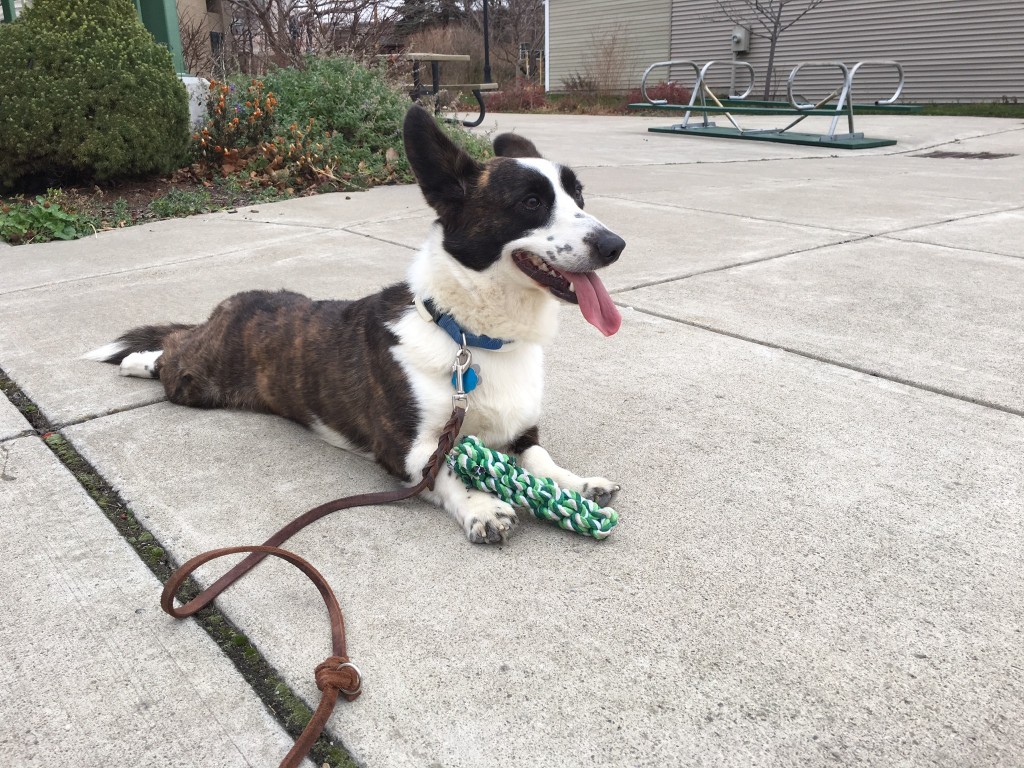 Other Activities
- Take a class – either in person or online – the Fenzi Dog Sports Academy has some great online courses. If you can’t find a class locally or online you are interested in, consider working with a certified, experienced trainer (again, in person or online) to help guide you, answer questions, and help you stay on track. (Scent or nosework classes are a great class for dogs who need to be stimulated/challenged!)
- Join a walking group that takes regular walks with their dogs (I DO NOT recommend off-leash, play group type walks – the walk should be as much about you and your dog as the social aspect for you with the other humans. It should NOT be about the dogs physically socializing.)
- Teach the dog tricks – Do More With Your Dog is a great online program for earning certificates/titles for teaching the dog tricks.
- If the dog likes to dig, create a place him/her to dig – a sandbox, an area of your yard – digging is a natural canine behavior and many dogs reduce stress and get a lot of stimulation when they dig.
Things You Can Leave With The Dog Unsupervised
If it is a multiple dog situation, I only recommend these if each dog is in a crate while you are gone to prevent any issues with resource guarding.
- Stuffed and frozen Kongs, Squirrel Dudes, Barnacles
- Bully sticks – freeze these too so they last longer
- Stuffed and frozen tracheas
- Ears – cow, pig, lamb
Mental stimulation is as important as physical stimulation for dogs. Encourage your clients to plays games and work with their dogs to build their bond and prevent boredom in their dogs.
Get Dog Training Business Tips!
Receive valuable dog training business tips and resources every week! Subscribe to The Modern Dog Trainer now by submitting your name and email below.
[mc4wp_form]
![How To Become A Therapy Dog Trainer]()
by Laurie Schlossnagle | Mar 13, 2015 | Training Methods
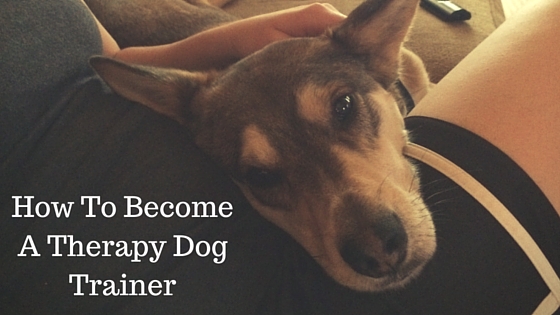
Therapy dogs are a growing population and there is a huge need for trainers and training classes to lead all those new volunteers. These are seven tips to become a therapy dog trainer.
Experience
Therapy dog trainers should have experience working a therapy dog in therapy situations. If your dog is not suitable, borrow a dog. Registered teams do not need to be traditional dog-owner teams; it just needs to be a dog you have a relationship with and will work with you. While you can’t possibly offer your students a full spectrum of experiences, it is important to be able to offer them some. (Therapy dog visits are always new and changing – that’s why it is important for teams to be flexible and accommodating to new situations, environments, people, etc.)
Registering Organizations
Therapy dog trainers should be familiar with the prevalent/popular registering organizations in your area: their insurance policies, their testing requirements, policies and procedures, their equipment requirements, and what is expected and prohibited on visits. Ideally, be a part of at least one of them as a team, as a supporter, or as an evaluator. Being familiar with the organizations and their guidelines will help you know what is required (or prohibited) and will help you determine what and how to teach. (It is important that therapy dog teams are registered and insured with a reputable organization. Many facilities require it. If there is an incident and the team is not registered/insured, it falls to homeowners/rental policies and can be financially devastating.)
Think outside the box!
Therapy dog work is no longer limited to nursing homes and libraries. There are therapy dog teams in a wide variety of locations and situations – hospitals, rehab centers, physical therapy centers, dentist offices, psychologist/psychiatrists’ offices, social workers, schools at all levels and abilities, colleges, various work places, court rooms, depositions, lawyers’ offices, funeral homes, hospices, after school programs, etc. So while a dog and handler may not fit a “traditional” therapy dog mold, they may fit into one of the less traditional therapy dog opportunities available to teams.
A Team Effort
It is important that therapy dog handlers understand that doing therapy dog work is a TEAM effort – both the human and the dog need training and preparation to be their most effective and successful. Challenging the handlers in your classes is important – handlers should be able to appropriately handle different situations in different environments as well as being the best possible handler and advocate for their dogs while visiting.
Be creative in your teaching!
Use lots of different props and equipment. Challenge both the humans and the dogs. Expect and require full participation from teams. Go on field trips. Utilize the information and curriculum available for both the Canine Good Citizen and the Canine Life and Social Skills evaluations. Invite lots of different people to come and help in your therapy dog class. Therapy dog teams cannot be over-prepared.
Foundations
Foundation behaviors are important in therapy dog work. A solid foundation will set teams up for success as well as giving them something to fall back on when a strange, unique, or unexpected situation arises while doing therapy dog work. Heavily reinforce the foundation. Incorporate exercises and games into your curriculum that incorporate foundation behaviors – focus/attention, touch, sit, down, stand, stay, polite leash walking, handling, greetings, and mat work. Distance is not important in a therapy dog class as most registrations require the handler always have their dog on a leash and the leash in the handler’s hand. But duration and distractions are very important!
Support
Ongoing support and training is important for therapy dog teams. Offering teams regular access to a trainer and opportunities to continue and maintain their training is reassuring and encourages teams to continue to train and mature as a team.
Being a therapy dog team is very rewarding; being their instructor/trainer is priceless. Teaching therapy dog teams may take a bit more preparation, but the positive results will far outweigh the investment of time and energy. What is your favorite out-of-the-box teaching tool?
Get Dog Training Business Tips!
Receive valuable dog training business tips and resources every week! Subscribe to The Modern Dog Trainer now by submitting your name and email below.
[mc4wp_form]
![10 Things You Didn’t Know About Dog Trainers]()
by Laurie Schlossnagle | Mar 3, 2015 | Training Methods

Here are 10 things you didn’t know about dog trainers:
1. Dog trainers love dogs – sometimes their humans not so much.
2. Dog trainers don’t like being asked at parties what to do about your dog eating his own poop (or insert any dog training dilemma “here”) any more than a doctor likes being asked about that suspicious bump.
3. Dog trainers see the good, the bad, and the ugly – and wake up to do it all again every day.
4. Dog trainers’ dogs are not perfect by any stretch of the imagination – we have the same struggles as every dog owner – please don’t expect perfection from our beloved dogs.
5. Dog trainers are human. We have our strengths and weaknesses, our passions and our “eh” moments.
6. Dog trainers have working hours, and non-working hours, just like any other profession.
7. That emergency training problem you have that was months, or maybe years developing? It is not going to be “fixed” on a Sunday evening at 9:00 p.m. for Monday morning.
8. When you don’t have money for dog training and want your dog trainer to give you a discount or a free session, we don’t pay our rent, our bills, or buy groceries. For many dog trainers, this is their livelihood, not just a “hobby.”
9. Do as your dog trainer says, not as s/he does.
10. When what you’re doing isn’t working, try doing what your dog trainer suggested.
Being a dog trainer takes a certain kind of person. They must love dogs, enjoy working with people, be self-motivated, and compassionate. We salute all dog trainers who pursue education and modern practices to improve their service to their community.
![Top 5 Tote Bags For Dog Trainers]()
by Laurie Schlossnagle | Jan 30, 2015 | Business
Dog trainers take a lot with them when they are working. Because of this need for “stuff,” dog trainers are always on a quest for the perfect bag to carry it all.
Tote bags are a great way to get organized and to carry all that stuff to appointments and classes. Following is a list of some favorite tote bags of trainers.
Please note – this is not an inclusive list nor is it necessarily an endorsement; these are some bags I personally use and have heard from other trainers they use and like.
Thirty One Utility Bags
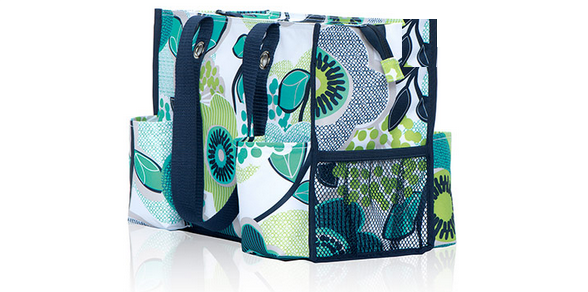
The organizing utility tote from Thirty One is an organized, all-purpose bag with lots of pockets for clickers, receipt books, water bottles, pens, and poop bags. There are two versions of this bag – this one with a zip top and another that is open.
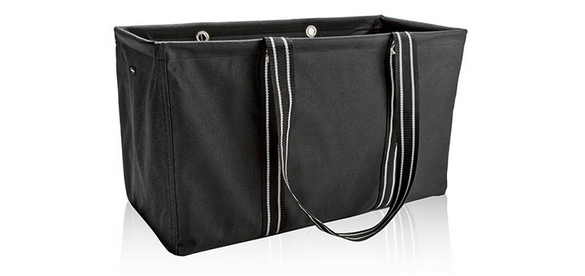
The large utility bag, also from Thirty One, is great for mats, cones, toys, and other big supplies that don’t fit well into other bags. Tops are available for this bag if you prefer a closed bag.
Land Ends Tote Bag
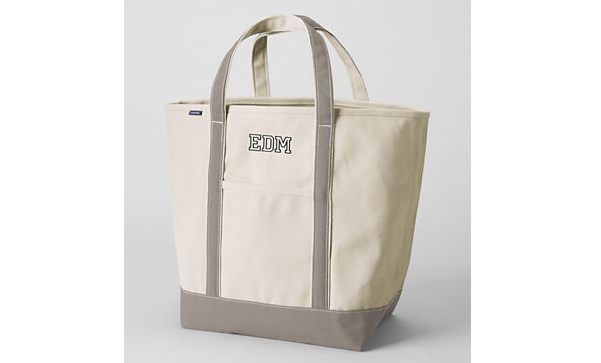
The Lands End bags work well for paperwork – client files, books, contact information, clipboards, etc. They also are good bags for toys. Lands End offers these bags in a variety of sizes, and with or without a zip top.
Products from Thirty One and Lands End are nice because you can get them embroidered with your business name, a monogram, or a paw print. They also come in a variety of colors and prints.
Paw Print Duffle Bag
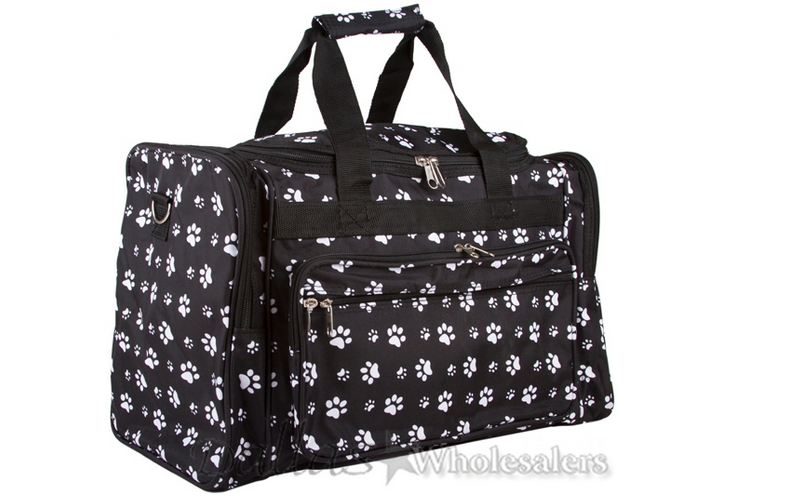
The paw print duffle bag is available from many vendors online. A duffle bag with both handles and a shoulder strap and end pockets and a front pocket is a great bag to have. You can get duffle bags from embroidery businesses with your logo or something dog/business related embroidered on the front pocket. This is can be an all-purpose bag to carry class supplies.
Ruffwear Haul Bag
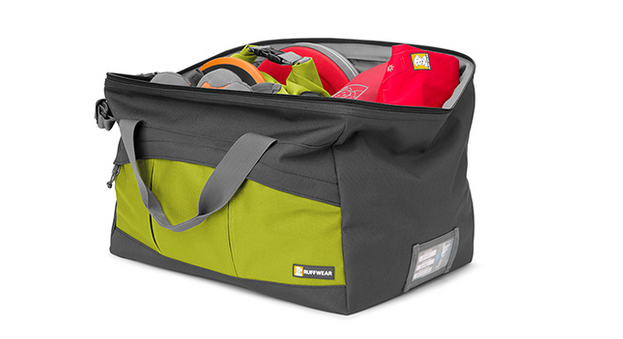
This Ruffwear Haul Bag is brand new, but it is creating quite the buzz among dog trainers. It is from Ruffwear, a company known for its quality dog merchandise. Dog trainers are hoping their new bag is just as wonderful. This bag has a wide-opening gatemouth zip top and is reported to have lots of pockets for all that stuff! It also has both handles and a shoulder strap.
What is your favorite tote bag and what do you use it for?
Get Dog Training Business Tips!
Receive valuable dog training business tips and resources every week! Subscribe to The Modern Dog Trainer now by submitting your name and email below.
[mc4wp_form]
![10 Prejudices Owners Have Against Clicker Training That Are Wrong]()
by Laurie Schlossnagle | Jan 20, 2015 | Training Methods
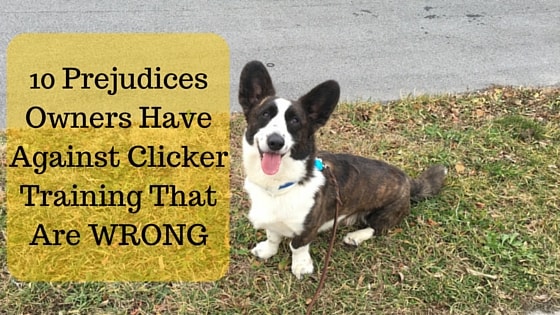
Clicker training does not mean you will never tell a dog “no.” Behaviors that are reinforced with a click/treat will repeat; behaviors that are ignored will go away. Ignoring behaviors and/or NOT clicking/treating is telling the dog “no, that’s not what I want.”
2. A Clicker Is Forever
Some people think, “I will have to carry a clicker and treats with me everywhere for the rest of my dog’s life.” Once the dog’s history of reinforcement for a behavior is built and the behavior is on stimulus control, the click/treat reinforcement is no longer as important. It is, however, important to remember that to maintain behaviors, reinforcement of the behavior should still occur.
3. It’s A Juggling Act
You need to have three hands (or more!) to clicker train. Practice clicker mechanics just like you practice “sit” and “down.” Get your leash, clicker, and some treats (candy or something rewarding for you) and practice without a dog (hence the treats for you!). Another way to practice is to have someone bounce a ball while you click/treat when the ball hits the ground.
4. It’s Bribery
Some people also think, “My dog will only listen to me when I have a clicker/treats.” Dogs will not do what they are asked to do until they have learned the cue and the behavior. Once dogs understand the cue and know the behavior, this is no longer an issue. Using proper clicker training mechanics is also an important part in preventing bribery – keep those hands out of the treat pouch!
5. It Isn’t Applicable To Other People
Do you want your dog to listen to someone else? Then have that person train with your dog. Or if what you want is a dog who will listen to a variety of people (vet tech, groomer, dog walker, etc.), have a variety of people train with your dog so that your dog gets used to listening to a variety of people. It is not about training method — it is about generalization and training in general.
6. A Classroom Full Of Clicking Will Confuse A Dog
Life is not lived in a vacuum and dog training is not done in a vacuum. Dogs pay attention to the whole picture – body language, verbalization, emotion, clicker, treats, etc. Your dog absolutely knows which click is for her.
7. Clicker Training Is Limited
You can train everything with a clicker – from sit to housetraining to dog sports to working dogs. Everything.
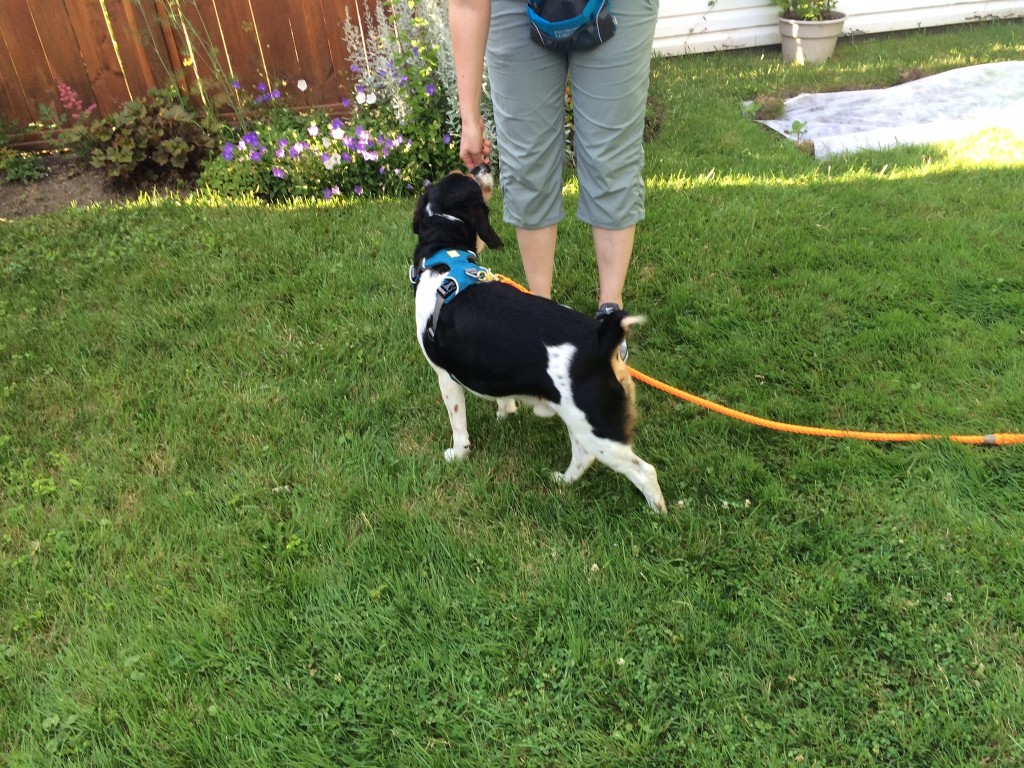
8. You Can’t Use A Clicker For Dog Sports Or Therapy Dog Work
Clickers are not allowed in the ring or on therapy visits (with many registering organizations/groups). But you can certainly utilize clicker training to train and prepare your dog for these things (remember it’s about history of reinforcement and stimulus control). Fortunately, you can utilize the clicker in your warm-up routine (at competitions it is polite and good trial etiquette to warm up outside or away from the ring(s) if you are using a clicker so as not to distract the working dog(s)).
9. Clickers Won’t Help With Reactive Or Aggressive Dogs
Using a clicker to work with a reactive or aggressive dog can be very calming for the dog. Once the dog understands that click means reinforcement, it helps the dog feel more comfortable and confident. They enjoy knowing that a click means the same thing in the training space, at home, on the street, alone, with other dogs, etc. A clicker increases comfort and confidence in reactive dogs because it consistently reinforces the behaviors they should do in a trigger situation while creating a positive association.
10. Sound Sensitive Dogs Hate Clicker Training
There are a number of different clickers with different levels of sounds for dogs and for humans. Experiment! If you can’t find a clicker that your dog is comfortable with, try a clicking pen, a canning lid, children’s toys – be creative. You can also put your clicker in your pocket or behind your back to quiet the sound a bit. Always be careful not to click too close to a dog, especially his ears.
Get Dog Training Business Tips!
Receive valuable dog training business tips and resources every week! Subscribe to The Modern Dog Trainer now by submitting your name and email below.
[mc4wp_form]